- 15 Jan 2026

Fire safety planning in Singapore has moved well beyond wall-mounted extinguishers and exit signs. A modern fire safety course Singapore must prepare people, systems, and response decisions for real incidents. This blog will walk you through how worksites should plan fire safety coverage in 2026 using risk, readiness, and operational reality rather than surface-level compliance.
Why Fire Safety Planning Is Changing in 2026

Compliance is no longer the hardest part
Most workplaces already meet baseline regulatory requirements. Fire extinguishers are installed. Exit routes are marked. Fire safety certificates are filed.
The failure point today is response quality.
Investigations into workplace fires increasingly show that damage escalates not because equipment was missing, but because:
- Staff did not know when to escalate
- Fire wardens hesitated or acted out of sequence
- Evacuation broke down under real pressure
Fire safety coverage planning now focuses on decision-making under stress, not static assets.
Fire risk has changed with how buildings are used
Hybrid work, shared facilities, automated systems, and after-hours operations have altered risk profiles. A site that appears low-risk at 10am can become high-risk at 10pm when staffing drops and contractors are present.
Fire safety coverage must account for time-based risk, not just floor plans.
What Fire Safety Coverage Actually Means

Fire safety coverage is not equipment coverage
Fire safety coverage planning refers to the human and procedural capability to detect, contain, and respond to a fire incident before it escalates.
That includes:
- Who identifies the hazard first
- Who decides whether to fight or evacuate
- Who coordinates evacuation and headcount
- Who communicates with emergency responders
A fire extinguisher does nothing on its own. Coverage exists only when trained people act correctly.
Where signage and extinguishers fall short
Signage assumes visibility. Fires reduce visibility fast.
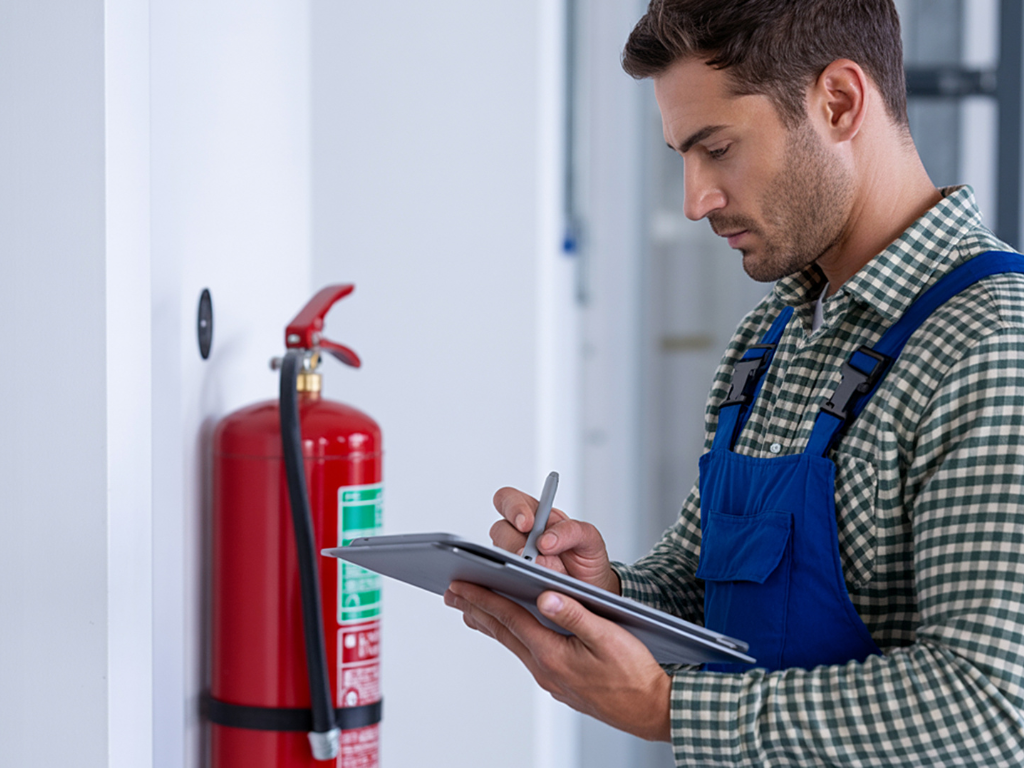
Extinguishers assume confidence. Many trained staff hesitate when smoke, alarms, and people converge. Fire safety coverage planning closes this gap by training role clarity, not just tool usage, which is why many sites start by standardising baseline behaviour through a fire safety awareness course.
Fire Risk Assessment Must Drive Training Decisions
Risk assessment is the foundation, not paperwork
A real fire risk assessment evaluates ignition sources, fuel load, building layout, and occupancy patterns. It also evaluates human behaviour under emergency conditions.
Key factors that influence training depth include:
- Electrical load and equipment density
- Storage of flammable materials
- Vertical evacuation complexity
- Public access versus controlled access
- Night and weekend staffing levels
Singapore’s Workplace Safety and Health Council expects employers to align preparedness with realistic risks, not generic assumptions.
Office versus industrial risk is not a binary choice
Modern offices contain server rooms, pantry equipment, lithium battery storage, and contractors working after hours. Industrial sites may have highly controlled zones with strong safeguards.
Training decisions must follow actual risk exposure, not job titles.
What Fire Safety Training Should Cover in 2026
Fire prevention strategy comes before response
Fire safety training should first reduce the likelihood of ignition through:
- Early hazard recognition
- Unsafe practice reporting
- Permit-to-work understanding
- Contractor supervision awareness
Prevention capability lowers incident frequency more effectively than reactive training alone.
Workplace fire response readiness requires sequencing
When a fire starts, response decisions occur in seconds. Effective training clarifies:
- When to attempt first response
- When to withdraw and evacuate
- Who gives the evacuation signal
- Who manages assembly and accountability
Poor sequencing causes congestion, panic, and secondary injury.
This is why a structured fire safety course Singapore must emphasise decision flow, not just equipment handling.
Fire Warden Coverage Is a Capacity Problem
Fire wardens are not symbolic roles
Fire wardens coordinate evacuation, manage zones, and relay information. Coverage planning asks:
- How many wardens are present per shift?
- Are they distributed across floors?
- Who replaces them during leave?
Many worksites technically appoint wardens but lack coverage redundancy, leaving gaps during real incidents.
Training depth matters more than headcount
A smaller number of well-trained wardens with clear authority often outperform a large list of lightly trained names.
Fire safety coverage planning prioritises competence density, not numbers.
Emergency Preparedness Must Match Building Reality
Vertical evacuation changes everything
High-rise buildings introduce:
- Stairwell congestion
- Fatigue during descent
- Communication loss between floors
Fire safety planning must train wardens and staff to manage paced evacuation, not panic-driven movement.
Guidance from the Singapore Civil Defence Force emphasises controlled evacuation and early coordination to prevent secondary harm during fires.
Assembly point management is often ignored
Evacuation does not end outside the building. Assembly point control prevents:
- Re-entry risks
- Missing persons confusion
- Emergency responder obstruction
Fire safety coverage includes post-evacuation control, not just exit execution.
Why Fire Safety Training Must Be Scenario-Based
Fires rarely match textbook examples
Smoke spreads unevenly. Alarms trigger unexpectedly. People freeze or run.
Scenario-based training prepares staff for:
- Partial visibility
- Conflicting instructions
- Equipment failure
- Injured colleagues
This is where workplace fire response readiness becomes measurable.
Tabletop drills outperform memorisation
Short scenario discussions often reveal:
- Role overlap confusion
- Decision bottlenecks
- Communication blind spots
They also reinforce calm thinking under pressure.
Fire Safety Coverage for Multi-Tenant and Shared Sites
Shared responsibility creates blind spots
In business parks and mixed-use buildings, fire safety responsibility is often split between landlord and tenant.
Coverage planning must clarify:
- Who initiates evacuation
- Who communicates with SCDF
- Who manages shared assembly areas
Ambiguity here delays response.
Contractor and visitor exposure is real risk
Temporary occupants often lack training but increase ignition risk. Fire safety planning must account for untrained presence, not just employees.
Regulatory Expectations Are Shifting Subtly
Investigations focus on foreseeability
Post-incident reviews increasingly ask:
- Was the response plan realistic?
- Were trained personnel available?
- Did the employer anticipate the scenario?
This aligns with broader WSH fire safety management principles that evaluate preparedness quality, not just compliance status.
How to Build a Fire Safety Coverage Plan That Holds Up
Start by asking:
- Who is present during the highest-risk hours?
- Who makes the first response decision?
- How is evacuation coordinated under stress?
- Who accounts for people after exit?
Then align:
- Training depth
- Role coverage
- Drill frequency
- Leadership oversight
Fire safety coverage is a system, not a checklist.
Conclusion
Fire safety in 2026 is about response capability, not wall-mounted hardware. Worksites that plan beyond extinguishers and signage reduce risk, damage, and disruption when incidents occur.
If you want fire safety coverage that holds up under real conditions, Advanced Safe Consultants can help you assess your fire risks and align the right training for your worksite.
FAQs About Fire Safety Course Singapore
What does a fire safety course in Singapore typically cover?
A fire safety course Singapore trains staff in fire prevention, first response decision-making, evacuation coordination, and fire warden responsibilities aligned with SCDF expectations.
How often should fire wardens be trained?
Fire wardens should receive refresher training when building layouts change, staffing patterns shift, or new risks are introduced, not just on fixed cycles.
Are fire drills enough for preparedness?
Drills test movement. Preparedness requires role clarity, decision confidence, and scenario understanding beyond physical evacuation.
Do offices really need fire safety training?
Yes. Modern offices contain electrical loads, batteries, and after-hours work that create real fire risk despite low manual activity.