- 27 Feb 2026

Choosing the right first aid course Singapore employers need is not about ticking a box. It affects response time, injury outcomes, and audit defensibility. This blog will walk you through the five first aid courses workplaces in Singapore actually need, when each is required, and how to match training to real risk.
Why First Aid Course Selection Is a Compliance Decision
First aid is regulated through outcomes, not branding
Singapore does not mandate a single universal first aid course for all workplaces. Requirements depend on workforce size, risk level, and operational context. The Ministry of Manpower focuses on whether employers have trained personnel who can respond effectively to foreseeable injuries at their sites.
This means course selection must reflect risk exposure. An office with screen-based work does not need the same first aid capability as a logistics hub or construction site, a distinction explained in workplace safety risk management implementation in Singapore.
Employer responsibility does not stop at training
Training equips people. Employers remain responsible for response systems, equipment, coverage ratios, and refresher planning. During inspections, MOM assesses whether first aid readiness matches workplace hazards, reflecting the employer duties set out under the Workplace Safety and Health Act administered by the Ministry of Manpower.
This is why understanding workplace first aid requirements Singapore employers face matters more than simply enrolling staff in the nearest course.

How MOM Views First Aid Coverage at Work
Coverage is linked to headcount and risk
MOM guidance expects employers to appoint trained first aiders based on:
- Number of employees on site
- Nature of work and injury likelihood
- Physical layout and response time constraints
A single trained staff member may be sufficient in a small office. High-risk or dispersed operations require more robust coverage.
Certification must be valid and current
Expired certificates are treated as non-compliant. Employers must track validity periods and plan renewals before lapses occur. This is one of the most common audit findings related to first aid.

1. Occupational First Aid Course (OFA)
Who Needs It
High-risk environments including:
- Construction sites
- Manufacturing plants
- Warehouses and logistics hubs
- Engineering workshops
What It Covers
Occupational First Aid is designed for industrial settings where injuries can be severe. The course includes:
- Management of major bleeding and fractures
- Workplace trauma scenarios
- Industrial injury response protocols
- CPR and AED certification
- Scene control before emergency services arrive
In high-risk environments, injury severity is typically higher and response time matters. Occupational First Aid prepares designated first aiders to stabilise casualties until paramedics take over.
When It Is Required
Where workplace risk assessment identifies significant injury exposure, MOM first aider requirement expectations typically point toward Occupational First Aid rather than Standard First Aid.
Industrial settings generally require deeper competence due to machinery, manual handling risks, height exposure, and hazardous materials.
2. Standard First Aid Course (SFA)
Who Needs It
Commonly suitable for:
- Offices
- Retail stores
- Schools and teachers
- Sports coaches and instructors
- Low to moderate risk workplaces
What It Covers
Standard First Aid prepares participants to manage:
- Cuts, burns and minor injuries
- Fainting and seizures
- Sprains and fractures
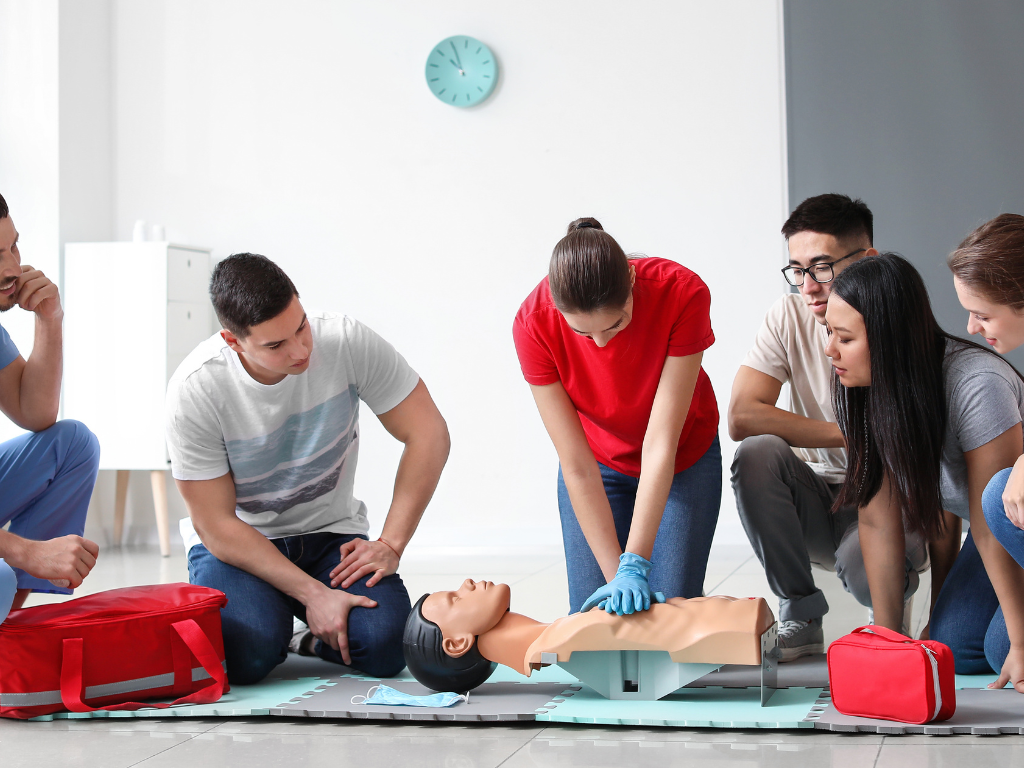
- CPR and AED usage
- Basic emergency response procedures
In office environments, most injuries are minor. However, sudden cardiac arrest can occur without warning. According to the Singapore Civil Defence Force public AED and CPR advisory, early CPR significantly increases survival chances before paramedics arrive. Standard First Aid ensures designated staff can respond effectively.
When It Is Appropriate
Standard First Aid aligns well with office based operations where injury likelihood is lower and emergency medical services are readily accessible.
This is often sufficient for employers whose risk profile does not involve heavy machinery or industrial hazards.
3. Child First Aid Course
Who Needs It
- Preschools and childcare centres
- Student care centres
- Enrichment centres
- Parents and caregivers
Children present different physiological and behavioural considerations during emergencies. Airway management, choking response, and injury patterns differ significantly from adults.
What Makes It Different
Child First Aid focuses on:
- Infant and child CPR
- Choking management for babies and toddlers
- Fever related emergencies
- Childhood injury scenarios
- Pediatric trauma stabilisation
In childcare environments, the first aider must understand age specific response techniques. Adult first aid protocols are not interchangeable with pediatric procedures.
When It Is Required
Preschool operators and childcare centres typically require staff trained specifically in child focused emergency response. Using a general workplace first aid certification alone may not adequately address child specific risks.
4. Basic Cardiac Life Support (BCLS) Course
Who Needs It
- Healthcare assistants
- Nursing staff
- Caregivers
- Clinics
- Eldercare facilities
What It Focuses On
Basic Cardiac Life Support concentrates on:
- High-quality CPR
- AED deployment
- Airway management
- Team-based resuscitation response
BCLS training emphasises clinical precision and repetitive hands-on drills. It is designed for environments where cardiac events are more foreseeable.
Why It Matters
Cardiac arrest survival depends heavily on immediate intervention. High-quality CPR within the first few minutes dramatically affects outcomes.
In healthcare or eldercare settings, having personnel trained specifically in cardiac life support improves emergency response readiness beyond general first aid coverage.
5. CERT First Aid Course
CERT stands for Company Emergency Response Team.
Who Needs It
- Organisations forming in-house emergency response teams
- Large commercial buildings
- Industrial facilities
- Companies seeking structured emergency preparedness
What It Covers
CERT First Aid, often known as Basic First Aid for emergency teams, supports:
- Workplace emergency coordination
- Fire response integration
- Evacuation procedures
- Initial casualty management
- Team-based emergency roles
Unlike general public first aid, CERT training integrates first aid capability into a broader emergency response framework.
When It Is Useful
Where organisations maintain internal emergency response structures, CERT training ensures first aid skills align with evacuation plans, fire drills, and structured incident command procedures.
Office vs Industrial First Aid Requirements
Office environments
Offices typically require:
- SFA-certified first aiders
- CPR and AED coverage where headcount is high
- Clear response procedures and signage
Injuries are usually minor, but medical emergencies still occur. Preparedness focuses on speed and coordination.
Industrial and operational sites
These environments require:
- OFA-certified first aiders
- Higher first aider to employee ratios
- Clear escalation and evacuation protocols
Injury severity and complexity demand deeper competence.
How to Choose the Right Course for Your Workplace
Start with risk assessment
Course selection should follow risk assessment, not precede it. Identify:
- Likely injury types
- Response time constraints
- Workforce size and shift patterns
This ensures training aligns with actual exposure.
Match certification to role, not convenience
Not every employee needs the same training. Designated first aiders need deeper competence. Supervisors may need refresher or CPR coverage. Blanket training wastes resources without improving readiness.
Plan for continuity
First aid coverage must survive leave, turnover, and shift changes. Employers should train beyond the minimum headcount to maintain resilience.
Where Training Fits Within a Wider Safety System
First aid training is one layer of workplace safety. It supports, but does not replace:
- Hazard controls
- Safe work procedures
- Incident reporting and review
- Emergency planning
Organisations that treat first aid as a standalone solution often fail audits. Those that integrate it into safety systems demonstrate maturity.
Common Employer Missteps to Avoid
Treating first aid as a one-time task
Certification expires. Skills fade. Workforce changes. First aid planning must be ongoing.
Ignoring site-specific realities
Training that does not reflect site layout, access points, or equipment locations underperforms in real emergencies.
Underestimating audit scrutiny
Inspectors look for alignment. Training records, first aid boxes, AED placement, and procedures must tell the same story.
Conclusion
First aid courses are not interchangeable. The right choice depends on risk, workforce, and response realities.
Break the line
If you want first aid training that stands up during inspections and real emergencies, select courses based on risk assessment and maintain them as part of a living safety system.
FAQs About First Aid Course Singapore
How many first aiders are required in a Singapore workplace?
MOM guidance links coverage to workforce size and risk level. High-risk sites need more trained first aiders. Employers remain responsible for adequate coverage.
Is Standard First Aid enough for all workplaces?
No. Offices may rely on SFA, but industrial environments often require Occupational First Aid to meet risk and audit expectations.
How often must first aid certification be renewed?
All first aid courses expire after 2 years. Employers must track expiry dates and schedule refreshers before lapses occur.
Does installing an AED remove the need for training?
No. AEDs are only effective when staff are trained to use them. CPR and AED certification is essential.
Can one provider cover multiple first aid courses?
Yes. Providers such as Advanced Safe Consultants deliver a range of MOM-recognised first aid courses aligned to different workplace risks.