- 23 Feb 2026
Choosing the right occupational first aid course Singapore employers rely on is a compliance decision, not a training preference. This blog will walk you through who needs Occupational First Aid, what it actually covers, and when it becomes mandatory under Singapore’s workplace safety framework, and how that training fits into the broader suite of accredited programmes on the Occupational First Aid certification.
Why Occupational First Aid Exists in Singapore
Occupational first aid is about foreseeable harm
Occupational First Aid is designed for workplaces where injuries can escalate quickly without immediate, competent intervention. It addresses environments with machinery, manual handling, vehicles, or hazardous processes. The intent is practical readiness. Trained responders stabilise casualties, manage scenes, and coordinate escalation until professional medical help arrives.
This differs from general first aid. Office environments see slips, minor cuts, and sudden illness. Industrial sites face crush injuries, amputations, severe bleeding, and traumatic incidents. The response scope must match the risk profile.
The regulatory lens focuses on employer control
Singapore’s safety framework evaluates whether employers have anticipated harm and put competent controls in place. Training is one control. In high-risk settings, baseline first aid is not enough. Occupational First Aid is the expected standard because it equips responders to manage complexity, not just symptoms, a principle embedded in the Workplace Safety and Health Act employer duty of care requirements published by the Ministry of Manpower.

Who Needs an Occupational First Aid Course
High-risk workplaces
Occupational First Aid is expected where work activities present a realistic chance of serious injury. Common examples include:
- Manufacturing lines with moving machinery
- Warehousing and logistics operations with forklifts
- Construction and facilities maintenance
- Marine, shipyard, and offshore support activities
These environments share two traits. Injuries can be severe, and response time matters. Occupational First Aid prepares designated first aiders to act decisively under pressure.
Medium risk operations with response constraints
Some workplaces are not inherently dangerous, but face delayed emergency response due to layout, size, or location. Large campuses, multi-level facilities, and remote sites fall into this category. Occupational First Aid becomes appropriate because the first aider must manage the situation longer before handover.
Employers with incident history
Repeated injuries, near misses, or enforcement actions change expectations. Where incidents show that basic response has failed, upgrading to Occupational First Aid demonstrates corrective action and risk ownership, a pattern commonly seen among SMEs reviewed in Occupational First Aid course requirements for Singapore SMEs.

When Occupational First Aid Becomes Mandatory
The WSH Act expectation
Singapore’s Workplace Safety and Health Act does not publish a single table stating when Occupational First Aid is mandatory. Instead, it places responsibility on employers to ensure adequate first aid arrangements based on risk. In practice, MOM expects Occupational First Aid in high-risk environments because anything less is not defensible.
If an injury is foreseeable and severe, and the employer relied on basic first aid, that decision is scrutinised.
MOM inspection patterns
During inspections, officers examine:
- Nature of work performed
- Severity of potential injuries
- Number of workers exposed
- Availability and competence of first aiders
Where risks are high, inspectors expect to see Occupational First Aid certification among designated responders. Absence of this training often results in findings, even if staff hold general first aid certificates.
Tender and client requirements
Beyond enforcement, many clients and principals require Occupational First Aid as a contractual condition. It signals maturity and reduces downstream liability. For contractors, this requirement is effectively mandatory to secure work.
What the Occupational First Aid Course Covers
Expanded emergency response scope
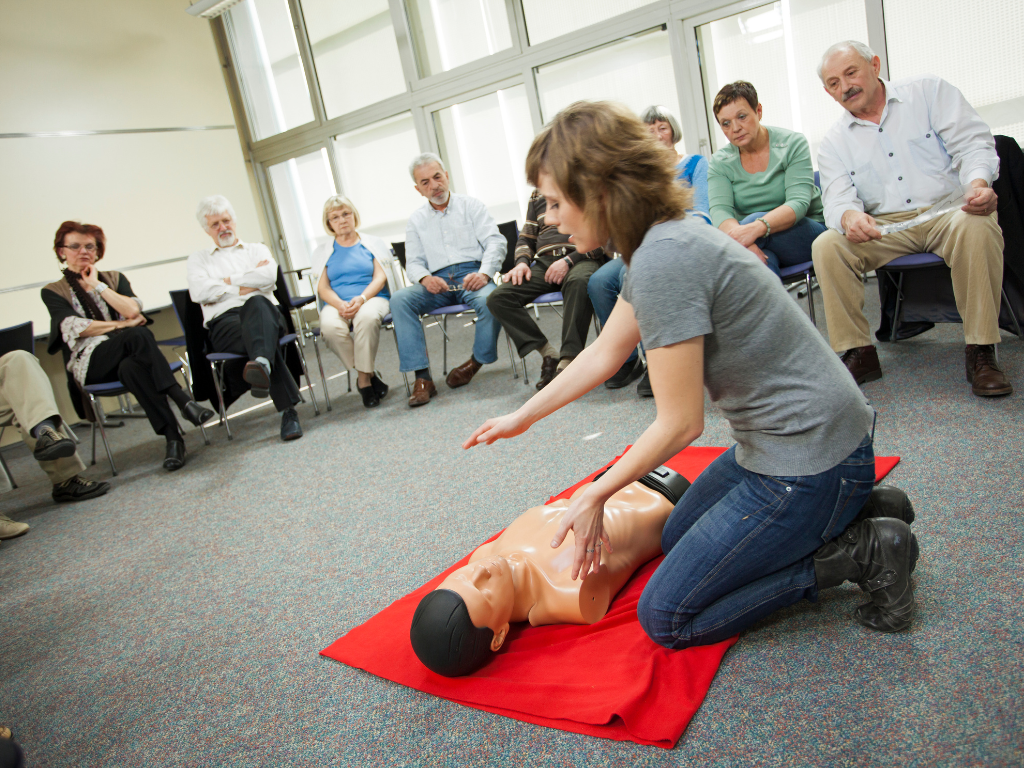
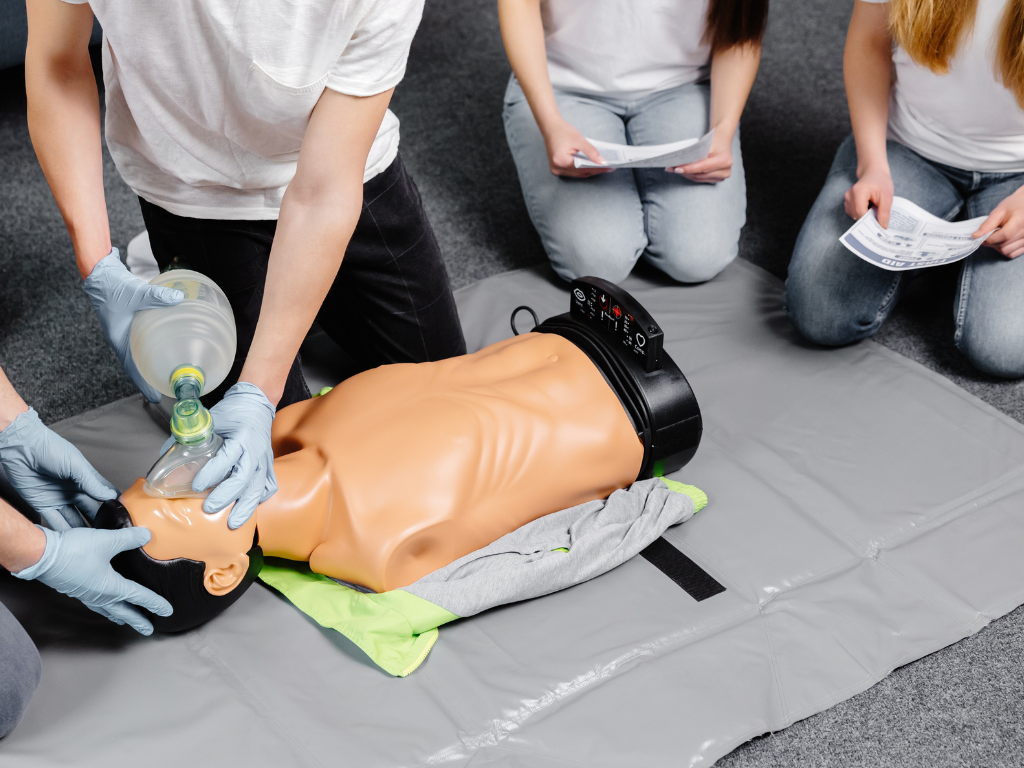
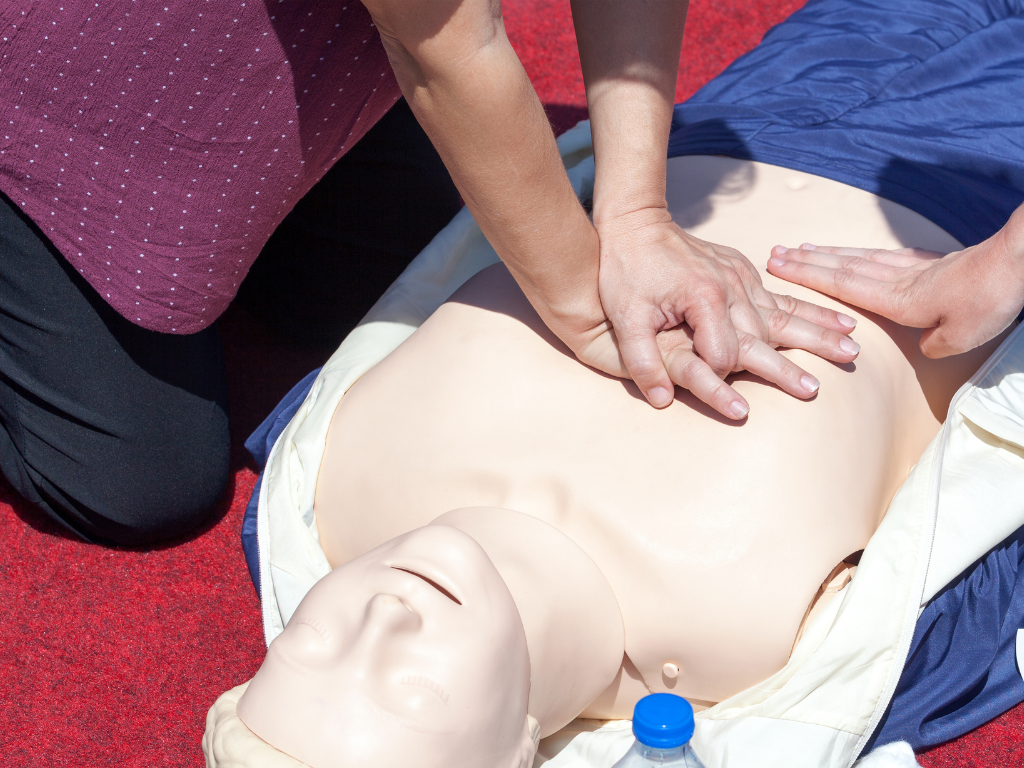
Occupational First Aid goes beyond basic injury care. It prepares responders to manage complex and traumatic incidents. Core competencies include:
- Severe bleeding control and shock management
- Crush injuries and amputations
- Head, spinal, and multiple trauma assessment
- Scene safety and casualty prioritisation
- Prolonged care until evacuation
The emphasis is decision making under stress. First aiders learn to stabilise casualties while protecting themselves and others.
Workplace-specific application
Unlike generic courses, Occupational First Aid contextualises response to industrial settings. Participants learn how to operate within noisy, confined, or hazardous environments. They practise communication, delegation, and coordination with supervisors and emergency services.
This practical focus mirrors international safety management principles found in ISO 45001 occupational health and safety management system standards, where emergency preparedness is tied directly to risk exposure.
Occupational First Aid vs Standard First Aid
Depth of training
Standard First Aid builds foundational capability. Occupational First Aid assumes that foundation and adds layers. The difference is not academic. It is operational.
Standard First Aid teaches how to respond to injuries. Occupational First Aid teaches how to manage emergencies at work.
Suitability by risk level
Standard First Aid suits offices and low-risk environments. Occupational First Aid suits environments where injuries can be life-threatening or complex. Using the wrong course for the wrong environment creates a response gap.
Audit defensibility
In audits and investigations, employers must justify their choices. When risks are high, Occupational First Aid is the defensible choice. It shows that training decisions were aligned with foreseeable harm.
How Many Occupational First Aiders Are Needed
Coverage depends on exposure
There is no universal ratio. Coverage depends on:
- Number of workers per shift
- Work area size and layout
- Simultaneous high-risk activities
- Shift patterns and overtime
High-risk sites usually require multiple Occupational First Aiders per shift. Single coverage is rarely adequate.
Planning for absence and turnover
Compliance fails when trained staff are on leave or resign. Employers should train beyond the minimum to maintain continuity. This is a common failure point during inspections.
Certification Validity and Refresher Expectations
Validity periods matter
Occupational First Aid certifications have defined validity periods. Allowing them to lapse is treated as non-compliance. Employers must track expiry dates and schedule renewals early.
Skill degradation is real
High-risk response skills fade without practice. Refresher training reinforces muscle memory and decision-making. It also updates responders on current best practices.
Employers who delay refreshers until after expiry expose themselves during audits.
Common Misunderstandings Employers Make
Treating Occupational First Aid as optional
Some employers view Occupational First Aid as a nice-to-have. In high-risk environments, this is incorrect. It is the expected standard.
Assuming general first aid is sufficient
General first aid does not equip responders for severe trauma or prolonged care. Using it in industrial settings creates a false sense of readiness.
Training without systems
Even Occupational First Aid cannot compensate for missing systems. Employers must pair training with:
- Clear emergency response plans
- Accessible first aid equipment
- Defined escalation protocols
- Supervisor support during incidents
Training works when systems support it.
Integrating Occupational First Aid Into a Safety System
Start with risk assessment
Occupational First Aid should be selected after risk assessment, not before. Identify tasks with potential for serious injury and design response capability around them.
Align training with roles
Not every worker needs Occupational First Aid. Designated responders do. Supervisors need awareness and coordination skills. Clarity prevents overtraining and gaps.
Review after incidents
Every incident tests the system. Employers should review whether Occupational First Aid coverage was sufficient and adjust accordingly.
Choosing the Right Training Provider
Look beyond course delivery
The provider should understand industrial risk and emergency response realities. Course quality is defined by how well it prepares responders for real incidents, not how quickly certificates are issued.
Integration with broader safety competence
Providers that offer Occupational First Aid alongside other safety training and consultancy support reduce fragmentation. Findings from risk assessments can be translated into targeted training pathways.
This integrated approach is a core strength of Advanced Safe Consultants Pte Ltd, which delivers Occupational First Aid as part of a wider workplace safety capability.
Conclusion
Occupational First Aid is not an upgrade for its own sake. It is the appropriate response to high risk work. Employers who match first aid capability to real hazards protect workers, strengthen audit defensibility, and reduce incident impact.
Break the line
If your operations involve serious injury risk, Occupational First Aid should be part of your baseline safety system, not an afterthought.
FAQs About Occupational First Aid Course Singapore
Who is required to take an Occupational First Aid course in Singapore?
Designated first aiders in high-risk workplaces such as manufacturing, logistics, and construction are expected to hold Occupational First Aid certification.
Is Occupational First Aid mandatory under the WSH Act?
The Act requires adequate first aid arrangements based on risk. In high-risk environments, Occupational First Aid is the defensible standard.
How is Occupational First Aid different from Standard First Aid?
Occupational First Aid covers severe trauma, scene management, and prolonged care in industrial settings, which Standard First Aid does not.
How often must Occupational First Aid be renewed?
Validity periods apply. Employers should track expiry dates and schedule refreshers before certificates lapse.
Can one provider handle Occupational First Aid and other safety training?
Yes. Integrated providers align Occupational First Aid with broader safety competence and risk management.