- 25 Mar 2026
Searching for bizSAFE Level 2 certification services Singapore often leads companies into a mix of course pages, consultancy offers, and vague claims about approval. This blog will walk you through what bizSAFE Level 2 actually involves, which kinds of providers offer it, how to verify accreditation, and how to choose a provider that fits your operations in 2026.
What bizSAFE Level 2 Certification Actually Covers for Employers
bizSAFE Level 2 is built around risk management, not just classroom attendance. At this stage, a company must have a trained Risk Management Champion who can help develop a risk management plan and conduct risk assessments for the workplace. The wider legal context matters here because Singapore employers are already required to assess risks, control them, and communicate them to relevant stakeholders under the WSH framework.
In practice, the person attending the course is usually a supervisor, manager, team leader, safety coordinator, or owner-manager who can influence operations. That matches how the course is positioned by Advanced Safe Consultants Pte Ltd, which states the course is suitable for supervisors, managers, team leaders, employees in higher-risk industries, and safety professionals.
The training outcome is not merely a certificate for an individual. The course is meant to equip the appointed person to form a risk management team, identify hazards, assess risks, develop controls, document actions, and communicate the plan across the business. Official bizSAFE guidance describes Level 2 as recognition that the company has a trained RM Champion who can facilitate these tasks.
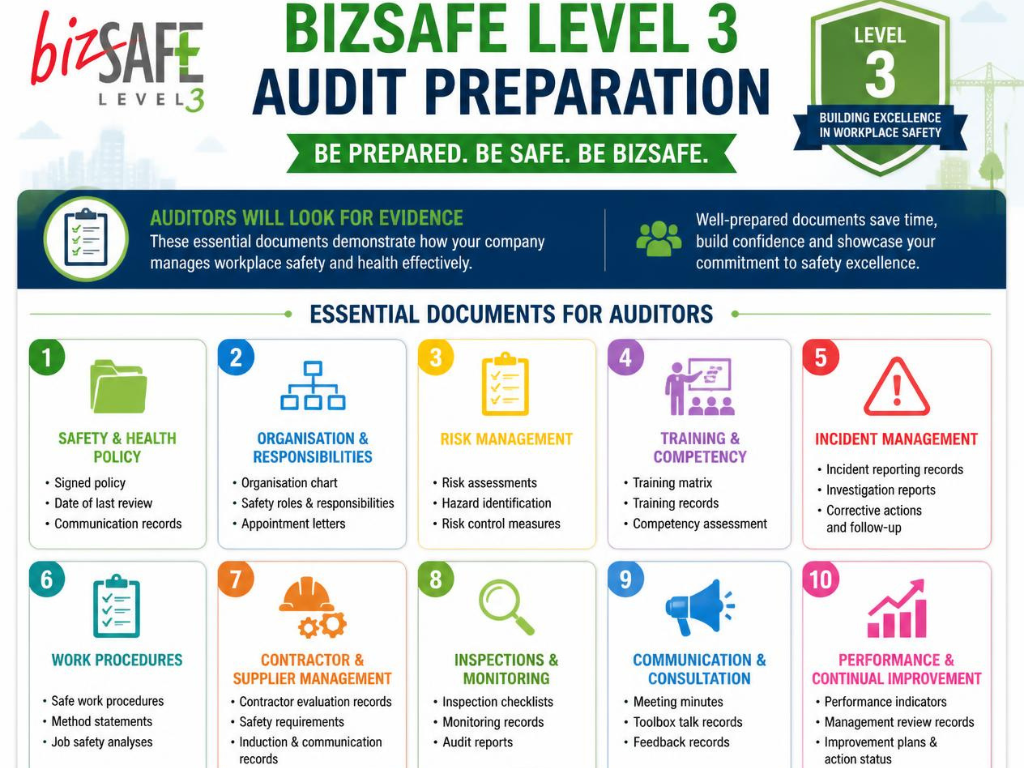
One point many SMEs miss is validity. The company’s bizSAFE Level 2 certificate is valid for 6 months from approval and is not renewable once it expires. That is why Level 2 should be treated as a progression step, not an end state. The usual next move is Level 3, where the company demonstrates implementation through risk assessments and an audit pathway.
Which Companies Offer bizSAFE Level 2 Certification Services in Singapore
When businesses compare bizSAFE Level 2 training providers Singapore, they usually encounter three broad provider types.
Independent WSH consultancies
These are safety consultancies that provide both training and operational advisory services. They often appeal to SMEs because the course can sit alongside practical support such as documentation review, HIRADC guidance, or Level 3 readiness planning. Advanced Safe Consultants Pte Ltd falls into this category, with both a dedicated bizSAFE Level 2 course page and a broader WSH consultancy services page covering risk management services and workplace safety advisory.
Larger training institutions
These providers tend to focus on course delivery at scale. They may have more frequent schedules, a bigger training calendar, and centralised registration systems. For companies that already have internal safety capability and only need the course, this model can work well. Officially, businesses should still verify whether the provider appears in the approved training ecosystem before registering staff.
Industry-specific providers
Some training centres position themselves around sectors such as logistics, construction, facilities, or industrial operations. This can be useful when the trainer’s examples reflect the hazards your teams actually face. Sector context matters because risk management is not abstract. A warehouse, marine site, and office fit-out contractor do not assess exposure in the same way. The Code of Practice on WSH Risk Management is broad, but provider quality often shows up in how well the training translates the code into real work processes.
A key filter applies to all three categories: only approved or recognised training channels should be considered. The WSH Council publishes a BizSAFE-approved training providers listing, and MOM directs employers to accredited WSH course and training provider search routes, including MySkillsFuture for WSQ courses.
How to Verify if a bizSAFE Level 2 Training Provider Is Accredited
This is where buyer discipline matters. Not every vendor marketing “bizSAFE support” is an approved training provider for the Level 2 course itself.
Start with official sources. The safest route is to check the bizSAFE Approved Training Providers listing on the WSH Council website, then cross-check course or provider details through MOM’s accredited WSH course and training provider search and MySkillsFuture’s course search for the WSQ course title.
Watch for warning signs. A vendor should not be vague about course title, assessment method, delivery mode, or certificate outcome. For a proper Level 2 pathway, the training should point to the WSQ risk management competency and the participant should receive a Statement of Attainment upon successful completion where applicable. Advanced Safe’s course page, for example, specifies a two-day classroom format, assessment components, and SOA outcome.
The risk of choosing a non-approved vendor is simple. Staff may complete a course that does not support the company’s bizSAFE application properly. The WSH Council states clearly that attending a bizSAFE course does not automatically grant company recognition. The company still needs to submit the proper application and supporting documents.
Training-Only vs Training + Consultancy Packages: What SMEs Should Choose
A training-only option is often enough when the company already has internal WSH capability, understands documentation requirements, and simply needs an RM Champion trained. This suits firms with an existing safety team, mature documentation practices, or operations that are relatively stable.
A training + consultancy package becomes more valuable when the course is only one part of the problem. Many SMEs do not struggle with attendance. They struggle with building a usable plan, assigning owners, reviewing hazards properly, or preparing for the next stage. Consultancy support can help with risk assessment structure, supporting documents, corrective actions, and the transition to Level 3. Advanced Safe’s service pages describe this broader support model clearly through its risk management plan guide and WSH advisory services.
That said, companies should be careful not to confuse consultancy with the audit function required later. For Level 3, the WSH Council states that the auditing organisation must be separate and independent from the consultancy organisation. That separation matters when planning long-term vendor relationships.
Key Factors to Compare When Choosing bizSAFE Level 2 Course Providers in 2026
Trainer credentials and industry experience
A credible trainer should understand workplace hazards beyond slides. Adult education qualifications matter, but so does operational familiarity. Companies in logistics, engineering, manufacturing, warehousing, and contracting usually learn faster when the trainer can discuss permits, task sequencing, contractor coordination, vehicle movement, or machinery risk in practical terms.
Course format, schedule, and delivery mode
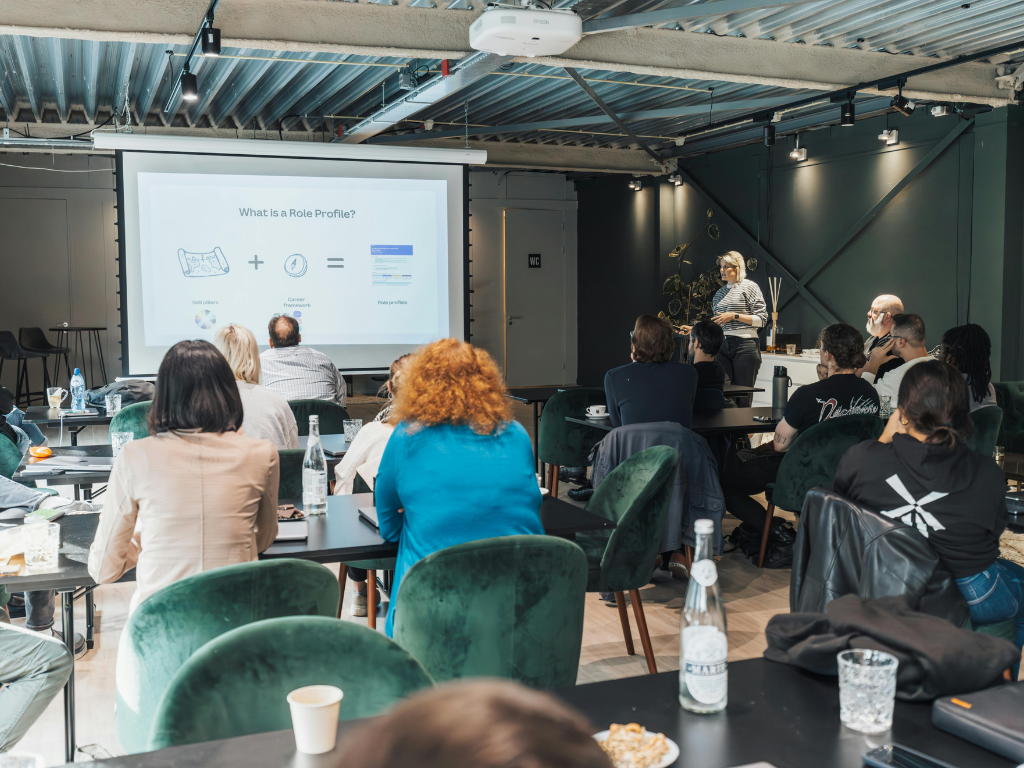
Some companies need weekday classroom training. Others need compact scheduling that does not disrupt operations. Advanced Safe currently positions its Level 2 course as a 2-day classroom programme, which gives buyers a clear expectation upfront. That kind of clarity is useful when planning coverage for supervisors or line leaders.
Pass support and assessment guidance
The provider should explain how participants are assessed and what support is given before assessment. Advanced Safe states that its course includes written and case study assessments and requires competency in both components. That is the kind of detail companies should look for before booking seats.
Class size and interaction level
For risk management training, discussion quality matters. Small or moderate cohorts often produce better learning because participants can work through real hazards, controls, and documentation logic instead of passively listening.
Post-course support for bizSAFE progression
This is often the deciding factor for SMEs. Some providers stop at attendance. Others help translate training into action. Support with HIRADC logic, internal documentation, and next-step planning is valuable when the company wants to move toward implementation rather than hold a certificate with no operational change. Related resources such as HIRADC assessment guidance and workplace safety training that turns HIRADC into control are a good sign that a provider understands post-course execution.
Why Many Companies Choose Advanced Safe Consultants Pte Ltd for bizSAFE Level 2
Advanced Safe Consultants Pte Ltd is a Singapore-based WSH consultancy and training provider with service lines covering workplace safety courses, risk management, first aid, fire safety, and consultancy support. Its bizSAFE Level 2 page gives buyers useful specifics rather than broad claims: course duration, subsidy notes, assessment method, target participants, and registration pathway. Its WSH services page also shows that the company works across consultancy, inspections, documentation support, and bizSAFE-related risk management services.
That combination tends to suit SMEs, logistics operators, contractors, engineering firms, and businesses that want both course delivery and practical compliance support. The appeal is not just convenience. It is the ability to connect training with what happens after the class ends.
Typical Costs and Time Commitment for bizSAFE Level 2 Certification
Time commitment is usually straightforward. Advanced Safe lists its Level 2 course as 2 days and notes a 16-hour duration in its FAQ section. That aligns with how many providers structure the course in Singapore.
Pricing varies by provider, funding status, learner profile, and whether the company purchases training alone or broader support. On Advanced Safe’s public page, the full course fee shown is S$320 before GST, with different subsidy illustrations for eligible individuals and corporate participants. Official bizSAFE guidance also notes that companies may be eligible for training subsidies for WSQ courses, but buyers should verify eligibility directly with the provider instead of assuming it applies.
What matters more than the cheapest fee is what is included. Compare course duration, assessment support, materials, registration clarity, post-course guidance, and whether there is practical help for the company’s next compliance step.
Common Mistakes Companies Make When Selecting a Provider
The first mistake is buying on price alone. A low course fee means little if the provider gives weak guidance or poor scheduling support.
The second is failing to verify approval status. In Singapore, that is avoidable because official listings exist.
The third is choosing a provider with no fit for your operational reality. Warehousing, transport, manufacturing, and site-based contracting each carry different hazard patterns.
The fourth is ignoring what happens after the course. Level 2 is time-limited, and progression matters. A provider that can help the company move from trained person to implemented system usually creates better value over six to twelve months.
Step-by-Step Process to Enrol in a bizSAFE Level 2 Course
- Identify a provider that offers the WSQ risk management course relevant to bizSAFE Level 2.
- Verify approval using the WSH Council and MOM-recognised search routes.
- Confirm course schedule, delivery mode, assessment format, and participant suitability.
- Register the staff member who will act as the RM Champion.
- Complete the training and assessment.
- Receive the course outcome documentation, such as the SOA where applicable.
- Submit the company’s bizSAFE Level 2 application with the required supporting documents to the WSH Council.
How bizSAFE Level 2 Helps Companies Progress Toward Higher bizSAFE Levels
Level 2 matters because it formalises who in the company can lead risk management. That becomes the foundation for Level 3, where the organisation must show that risk assessments are actually implemented across work activities and processes. The WSH Council’s bizSAFE structure makes that progression explicit.
The wider business value is not limited to compliance. Stronger hazard identification, clearer controls, better owner assignment, and more disciplined reviews all improve operational resilience. In practical terms, that means fewer blind spots during inspections, safer daily work, and a cleaner path toward contractor prequalification where bizSAFE is often expected.
Conclusion
Choosing a provider for bizSAFE Level 2 certification services Singapore is not just about finding a classroom seat. It is about selecting an approved course pathway, confirming the provider’s credibility, and deciding whether your company also needs implementation support after training. For companies that want both training and practical WSH guidance, Advanced Safe Consultants Pte Ltd is one Singapore-based option worth comparing carefully against your operational needs.
Ready to evaluate providers properly? Start with accreditation, course fit, post-course support, and whether the provider can help your business move from Level 2 training into real risk management execution.
FAQs About BizSAFE Level 2 Certification Services Singapore
How do I check if a bizSAFE Level 2 training provider is officially approved in Singapore?
Check the WSH Council’s approved training providers page and cross-reference the course through MOM’s accredited WSH training guidance or MySkillsFuture. That is the safest way to verify whether a provider supports the proper bizSAFE Level 2 training pathway.
Is bizSAFE Level 2 certification mandatory for all companies?
No, not all companies are legally required to hold bizSAFE Level 2. What is mandatory is risk management under Singapore’s WSH framework. bizSAFE is a recognised capability-building pathway that many companies pursue for compliance maturity, client requirements, or progression to higher bizSAFE levels.
How long does it take to complete bizSAFE Level 2 training?
Most providers structure the course over two days. Advanced Safe Consultants Pte Ltd, for example, lists the course as a 2-day classroom programme with a 16-hour duration.
Can bizSAFE Level 2 be completed online in Singapore?
Delivery mode depends on the approved provider and the specific course arrangement. Some WSH courses in Singapore may use classroom, blended, or other approved formats, but companies should verify the exact mode directly on the provider’s approved course listing before registering.
What happens after completing bizSAFE Level 2?
After the appointed participant completes the course, the company must still submit its bizSAFE Level 2 application and supporting documents to the WSH Council. Level 2 itself is valid for 6 months, so many companies move on quickly toward Level 3 implementation and audit readiness.