- 18 Jun 2026
Banksman vs traffic controller in Singapore is a distinction most worksites get wrong, and it shows up at audit. In 2025, vehicular incidents were the leading cause of workplace fatalities, 15 of 36 deaths reported by MOM. This blog walks you through which role your site needs, who regulates each, and which certification keeps you compliant, whether you run a warehouse, a factory floor, or oversee traffic control at work zones.
What’s the actual difference between a banksman and a traffic controller?
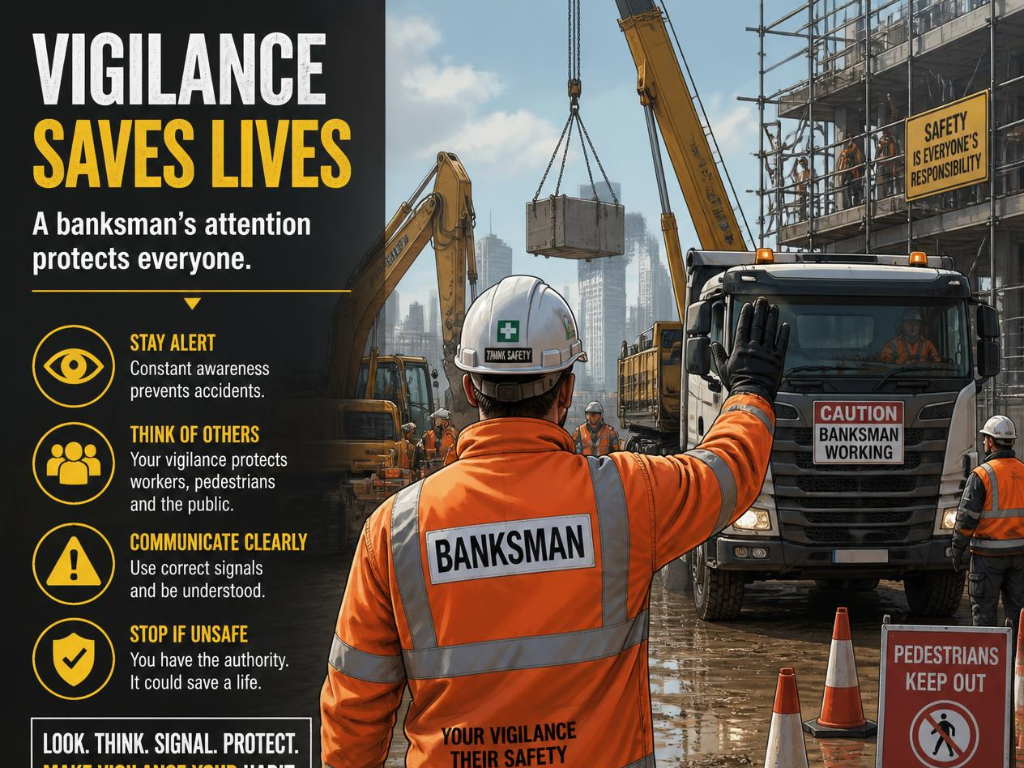
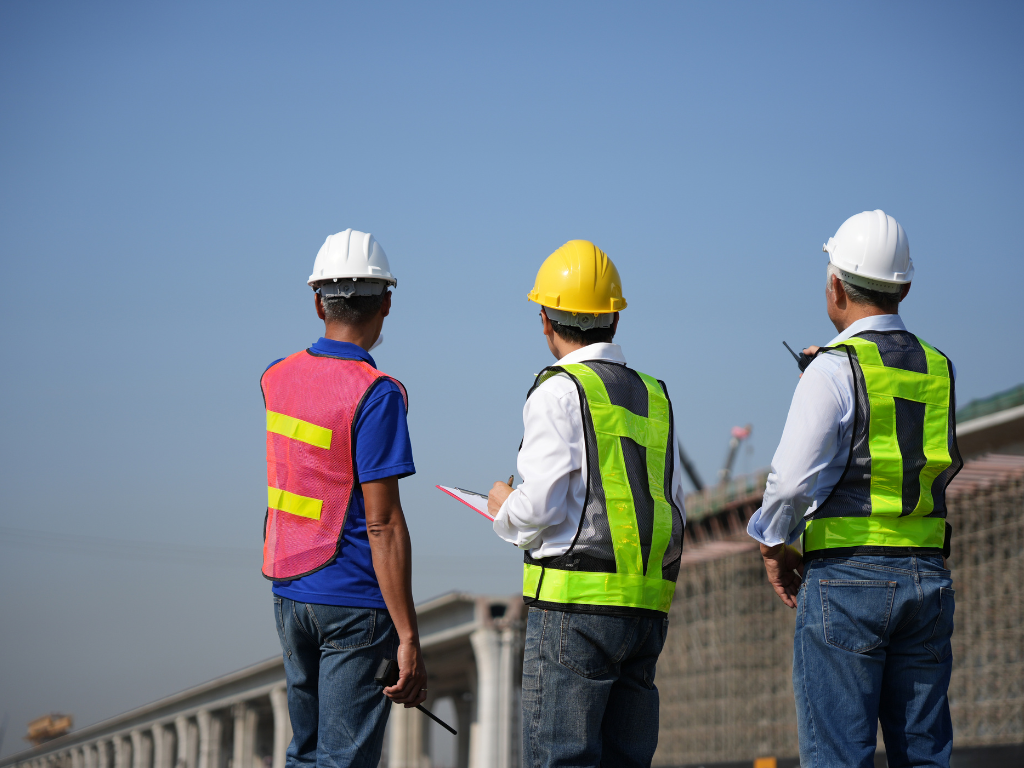
A banksman guides the movement of vehicles and machinery inside a worksite. A traffic controller manages public road traffic around a work zone. Same hi-vis vest, two different jobs, two different jurisdictions.
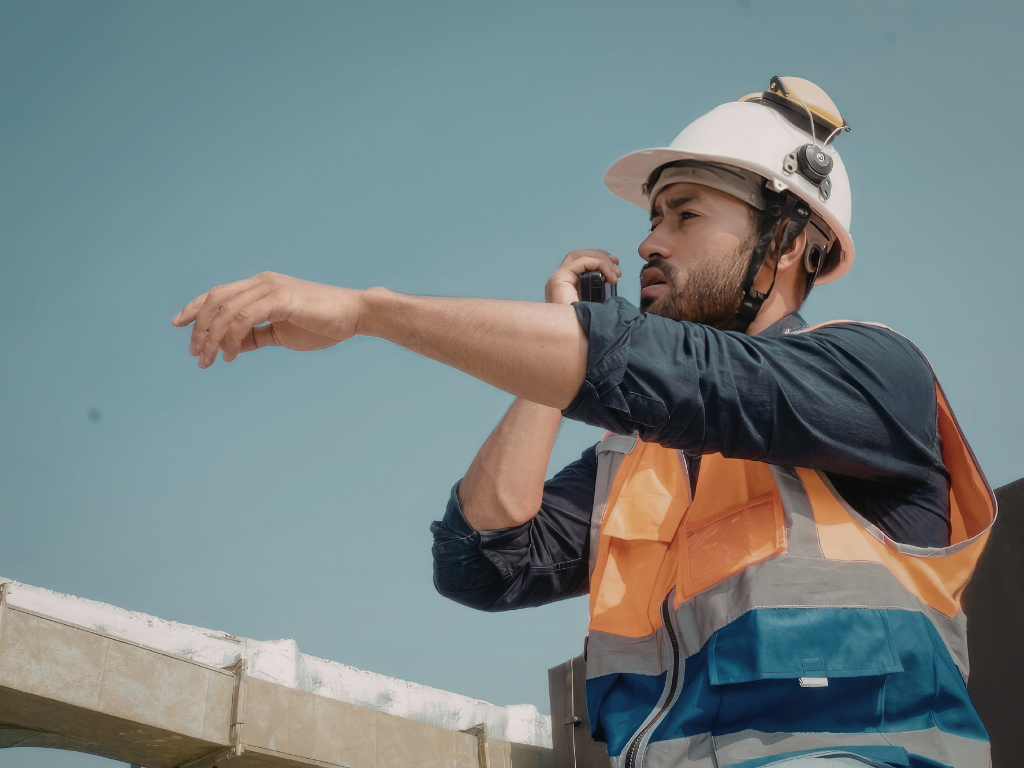
The banksman stands in the yard, the loading bay, or the construction deck, directing a reversing tipper or a slewing excavator past workers and structures using standard hand signals. The work is about machinery movement in a shared private space. A traffic controller stands at the edge of a live carriageway, placing cones, closing a lane, and waving public motorists through a works section under a Land Transport Authority plan. One protects people from machines on your site. The other protects road users from your works. A worker certified for one is not automatically cleared for the other.
Who regulates each role: MOM’s WSH Act or LTA’s Code of Practice?
This is where the compliance gap opens. The banksman sits under the Workplace Safety and Health Act, enforced by the Ministry of Manpower. The traffic controller sits under the LTA Code of Practice for Traffic Control at Work Zone, enforced by LTA.
That split decides everything downstream: who can do the work, what training they need, and which inspector turns up. Machinery movement on private land is an MOM matter. Works on a public street are an LTA matter. The current governing document for road work zones is the April 2026 Edition, which superseded the July 2019 edition and added lane status signs plus a new “Urgent Works in Progress” sign for emergency works. Many providers still quote the 2019 edition on their pages. If your traffic control plan references the old edition, that is the first thing an LTA audit will flag.
When is a banksman required on a Singapore worksite?
A banksman is required whenever vehicles or heavy machinery move in a space shared with workers or pedestrians. Reversing, blind spots, and tight manoeuvres are the trigger, not the type of vehicle.
That covers a lot of ground. A forklift backing out of racking in a logistics yard, a concrete truck reversing onto a construction deck, a mobile crane repositioning near a factory wall: each needs a trained spotter directing the move. The risk is real and current. MOM’s WSH National Statistics 2025 recorded a fatal and major injury rate of 23.8 per 100,000 workers in the Transportation and Storage sector, up from 18.4 in 2024, with vehicular incidents among the leading causes. Where machines and people share floor space, a banksman is the control that keeps them apart.
What does a banksman actually do?
A banksman directs vehicle and machinery movement using standard hand signals, manages blind spots the driver cannot see, and holds stop authority the moment a manoeuvre turns unsafe. The role is communication under pressure, not flag-waving.
In practice, the banksman owns the space behind and around a moving machine. They position themselves where the operator can see them, signal direction and distance, keep pedestrians clear of the swing radius, and call an immediate stop if a hazard appears. The training is built around exactly these duties. Banksman safety training from Advanced Safe Consultants is a half-day programme covering hazard identification, blind-spot management, and standard hand signals, with both written and practical assessment. Participants need ES WPLN Level 5 or equivalent and must achieve 100% competency to be certified.
What does a traffic controller do at an LTA work zone?
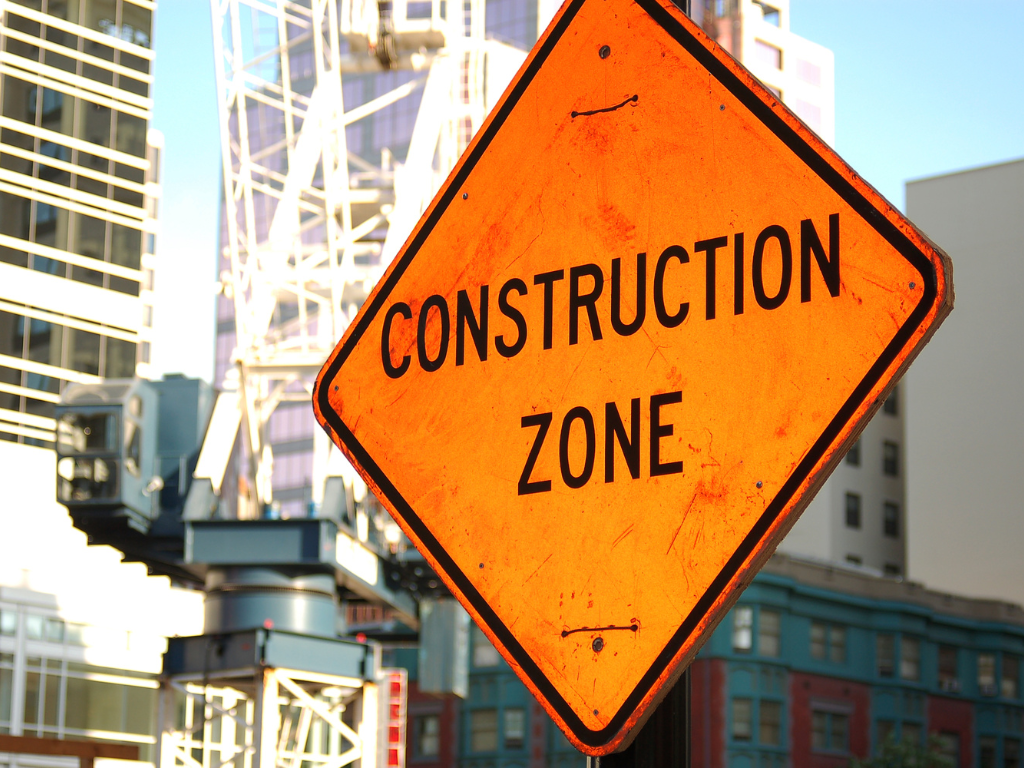
A traffic controller manages public traffic past a roadworks site by placing, operating, and removing traffic control devices to a plan. Cones, signs, lane tapers, and portable traffic lights are the tools. The public is the audience.
The work follows the LTA Code of Practice precisely: advance warning signs at set distances, correct taper lengths for lane closures, and a buffer zone between traffic and the work area. Get the layout wrong and you create the exact conflict the code exists to prevent. Most sites that fail do so on the basics, which is why a refresher on common traffic control mistakes is worth the time before deploying a crew. This is road safety for people who never set foot on your site.
Is “traffic controller banksman” one job? Why the confusion causes compliance gaps
No. They are two separate competencies under two separate regulators, and the habit of writing “traffic controller banksman” as a single phrase is precisely what causes wrong certification at audit.
The conflation is everywhere, including on training pages across the market, where course audiences get listed as “traffic controllers, flaggers, banksmen” in one breath. The problem surfaces when a site sends a worker to a banksman course, then posts them to manage public traffic on a road shoulder. That worker is certified for machinery movement under the WSH Act and uncertified for road traffic control under the LTA code. On paper everyone is trained. On the ground, the wrong cert is on file for the work being done. MOM stated the 2025 figures show the need for “all stakeholders to consistently remain vigilant and prioritise WSH.” Vigilance starts with matching the certificate to the jurisdiction.
Which course does each role need, and how do you decide?
Decide by asking two questions: where is the vehicle moving, and who is it interacting with. Private site with workers and machinery means banksman. Public road with motorists means traffic controller. The matrix below removes the guesswork.
|
Your scenario |
Role needed |
Regulator |
Course |
|
Reversing trucks or forklifts in a warehouse or logistics yard |
Banksman |
WSH Act (MOM) |
Vehicle & Machinery Banksman Safety Course |
|
Machinery movement on a private construction deck |
Banksman |
WSH Act (MOM) |
Vehicle & Machinery Banksman Safety Course |
|
Lane closure or works on a public road |
Traffic controller |
LTA Code of Practice |
Basic Traffic Control for Workers |
|
Overseeing a traffic control team at a road work zone |
Traffic control manager |
LTA Code of Practice |
Traffic Control Manager Course (TCMC) |
For road works, frontline crew take the basic traffic control for workers course, while the appointed person running the zone needs the traffic control supervisor course or the manager-level TCMC. For machinery movement on your own site, the banksman course is the right fit. If your workforce spans both, you need both certifications on file, not one standing in for the other. Advanced Safe can audit your roles against the right course; arrange a role-mapping consult before your next project mobilises.
Match the certificate to the jurisdiction, not the job title
A banksman and a traffic controller wear the same vest and share none of the same paperwork. One answers to MOM under the WSH Act for machinery movement on your site. The other answers to LTA under the Code of Practice for public road safety. Confuse them and the gap shows up at audit, after the work is already done.
Sort your workforce by where their vehicles move and who those vehicles meet, then certify each group for its own jurisdiction. That single step closes the most common compliance gap on Singapore worksites in 2026.
FAQs About Banksman vs Traffic Controller Singapore
How long is a banksman certification valid in Singapore?
A Certificate in Vehicle & Machinery Banksmen Safety from Advanced Safe Consultants is valid for four years. The half-day course requires ES WPLN Level 5 or equivalent and 100% competency in both written and practical assessment before certification is issued.
Is a banksman the same as a signaller or signalman?
Yes. Signaller and signalman are common names for the banksman role, the person directing vehicle and machinery movement with standard hand signals. The function is identical: managing blind spots and reversing manoeuvres on construction sites, in factories, and across logistics yards under the WSH Act.
Does a warehouse need a banksman or a traffic controller?
A warehouse needs a banksman. Forklifts and reversing vehicles inside a private yard fall under the WSH Act and MOM, not the LTA Code of Practice, which governs public roads. The control point is machinery moving near workers, so the Vehicle & Machinery Banksman Safety Course applies.
Can one worker hold both certifications?
Yes, a single worker can complete both the banksman course and a traffic control course. The two certifications stay separate because they cover different jurisdictions. Holding the banksman certificate does not clear someone to manage public road traffic under LTA, and the reverse is equally true.