- 26 Jun 2026

Worksite vehicle safety in Singapore is no longer a secondary concern. In 2025, vehicular incidents were the leading cause of workplace deaths, 15 of 36 fatalities reported by MOM. Banksmen and traffic controllers stand closest to that risk every shift. This blog walks you through why vehicles top the fatality list, who is most exposed, and how structured traffic control training courses cut the toll.
Why are vehicle incidents the top cause of worksite fatalities in Singapore?
Because moving vehicles concentrate the most force in the smallest margin for error. In 2025, vehicular incidents were the single leading cause of workplace fatalities in Singapore, accounting for 15 of 36 deaths, or 42%, according to MOM’s WSH Report 2025. The pattern held from 2024, when fatalities rose and vehicular incidents led the count.
The risk concentrates by sector. MOM’s WSH National Statistics 2025 recorded a fatal and major injury rate of 23.8 per 100,000 workers in the Transportation and Storage sector, up sharply from 18.4 in 2024. Construction and logistics carry similar exposure because they run heavy machinery and delivery vehicles through spaces where people work on foot. A reversing tipper, a slewing excavator, a forklift in a loading bay: each one shares ground with workers who have seconds to react. Vehicles top the list because the consequence of one missed signal is rarely an injury. It is a death.
Who is most at risk: banksmen, traffic controllers, and ground crew?
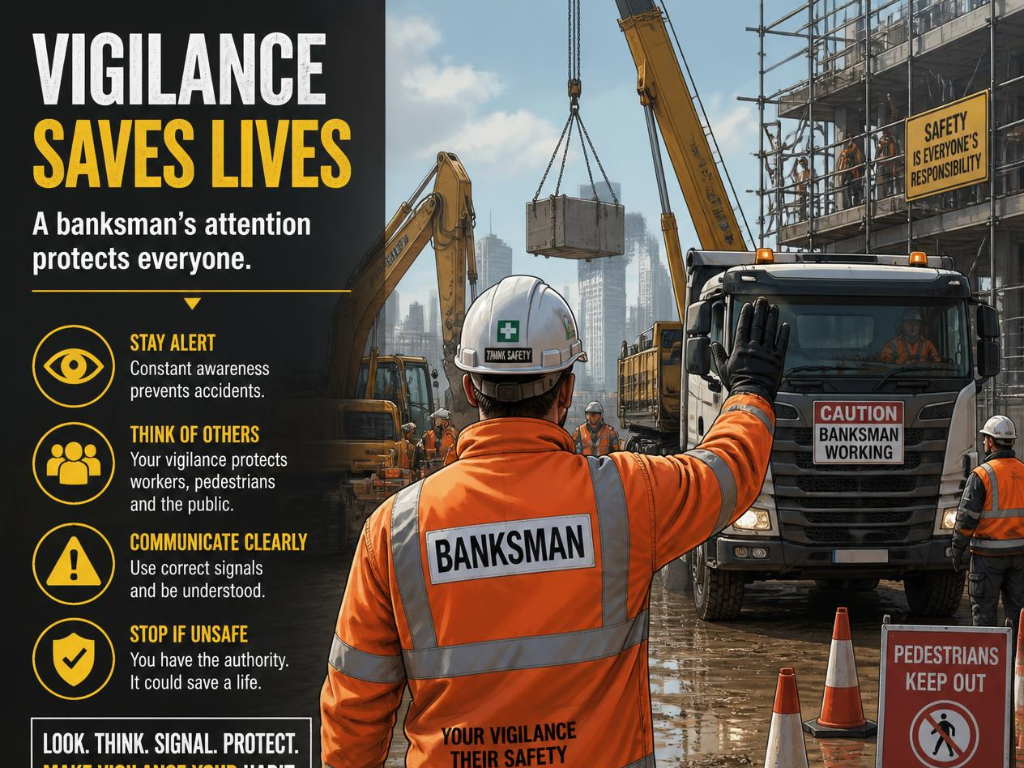
The people on foot nearest the machines. Banksmen, traffic controllers, signallers, and ground crew spend their shifts within arm’s reach of moving vehicles, which puts them at the sharp end of the statistic. Their job is to manage the very hazard most likely to kill them.
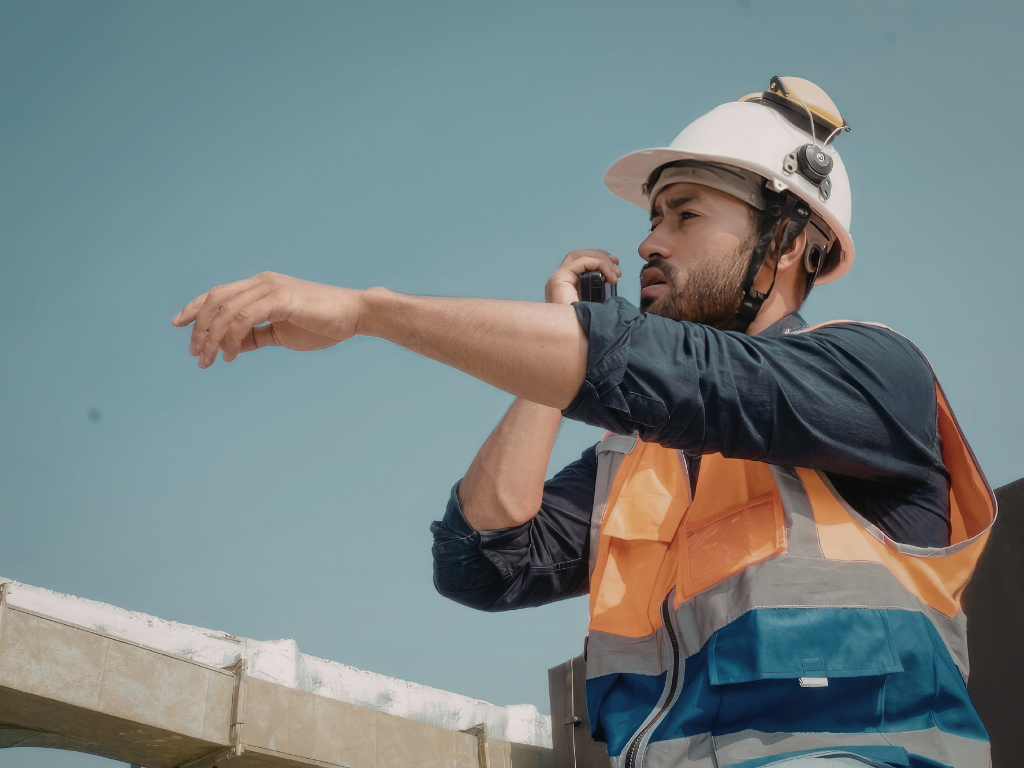
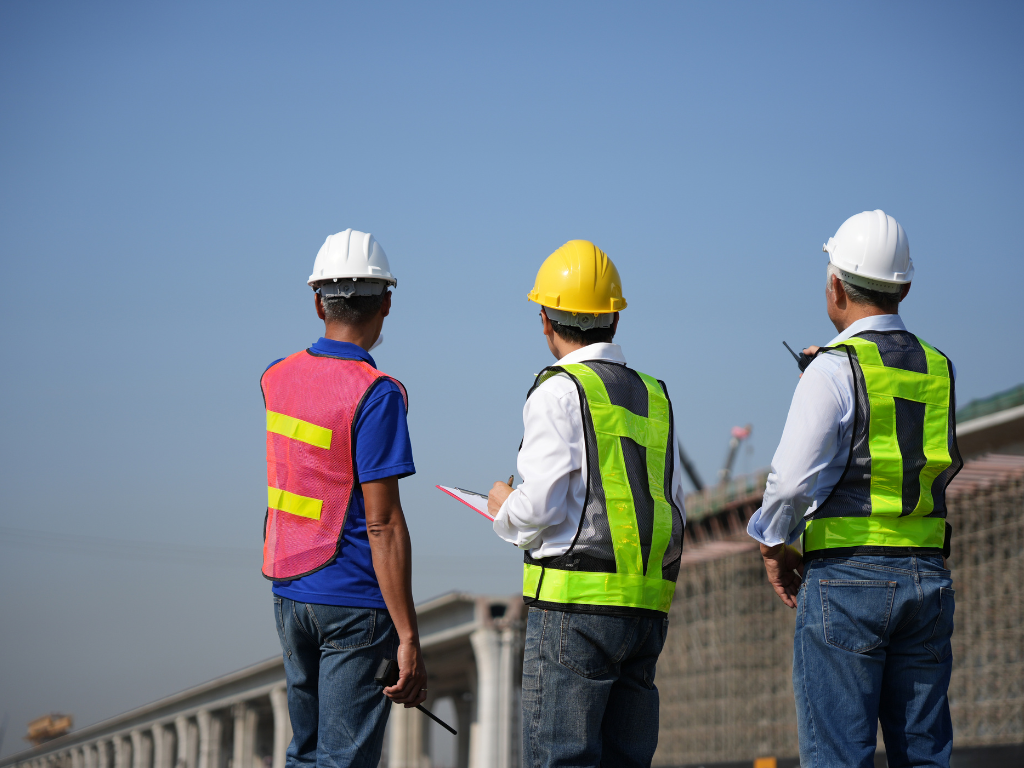
A banksman stands behind a reversing vehicle to guide it past obstacles and people. A traffic controller works the edge of a live carriageway, directing public vehicles around a work zone. Both roles exist because the vehicle operator cannot see everything, and both place a person in the path of the risk by design. Singapore has seen this play out, including a reported case of a traffic controller struck and killed by a road roller. The exposure is not abstract. It is the daily reality of the roles built to prevent exactly that outcome. Protecting these workers starts with treating their competence as a life-safety control, not a box to tick.

What makes reversing vehicles and blind spots so dangerous?
Reversing removes the operator’s clearest line of sight at the exact moment people are most likely to be behind the vehicle. Blind spots behind and beside large machines hide a person completely, and the driver is steering away from the direction of travel. This combination drives a large share of struck-by incidents on Singapore worksites.
The mechanics are unforgiving. A heavy vehicle reversing at low speed still carries enough mass to be fatal, and the worker in the blind zone often has no warning until contact. Poor lighting during early-morning or late-evening shifts compounds it. The WSH Council’s guidance recognises this directly, advising sites to “use a trained signaller or banksman” when the rear view is compromised and rear-view aids are unavailable during reversing. A trained banksman positioned where the operator can see him, using standard hand signals, closes the gap that the mirror cannot. Without that, the blind spot stays blind.
How does training actually reduce vehicle-related worksite deaths?
Training works because it replaces guesswork with a standard the whole team shares. A trained banksman knows where to stand, which hand signals mean what, and when to call an immediate stop. That shared protocol is what turns a chaotic reversing manoeuvre into a controlled one. The Workplace Traffic Safety Management guidelines from the WSH Council name competent, trained personnel as a core control alongside segregation and signage.
The control is cheap relative to the risk it removes. A vehicle and machinery banksman course is a half-day programme, and the resulting certificate is valid for 4 years, yet it addresses the hazard behind the country’s leading cause of workplace death. Where this breaks down is sites that put an untrained worker in a hi-vis vest and call him a banksman. The WSH Council’s own construction guidance lists an untrained, incompetent traffic controller as a hazard in its own right. Competence is the control. The vest is not.
What does the banksman and traffic control training ladder cover?
Four courses cover the full range of worksite vehicle roles, from worker to manager. Each maps to a specific exposure, so the right person trains for the right risk rather than everyone sitting the same session.
The banksman course trains workers and signallers to guide vehicle and machinery movement on private sites under the WSH Act. For public-road works under LTA, frontline crew take the basic traffic control course, the appointed person running the zone takes the traffic control supervisor course, and the role overseeing the whole operation takes traffic control manager training. The ladder matters because supervision is where many sites fall short: a competent banksman with an untrained supervisor still operates inside a weak system. Building the full chain, worker through manager, is what makes the control hold under pressure rather than on paper.
What do the WSH Council and LTA require for worksite vehicle safety?
Two bodies set the rules, split by location. On private worksites, the WSH Act and the WSH Council’s Workplace Traffic Safety Management guidance apply, requiring pedestrian-vehicle segregation, trained and competent personnel, and documented traffic rules. On public roads, the LTA Code of Practice for Traffic Control at Work Zone applies, currently on its April 2026 edition.
The two frameworks share a logic: separate people from vehicles, and put trained people in charge of the interface. The WSH Council guidance, which replaced its 2009 edition, calls for demarcated pedestrian walkways, convex mirrors at blind bends, and a trained banksman during compromised-visibility reversing. LTA’s code sets the signage, taper, and buffer rules for road work zones. Most worksites need both, because a single project can run machinery in a private yard and works on the adjacent public road in the same week. Compliance is not one document. It is matching each zone to the regulator that governs it and staffing it with people trained to that standard.
How do you build a vehicle safety system, not just send people on a course?
Treat training as one layer inside a system, not the whole answer. A certified banksman reduces risk only when the site also segregates pedestrians from vehicles, maintains the machines, and gives supervisors authority to stop unsafe work. Training is the highest-leverage layer, but it fails in isolation.
The cleaner approach is to design the system first, then certify people into it. Map where vehicles and people cross, separate those paths with barriers and marked walkways, fit reversing aids, and assign a trained banksman or controller to each interface that cannot be engineered out. Then keep the chain of competence intact from worker to manager. The lighter tactical fixes still matter, and a refresher on common worksite traffic mistakes catches the obvious gaps. If you want a clear read on where your current setup leaves people exposed, review your worksite traffic risk before the next project mobilises.
The deadliest worksite hazard is also the most preventable
Vehicles cause more workplace deaths in Singapore than any other hazard, and the people closest to that risk are the banksmen and traffic controllers hired to manage it. The control is not complicated. Segregate people from machines, fit the reversing aids, and put trained, competent personnel at every point where the two still meet. Training is the layer that holds the rest together.
Map your worksite by where vehicles and people cross, then certify a banksman, controller, supervisor, and manager into each role the risk demands, before an incident makes the case for you.
FAQs About worksite vehicle safety singapore
What is the leading cause of workplace death in Singapore in 2025?
Vehicular incidents. MOM’s WSH Report 2025 recorded them as the single leading cause of workplace fatalities, accounting for 15 of 36 deaths, or 42%. The Transportation and Storage sector carried a fatal and major injury rate of 23.8 per 100,000 workers, up from 18.4 in 2024.
Is a banksman required for reversing vehicles in Singapore?
The WSH Council’s Workplace Traffic Safety Management guidance directs sites to use a trained signaller or banksman when a vehicle’s rear view is compromised and rear-view aids are unavailable during reversing. On worksites with reversing machinery near workers, a trained banksman is the expected control under the WSH Act.
How long is banksman certification valid in Singapore?
A Certificate in Vehicle & Machinery Banksmen Safety from Advanced Safe Consultants is valid for 4 years. The course is a half-day programme covering blind-spot management, hazard identification, and standard hand signals, with both written and practical assessment required for certification.
What’s the difference between a banksman and a traffic controller for vehicle safety?
A banksman guides vehicles and machinery inside a private worksite under the WSH Act and MOM. A traffic controller manages public-road traffic at a work zone under the LTA Code of Practice. Both manage vehicle risk, but they answer to different regulators and need different certifications.