- 30 Jun 2026
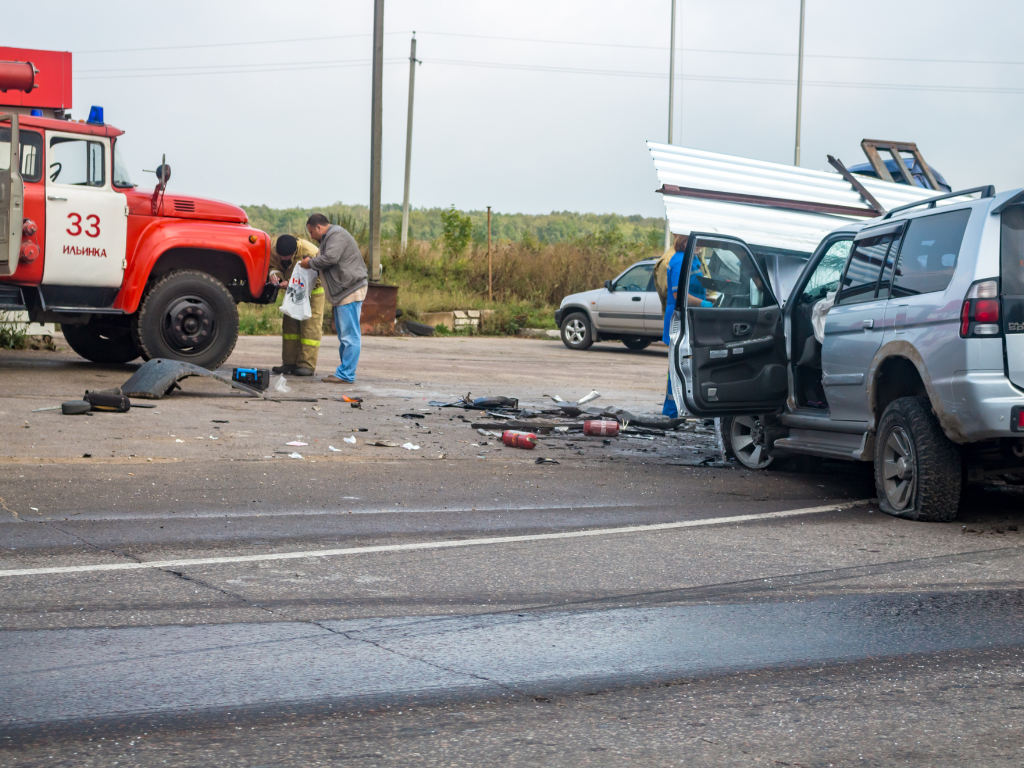
Reversing vehicle accidents on Singapore worksites follow the country’s most common vehicular fatality pattern: a worker on foot struck in the blind spot directly behind a reversing truck or machine. Vehicular incidents were the leading cause of workplace deaths in 2025, 15 of 36 reported by MOM. This blog walks you through the pattern and why banksman supervision, built through traffic control training, is the control that breaks it.
Why are reversing vehicles the most common fatal pattern on Singapore worksites?
Reversing concentrates three risks into one moment: the driver’s worst sightline, a worker on foot, and a heavy vehicle moving toward both. That combination is why reversing shows up repeatedly in fatal worksite vehicular incidents rather than as an occasional outlier.
The numbers frame the scale. Vehicular incidents were the leading cause of workplace fatalities in 2025, accounting for 15 of 36 deaths reported by MOM, after Singapore recorded 43 workplace fatalities in 2024 with vehicular incidents again leading. Reversing sits inside that category as a recurring mechanism, not a freak event. A forward-moving vehicle gives a worker time and sightlines to react. A reversing one removes both at the same time, which is exactly why the same preventable worksite traffic mistakes keep producing the same outcome. The pattern is predictable, and predictable is controllable.
What actually causes a reversing fatality?
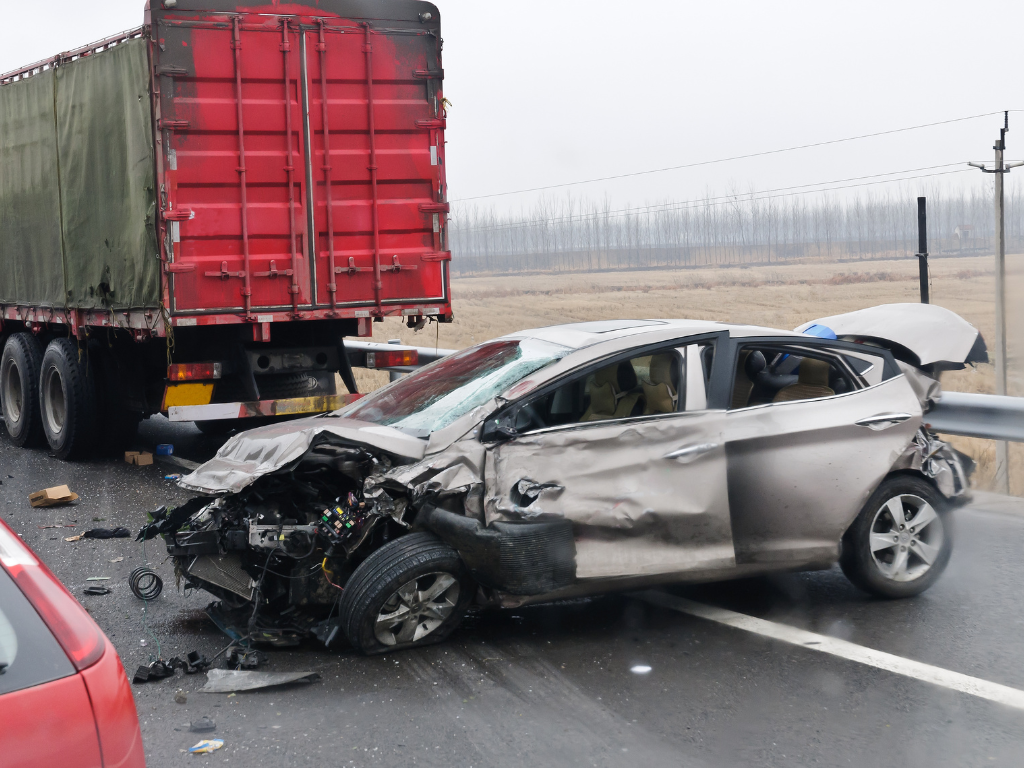
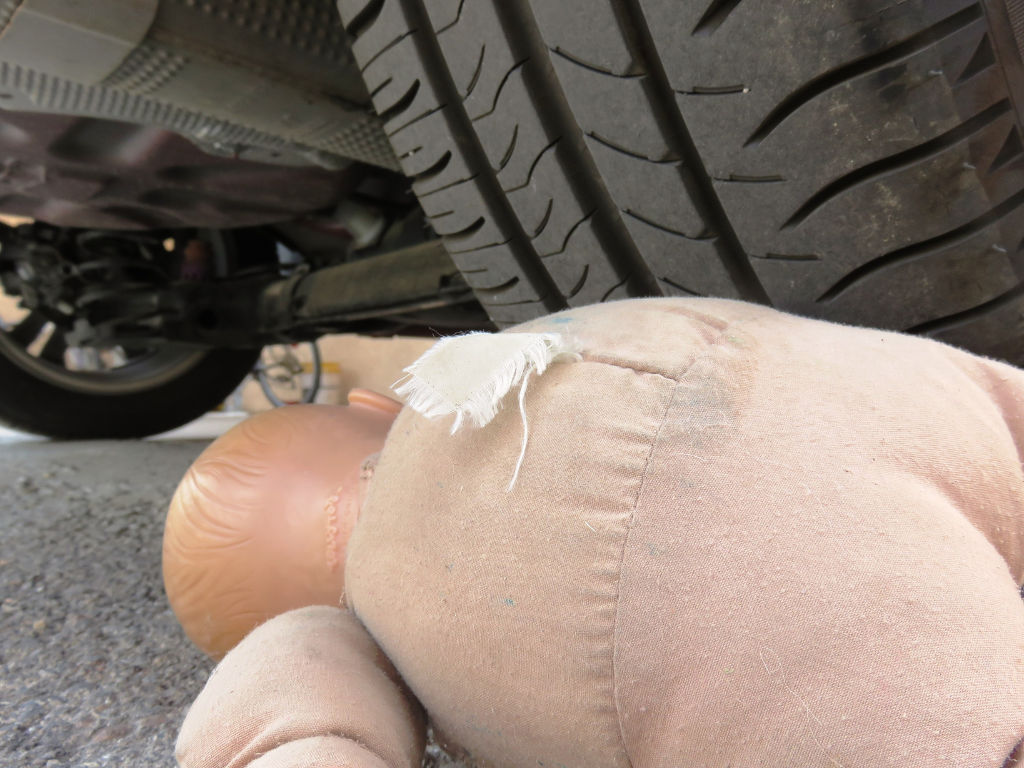
The cause is structural, not careless: the area directly behind a large vehicle is a blind spot the driver cannot see from the cab, and a worker standing in it has no reliable warning that the vehicle is about to move. The driver reverses on the assumption the path is clear. The worker assumes the driver can see them. Both assumptions are wrong at once.
Engine noise covers the approach. Mirrors show angles, not the dead zone immediately behind the tailgate. A worker focused on their own task does not register a slow reversing vehicle until contact. This is the failure chain behind most reversing fatalities, and every link in it is about information not reaching the people who need it. The vehicle is heavy enough that a low-speed impact is still fatal. Worth noting: a reversing fatality rarely involves a fast vehicle or an obvious error. It involves an ordinary manoeuvre where nobody had eyes on the one space that mattered.
How does a banksman prevent reversing accidents?
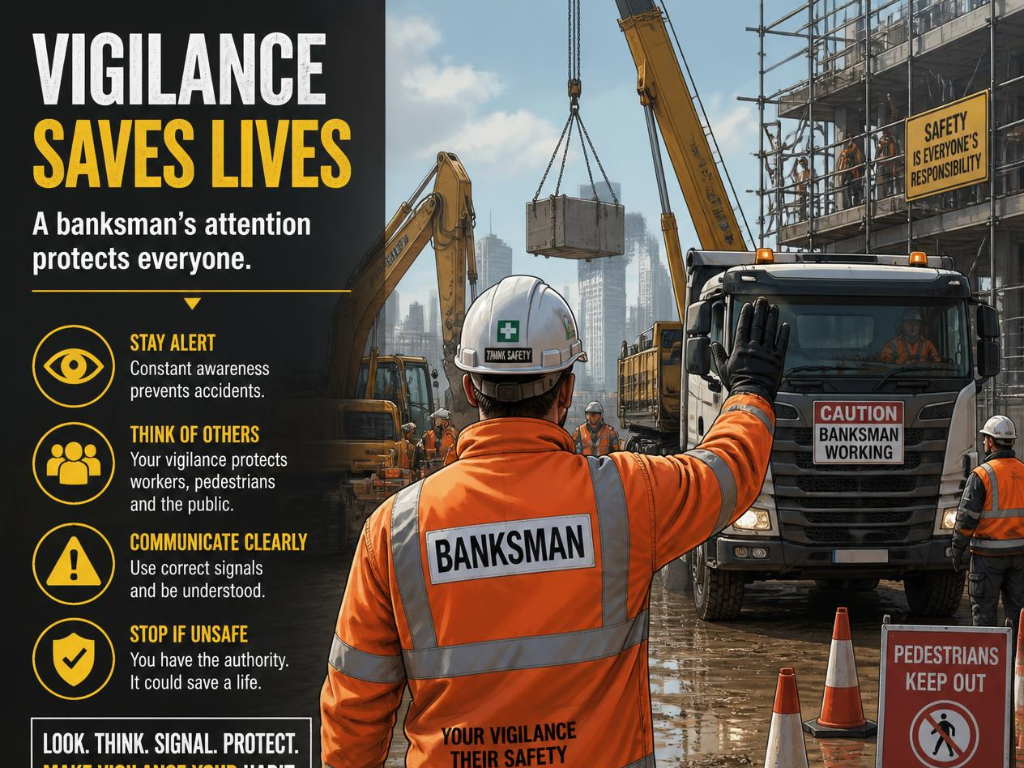
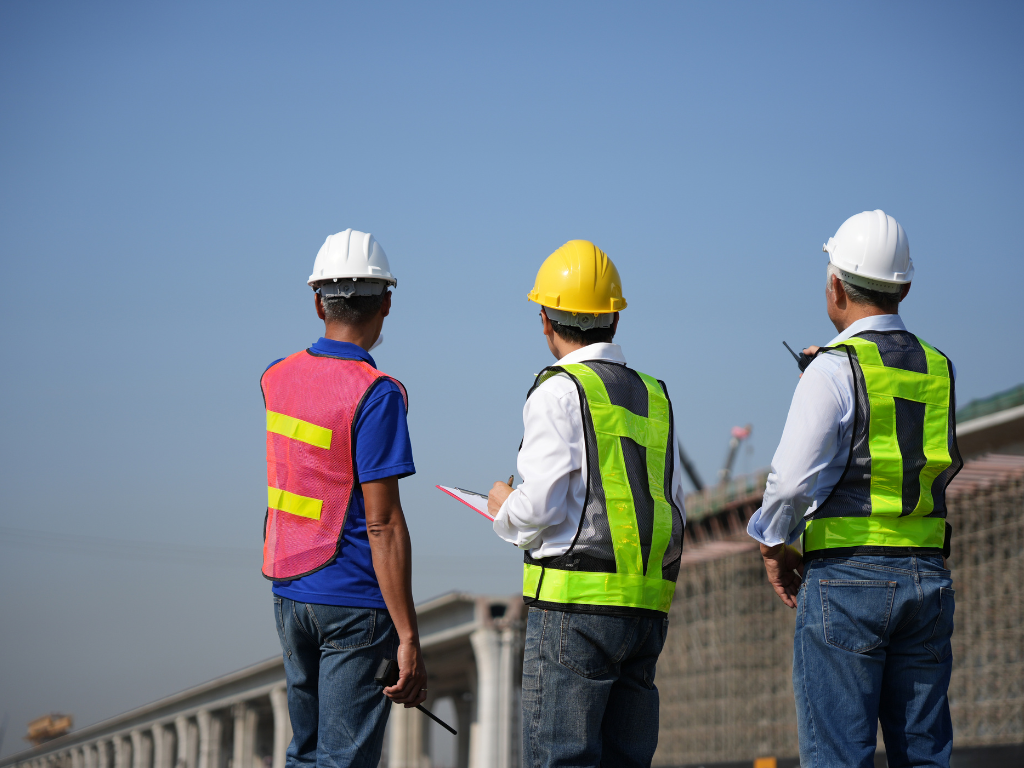
A banksman prevents reversing accidents by becoming the eyes the driver does not have and the authority that stops the manoeuvre the moment the zone is not clear. The banksman stands where the driver can see them and where they can see the dead zone, then directs the reverse with standard signals and halts it instantly if anyone enters.
This is why the banksman is the primary control rather than a backup. A trained signaller closes the exact information gap that causes the fatality, watching the blind zone the driver cannot and the worker cannot account for. The vehicle and machinery banksman course is built for this specific risk, with a half-day programme, written and practical assessment at 100% competency, and a certificate valid for 4 years. The banksman also enforces the rule that no one walks behind a reversing vehicle, which no piece of onboard equipment can do. A camera informs the driver. A banksman controls the whole scene.
Are reversing alarms, mirrors, and cameras enough on their own?
No. Audible alarms, convex mirrors, and reversing cameras reduce risk, but each one only addresses the driver’s awareness, and none of them stops a worker from walking into the path. They are supplements to supervision, not replacements for it.
Consider what each control actually does. A reversing alarm warns people nearby, but on a noisy site with constant alarms, workers tune it out. A convex mirror widens the view but still leaves the dead zone directly behind. A reversing camera shows the driver the area behind the vehicle, yet the driver is also steering, checking forward, and managing the task, and a camera cannot enforce an exclusion zone. The honest position is that technology aids the driver while a banksman governs the manoeuvre. Relying on a camera alone shifts a life-or-death decision onto a driver who is already doing three things. That is the wrong place to put it.
What’s the most effective way to control reversing risk?
The most effective approach removes reversing from the site wherever possible, then supervises every reverse that remains. Eliminating the manoeuvre beats managing it, so the first move is designing it out.
Lay out the site for drive-through and one-way circulation so vehicles rarely need to reverse at all. Where reversing is unavoidable, the control stack is a trained banksman directing the manoeuvre, an enforced no-go zone behind the vehicle, and onboard aids such as alarms and cameras supporting the driver. PPE sits last, as the visibility backstop, never the primary measure. This mirrors the broader logic of vehicle and pedestrian safety on site: separate people from vehicles by design, and where you cannot separate them, put a competent person in control of the interaction. A site that depends on workers staying alert has chosen the weakest control as its main one.
What is a no-go zone and how do you enforce it?
A no-go zone is a marked exclusion area behind and around a reversing vehicle that workers on foot are barred from entering while the vehicle is manoeuvring. It turns the blind spot into a space nobody is standing in, which is the simplest way to break the fatality pattern.
Enforcement is where it succeeds or fails. A painted line or a sign is a suggestion; a banksman watching the zone with the authority to stop the vehicle is a control. The WSH Council’s workplace traffic safety guidance directs sites to separate pedestrians from vehicles, control reversing, and use a trained signaller when the rear view is compromised. The no-go zone and the banksman work as a pair: the zone defines the danger space, and the banksman keeps it empty. Mark it physically where you can, with barriers rather than paint, and brief every worker on site that the zone is active whenever a vehicle reverses.
Who is responsible, and how do you build banksman competence?
The employer carries the duty to control reversing risk, and that means appointing trained, competent banksmen, not handing a vest to whoever is free. Competence is the qualification, and on this hazard it is the difference between a control and a bystander.
A worker waving a vehicle back without training is not supervising the manoeuvre; they are standing near it. Building real competence means certified instruction in blind-spot awareness, standard signals, positioning, and stop authority. Advance Safe’s banksman course runs as a half-day session at $120, is not eligible for SkillsFuture Credit, and certifies competency for four years. For sites with regular reversing operations, the priority is having enough trained banksmen that every manoeuvre is covered, on every shift. If your reversing operations currently rely on untrained spotters, train a competent banksman team before the next vehicle backs into a live work area.
The pattern is predictable, which is why it is preventable
Reversing fatalities on Singapore worksites come from one repeatable mechanism: a worker in the blind spot behind a moving vehicle, with no warning reaching anyone in time. Onboard alarms and cameras help the driver, but only a trained banksman watching an enforced no-go zone closes the gap that kills. Design reversing out where you can, supervise every reverse you cannot.
Audit your site for every point where a vehicle reverses near workers on foot, then put a certified banksman and a marked exclusion zone on each one before the next shift starts.
FAQs About Reversing Vehicle Accidents Singapore Worksites
What is the most common cause of vehicle fatalities on Singapore worksites?
Vehicular incidents were the leading cause of workplace fatalities in 2025, accounting for 15 of 36 deaths reported by MOM. Reversing vehicles striking workers on foot in the blind spot behind the vehicle is a recurring mechanism within that category, which is why controlling reversing is a priority for site safety.
Is a banksman legally required for reversing?
Singapore’s WSH framework requires employers to control vehicle movement risks, and the WSH Council directs sites to use a trained signaller or banksman when a vehicle’s rear view is compromised. In practice, any reversing operation near workers on foot needs a competent banksman, certified through a course such as Advance Safe’s 4-year banksman programme.
Do reversing cameras remove the need for a banksman?
No. A reversing camera shows the driver the area behind the vehicle, but it cannot enforce an exclusion zone or stop a worker walking into the path. Cameras and alarms support the driver; a trained banksman controls the whole manoeuvre and halts it the instant the no-go zone is breached.
How do you set up a no-go zone for reversing vehicles?
Mark a physical exclusion area behind and around the reversing vehicle, ideally with barriers rather than paint, and keep all workers on foot out of it during manoeuvres. Assign a trained banksman to watch the zone with authority to stop the vehicle. The WSH Council recommends this pairing of segregation and trained supervision.