- 26 Nov 2025

Choosing between a standard first aid course Singapore and a child first aid course Singapore depends on who you serve and the emergencies you’re most likely to face. This guide shows the differences, who each course is for, and how to decide confidently for your team.
why “the right” first aid training matters
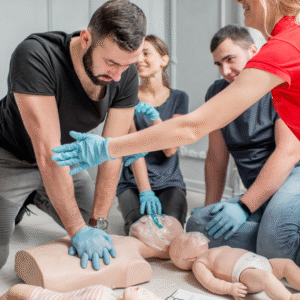
First aid is not one-size-fits-all. Teams that work mainly with adults need a different emphasis from teams that care for infants and children. Standard First Aid prepares responders for typical adult emergencies in workplaces and public settings; Child (Pediatric) First Aid adapts techniques, equipment, and assessment for smaller airways, different vital signs, and child-specific illnesses. Choosing the right course means your people can act quickly and safely when it matters most.
What is Standard First Aid?
Standard First Aid (SFA) is the mainstream, workplace-oriented programme that equips responders to manage adult casualties in offices, retail, hospitality, warehousing, construction support roles, and community settings. In many regions it’s comparable to “First Aid at Work.”
Typical scope and competencies
- Primary survey & scene safety: approaching safely, rapid assessment, calling for help.
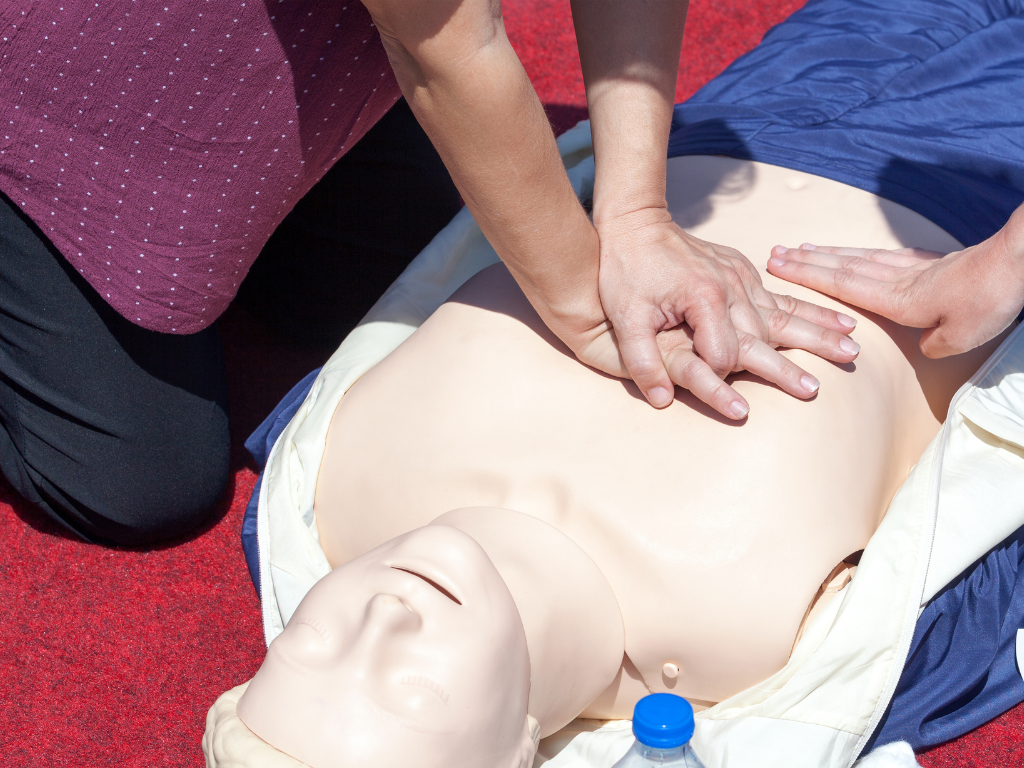
- Adult CPR & AED: compression depth/rate for adults, pad placement, safe defibrillation.
- Time-critical medical emergencies: suspected cardiac arrest, heart attack, stroke, asthma, anaphylaxis, seizures, diabetic emergencies.
- Trauma care: severe bleeding control (direct pressure, dressings), shock, fractures/splinting, soft-tissue injuries, burns and scalds (cooling, dressing selection).
- Incident management: monitoring, documentation, handover to EMS, workplace reporting.
Why workplaces choose SFA
It aligns with occupational risks in adult environments—manual handling injuries, slips and falls, heat stress, exposure to tools and machinery, and medical events among adult staff or customers. For most offices, warehouses, and mixed commercial sites, SFA provides the primary foundation for legal coverage and practical readiness.
If your headcount and risk profile indicate you must appoint first aiders, SFA is usually the baseline course for adult-only settings.
What is Child / Pediatric First Aid?
Child (Pediatric) First Aid focuses on emergencies involving infants and children—typical in preschools, schools, student care, enrichment centres, sports clubs, community programmes, and family-oriented venues. Anatomy, vitals, and common conditions differ from adults, so assessment and interventions are tailored accordingly.
Typical scope and competencies
- Infant & child CPR: modified compression techniques (two fingers for infants, one hand for small children), ventilation volumes, ratios, and pad selection for AEDs with paediatric settings.
- Choking relief: back blows and chest thrusts for infants; age-appropriate management for children (instead of adult abdominal thrusts for small bodies).
- Child-specific medical issues: febrile seizures, asthma exacerbations, severe allergic reactions (anaphylaxis), minor head injuries, dehydration, and common childhood illnesses.
- Injury prevention & environment: playground hazards, sports injuries, safe supervision, and communication with caregivers.
Who needs Pediatric First Aid
Childcare professionals, teachers, coaches, youth leaders, and any team that routinely supervises children. In many jurisdictions, paediatric certification is mandated for licensed childcare and early years settings so that qualified responders are always present.
Key differences at a glance
Victim age focus
- Standard First Aid (SFA): adult casualties in work/community settings.
- Child First Aid: infants and children; assumes limited ability to describe symptoms; emphasises calming, communication, and safeguarding.
Curriculum content
- SFA: broad adult emergencies (heart attack, stroke), adult CPR/AED, major bleeding, fractures, burns, workplace trauma.
- Pediatric: infant/child CPR modifications, choking protocols for babies and children, child-specific illnesses and injury patterns, AED pad selection/settings for paediatrics, and prevention in child environments.
First aid techniques
- CPR: two hands for adults vs one hand or two fingers for smaller patients; ventilations and compression ratios are age-adjusted.
- Choking relief: infants—back blows + chest thrusts; adults—abdominal thrusts.
- AED: paediatric pads or settings for infants/children when available; pad placement may differ for small chests.
Course duration & certification
- SFA is often longer and broader for workplace compliance; paediatric versions vary by regulator.
- Certificates typically last 2–3 years (check your local standard); refreshers keep CPR/AED protocols current.
Regulatory orientation
- SFA aligns with workplace safety obligations in adult environments.
- Pediatric First Aid aligns with childcare/education licensing or safeguarding standards that require paediatric-trained staff on duty.
How to choose the right course for your team (a practical framework)
Use this quick framework to make a confident, defensible choice:
1) Map your environment
- Adults only (office, warehouse, factory visitors are adults): prioritise Standard First Aid.
- Children present (preschool, school, youth programmes, family-facing venues): prioritise Child/Pediatric First Aid.
- Mixed audiences (e.g., school campus with adult staff and student children; retail venues with families): plan for both, or a structured mix of SFA for some responders and Pediatric for others.
2) Check regulatory obligations
- Occupational safety rules often require a set number of trained first aiders per headcount and per shift for adult workplaces.
- Childcare and education regulators typically require paediatric certification and continuous coverage during operating hours.
Choose the course that meets your mandated requirement first, then build additional capability as needed.
3) Consider the most likely scenarios
- Adult-centric risks: cardiac events, stroke, heavy-tool injuries, heat stress, slips/falls SFA.
- Child-centric risks: choking, febrile seizures, playground trauma, asthma/allergy flares Pediatric.
If you routinely face both sets of risks, train a blended cohort.
4) Match roles to training
- Appoint shift-coverage responders for each location.
- Train frontline supervisors and high-exposure roles (PE teachers, sports coaches, ECE educators, warehouse leads).
- Maintain at least two trained responders per site so one can assist while the other calls EMS or fetches equipment.
5) Future-proof your coverage
If your setting regularly welcomes the public, or if programmes evolve (holiday camps, community events), investing in both SFA and Pediatric training reduces risk and builds confidence across the board.
What outcomes improve when training matches your risks
Faster, safer response
When responders are trained for their likely casualty group, they choose the right technique first time (e.g., child-safe airway positioning, paediatric compression depth, infant choking sequence). That avoids harm from applying adult techniques to small bodies—and vice versa.
Better coverage, fewer gaps
A school staffed only with adult-focused first aiders still has gaps around infant CPR or child anaphylaxis. Conversely, a factory staffed only with paediatric-trained responders will lack depth on adult cardiac care and heavy-trauma management. The right mix closes these gaps.
Compliance and liability
Matching training to regulatory expectations (workplace vs childcare) evidences due diligence in audits, incident investigations, and insurance discussions.
Morale and safety culture
People feel safer and more confident when they know training fits their reality. Teams that run short, regular drills (adult collapse on the shop floor; choking toddler at a family event) develop calm, reliable habits under pressure.
Cost, logistics, and keeping skills fresh
- Duration & format: Expect ~1–2 days for many SFA or Pediatric variants (some workplace frameworks can be longer, especially when paired with additional modules).
- Validity: Most certificates last 2–3 years; plan refreshers to keep CPR/AED current.
- On-site vs public runs: On-site delivery can be more efficient for larger teams and allows you to practise with your own AED and first-aid kits.
- Funding: In Singapore, many accredited courses are SkillsFuture-eligible (employers and individuals can offset fees where applicable).
- Tracking: Maintain a simple register of certified staff, expiry dates, and locations/shifts covered.
Conclusion
The safest choice is the one that reflects your world. If your team supports adults in offices, warehouses, or stores, Standard First Aid gives you the right foundation. If you supervise children or serve families Child/Pediatric First Aid closes critical gaps in technique and judgment. Many organisations blend both so there’s always someone ready for any age group. Map your risks, confirm your obligations, and train for the emergencies you’re most likely to face. Your people and the communities you serve deserve nothing less.
FAQs About Standard First Aid Course Singapore
What’s the main difference between Standard and Child First Aid?
SFA focuses on adult emergencies and adult CPR/AED, fractures, bleeding, burns, and workplace trauma. Child (Pediatric) First Aid adapts techniques and equipment for infants and children, including paediatric CPR, choking sequences for babies, and child-specific illnesses.
Do some Standard First Aid courses include child CPR?
Many SFA programmes touch on all-ages CPR at a basic level, but depth and practice time are limited. If you regularly care for children, enrol in Pediatric First Aid to cover infant airway differences, paediatric pad use, choking protocols, and child-specific conditions.
Our team serves both adults and children—what’s best?
Run a blended model: train part of the team in SFA (adult workplace risks) and part in Pediatric (child-centric emergencies). In public-facing or school environments, this ensures no age group is left uncovered.
How long do certificates last?
Most SFA and Pediatric certificates are valid 2–3 years. Book refreshers ahead of time, especially for CPR/AED, which updates with clinical guidance.
Is Pediatric First Aid mandatory for childcare providers?
In many jurisdictions, yes. Childcare and early years settings typically require paediatric-trained staff on duty during operating hours. Adult-oriented workplaces typically rely on SFA for compliance.