- 21 Jul 2026
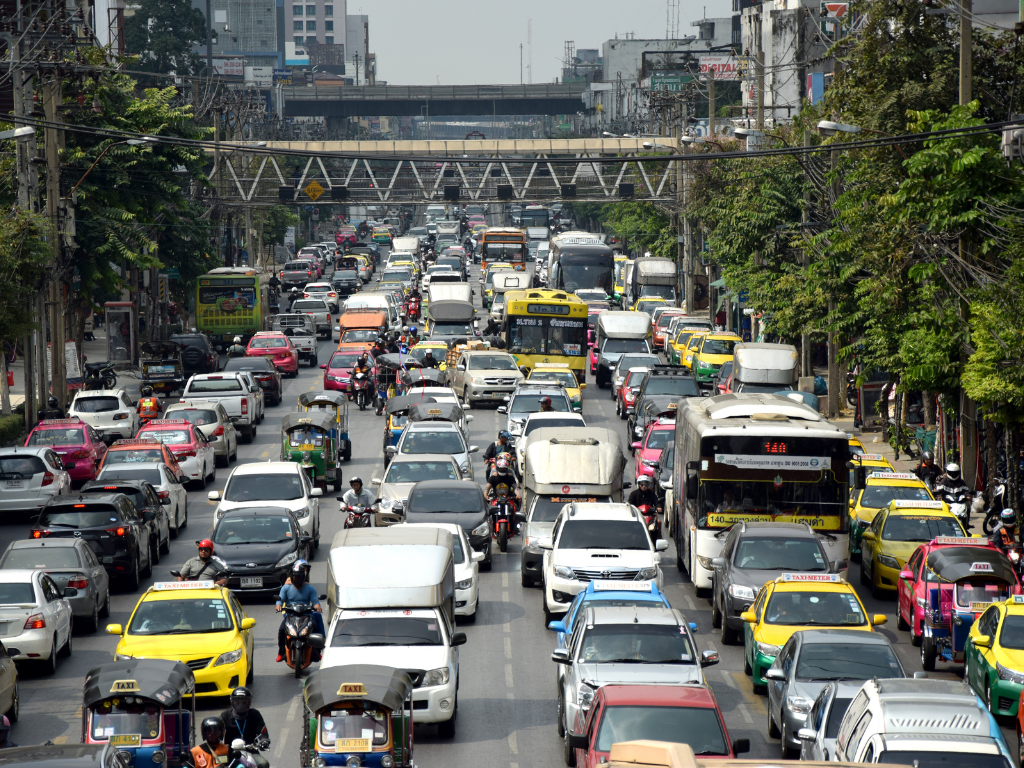
A traffic management plan for a Singapore worksite sets out how vehicles, machinery, and people move around a site without meeting. WSH Council named it the first of seven controls in its 12 June 2026 advisory on protecting banksmen and traffic controllers. This blog walks you through what belongs in a TMP and how to build one that passes audit, using traffic control training for the roles inside it.
What is a traffic management plan on a Singapore worksite?
A TMP is the document that governs how vehicles, mobile plant, and pedestrians move through a workplace, and where they are kept apart. WSH Council’s own guidance calls it a workplace traffic safety management plan; the June 2026 advisory calls it a traffic management plan. Same instrument, two names.
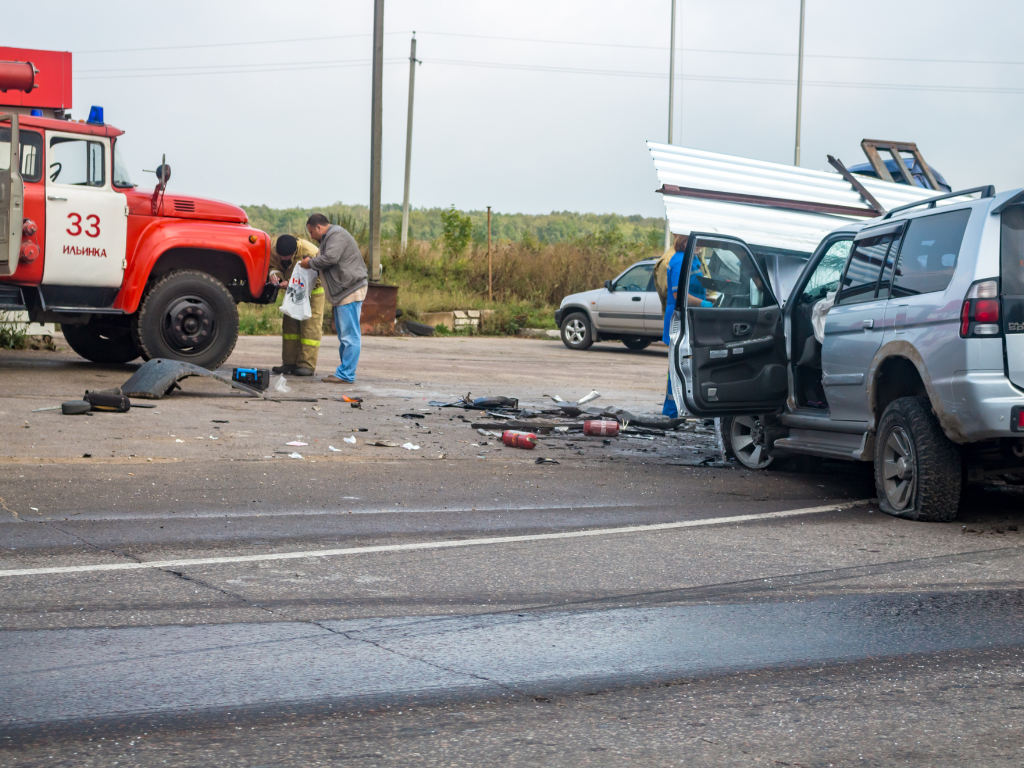
The plan exists to remove the interaction between a moving vehicle and a person on foot. It does that by fixing routes, speeds, sightlines, separation, and the positions people stand in. Poor traffic management on site produces vehicle collisions, injuries to employees and visitors, and downtime, which is why WSH Council treats the plan as necessary rather than optional for construction, marine, and logistics operations. The stakes are not abstract: vehicular incidents were the leading cause of workplace deaths in 2025, accounting for 15 of 36 fatalities reported by MOM. A TMP is the document standing between a site’s layout and that statistic.

Is a traffic management plan legally required in Singapore?
The binding legal duty is the risk assessment, not the TMP itself. WSH Council states that employers must conduct proper risk assessments to identify all potential hazards and risks, a duty enforced under the WSH (Risk Management) Regulations. The TMP is the instrument WSH Council expects you to use to discharge that duty for traffic.
Plenty of safety blogs claim a TMP is legally mandated by name. That is imprecise, and the imprecision does real harm, because it lets a contractor conclude that if no statute names the document, the document is optional. The correct reading is sharper. You are legally required to assess and control traffic risk. WSH Council’s workplace traffic safety guidance tells employers to develop the plan, implement it, and communicate it to all employees, and the 12 June 2026 advisory tells occupiers to establish and implement a TMP as the first of its seven controls. An MOM inspector reads your site against that expectation. A site with controlled traffic risk and no plan is a site that cannot prove it, and a worksite traffic risk assessment is where the plan’s content comes from.
What must a traffic management plan contain?
WSH Council sets out ten considerations the plan must account for, and the June 2026 advisory adds the physical measures that belong inside it. Build against both lists, not one.
|
Layer |
What the plan must cover |
|
Site and activity |
Transport activities on site, workplace traffic conditions, types of vehicles operating, work schedules |
|
Rules and conditions |
Traffic rules and regulations, environmental conditions including road and weather |
|
Vehicles |
Vehicle safety devices and available technologies, a vehicle maintenance regime |
|
People |
Driver behaviours and habits, training and competency of drivers, health and fitness status of drivers |
|
Physical measures |
Traffic signs and markings to control flow, road humps to reduce speeding, mirrors placed for driver blind-spot checks, designated banksman and traffic controller positions |
|
Separation |
Demarcation of pedestrian walkways from vehicular roads, barriers between work zones |
|
Response and records |
Emergency response plans communicated to staff, records of traffic incidents with timely intervention |
The driver-focused items surprise people. Health and fitness status, and driver behaviours and habits, sit in WSH Council’s list because a plan that routes vehicles perfectly around a fatigued operator has solved the wrong problem.
How do you actually build a TMP?
Start with the risk assessment, then walk the site, then design the separation before you draw a single route. The plan is the record of decisions you have already made about how people and vehicles stay apart.
Walk the route a vehicle takes from gate to task and back, marking every point where it comes near a person on foot. Those crossings are what the plan has to eliminate or control. Design separation first, using demarcated walkways, barriers, and one-way circulation, because separation removes the interaction rather than managing it. Fix the physical measures next: signage, markings, road humps for speed, and mirrors positioned so drivers can check blind spots. Then name the positions. Then assign an owner to each control, communicate the plan to every employee, and set the review trigger. Most plans I have seen fail not in the drawing but in the last two steps, sitting in a folder that nobody on the ground has read.
Where does the banksman’s position fit into the plan?
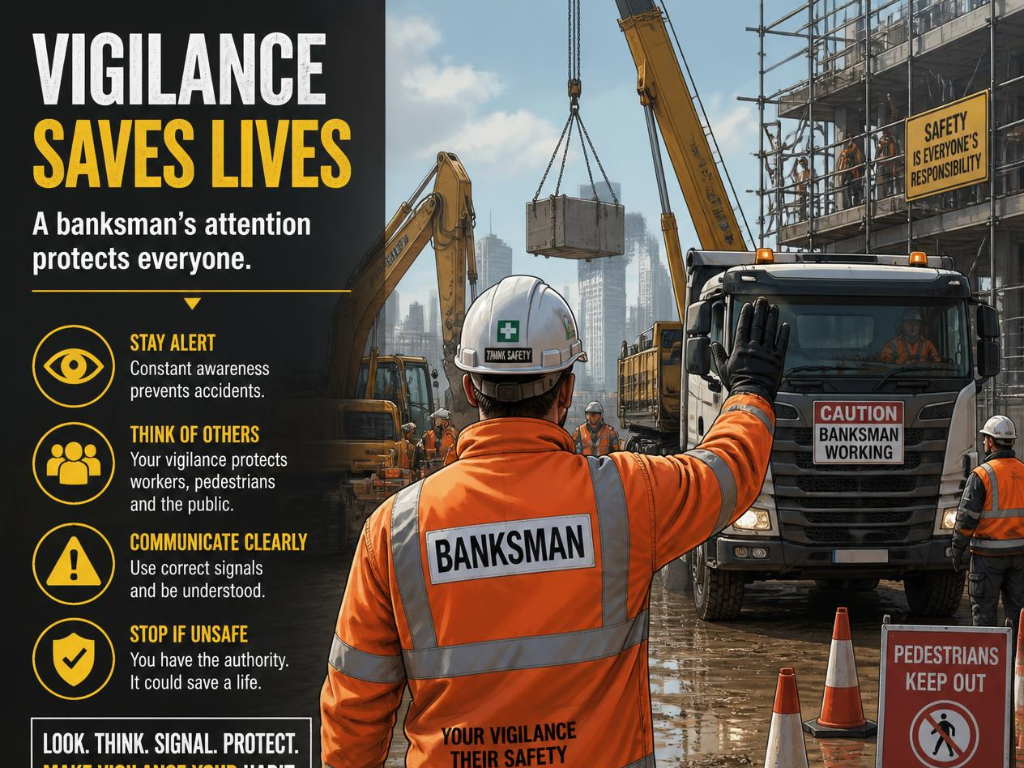
Designated banksman and traffic controller positions are an explicit element of the TMP under WSH Council’s June 2026 advisory. The plan must state where these people stand. Almost no template includes this, and it is the element the recent fatalities turn on.
A TMP that routes trucks but never says where the banksman stands has left the highest-risk person on site to improvise a position next to a moving vehicle. WSH Council’s instruction in the advisory on protecting banksmen and traffic controllers is direct: “Banksmen and traffic controllers should not be entering a demarcated danger zone.” That only works if the plan defines the zone and the position outside it. Write both into the document, marking where the banksman stands for each reversing point, loading bay, and plant operating area. The competency to hold that position correctly comes from banksman safety training, a half-day course at $120 certifying for 4 years.
Does public road work need a TMP or a Traffic Control Plan?
Both, and they are not the same document. The TMP governs vehicle and pedestrian movement inside your worksite under the WSH Act, enforced by MOM. Work that touches a public road needs a Traffic Control Plan under the LTA Code of Practice for Traffic Control at Work Zones, currently the April 2026 edition, and the TCP is endorsed by a Professional Engineer.
Sites conflate these constantly, and the gap shows at audit. One document answers to MOM for how your forklift crosses a pedestrian walkway. The other answers to LTA for how the public drives past your lane closure. A contractor doing roadworks needs both, and holding a strong TMP does not clear you on the LTA side. The jurisdictional split runs through the roles as well, which is why knowing which role your site needs matters before you staff either plan. For the road-facing half, the LTA work zone requirements set the permits, signage, and personnel your TCP must satisfy.
What makes a traffic management plan fail an audit?
Four failures recur: a generic template that does not describe the actual site, no designated positions for banksmen, a plan never communicated to the workers inside it, and a plan not reviewed after the layout changed. Each one is visible to an inspector within minutes.
The generic template is the most common. A plan downloaded and lightly edited will name hazards your site does not have and miss the ones it does, and an auditor comparing the document against the ground sees that immediately. The communication failure is quieter and more dangerous, because WSH Council explicitly requires the plan be implemented and communicated to all employees, and a plan the crew has never seen controls nothing. Review is the third: a live site changes weekly, and a TMP describing January’s layout is fiction by June. Competency is the fourth, since a plan that assigns a role to an untrained worker has assigned it to nobody, which is why you certify each role correctly before the plan goes live. If your TMP has never been checked against current site conditions, review your site’s TMP before the next phase mobilises.
A plan nobody has read is a plan that controls nothing
A traffic management plan earns its place when it describes the site as it actually runs, separates people from vehicles by design, and names where the banksman stands. The legal duty behind it is the risk assessment, and the TMP is how you prove that duty was met. WSH Council’s June 2026 advisory put the plan first among seven controls for a reason. It is the control that removes the interaction rather than mitigating the outcome.
Pull your current TMP, check whether it names a position for every banksman and traffic controller on site, and rebuild it against the actual routes before your next mobilisation.
FAQs About Traffic Management Plan Singapore Worksite
Who should write and approve a traffic management plan?
The employer or occupier carries the duty to develop, implement, and communicate the plan, per WSH Council guidance. In practice a WSH professional or coordinator drafts it from the risk assessment, and site management signs it off. For public road works, the separate Traffic Control Plan under the LTA Code must be endorsed by a Professional Engineer.
How often should a traffic management plan be reviewed?
Review it whenever the site layout, equipment, or work activity changes, and at minimum on the three-year cycle the WSH (Risk Management) Regulations set for risk assessments. A live worksite changes faster than that, so a plan drawn at mobilisation rarely still describes the site six months in.
Is a traffic management plan the same as a risk assessment?
No. The risk assessment identifies and rates the traffic hazards; the TMP is the plan that implements the controls. WSH Council states employers must conduct proper risk assessments, and the plan follows from that work. One finds the hazards, the other fixes how the site runs around them.
Does a small logistics yard need a traffic management plan?
Yes. WSH Council names logistics alongside construction and marine as sectors where workplace traffic management is central to operations. A yard with forklifts crossing pedestrian routes carries the same interaction risk as a construction deck. The Transportation and Storage sector recorded a fatal and major injury rate of 23.8 per 100,000 in 2025.