- 25 Aug 2026
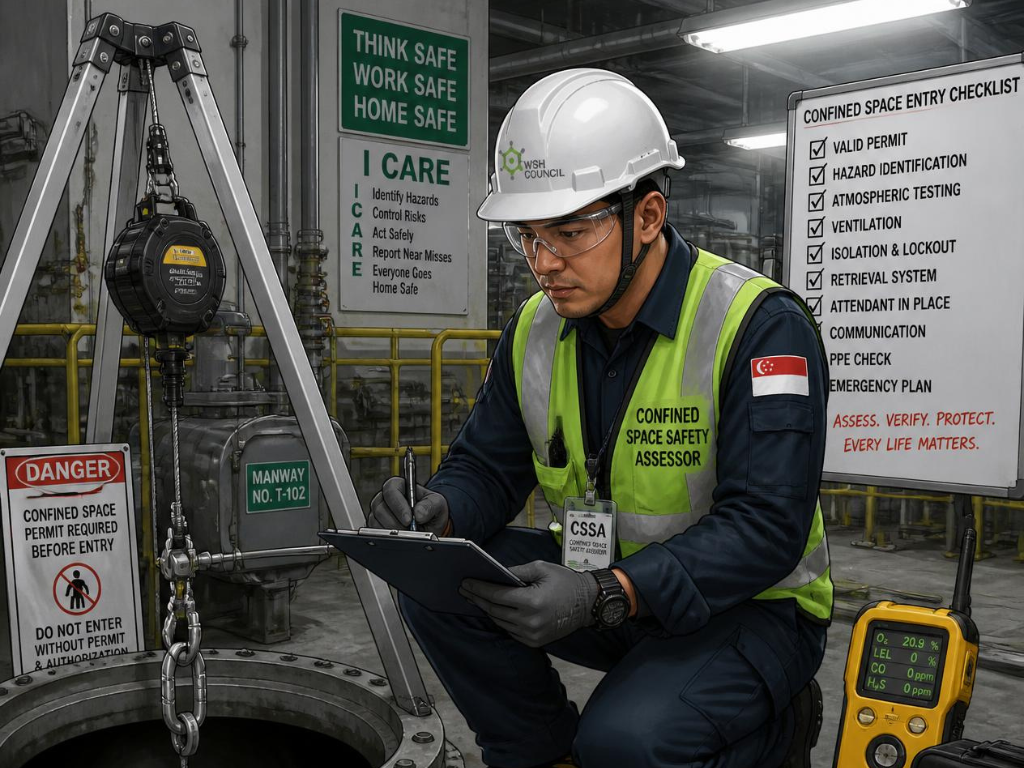
A confined space safety assessor is the competent person Singapore law requires to confirm a tank, sewer or vessel is safe before anyone enters. MOM recorded 43 workplace fatalities in 2024, and confined space entry stays among the deadliest jobs on site. Companies routinely confuse the assessor with the supervisor and the entrant, a gap that proper workplace safety training in Singapore is meant to close. This blog walks you through which certification each confined space role needs, and who your site is legally required to appoint.
What does a confined space safety assessor actually do in Singapore?
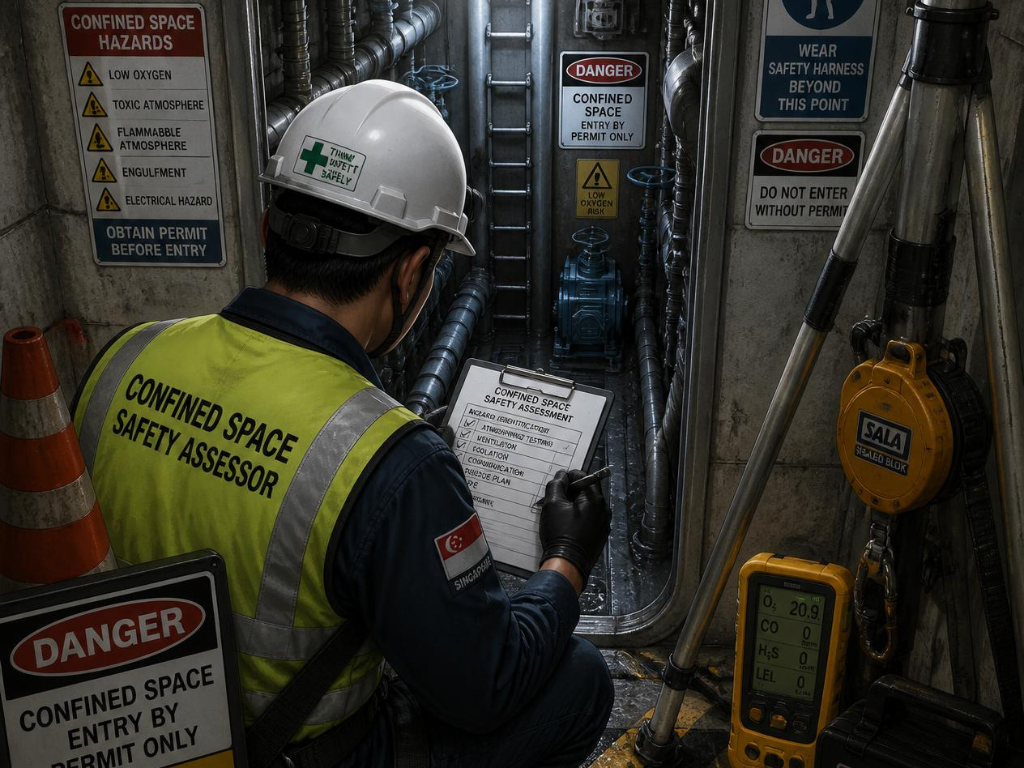
A confined space safety assessor tests the atmosphere inside a confined space and decides whether it is safe to enter. Under the Workplace Safety and Health (Confined Spaces) Regulations 2009, a responsible person must appoint one before any permitted entry, a duty set out in Regulation 9(b).
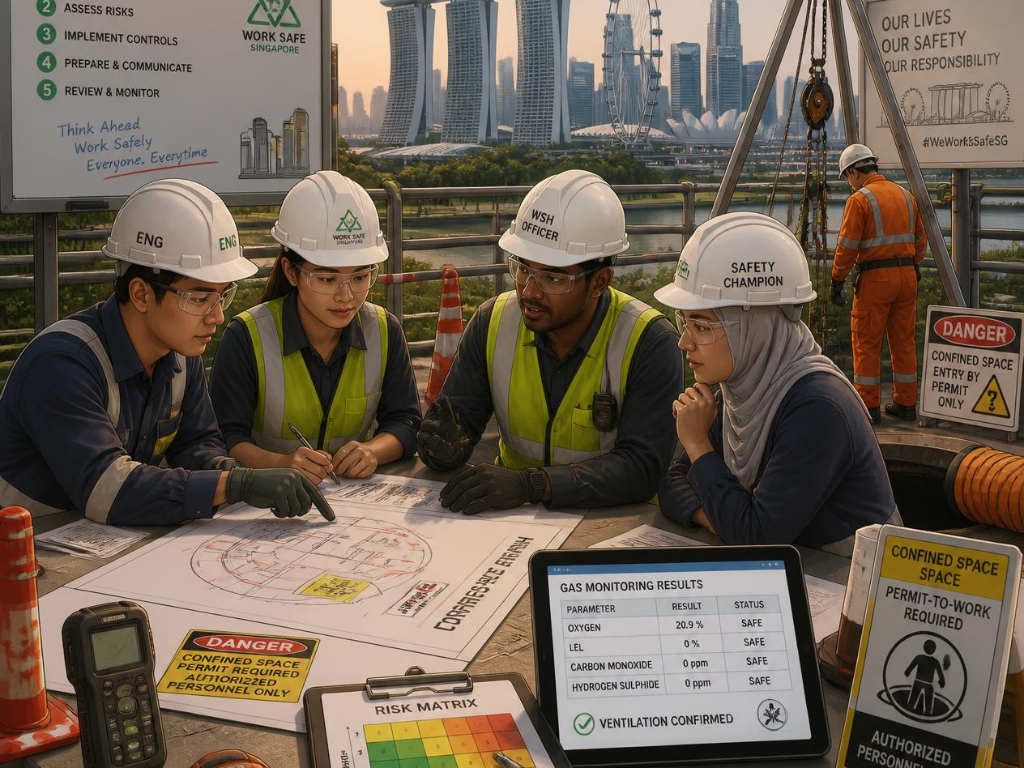
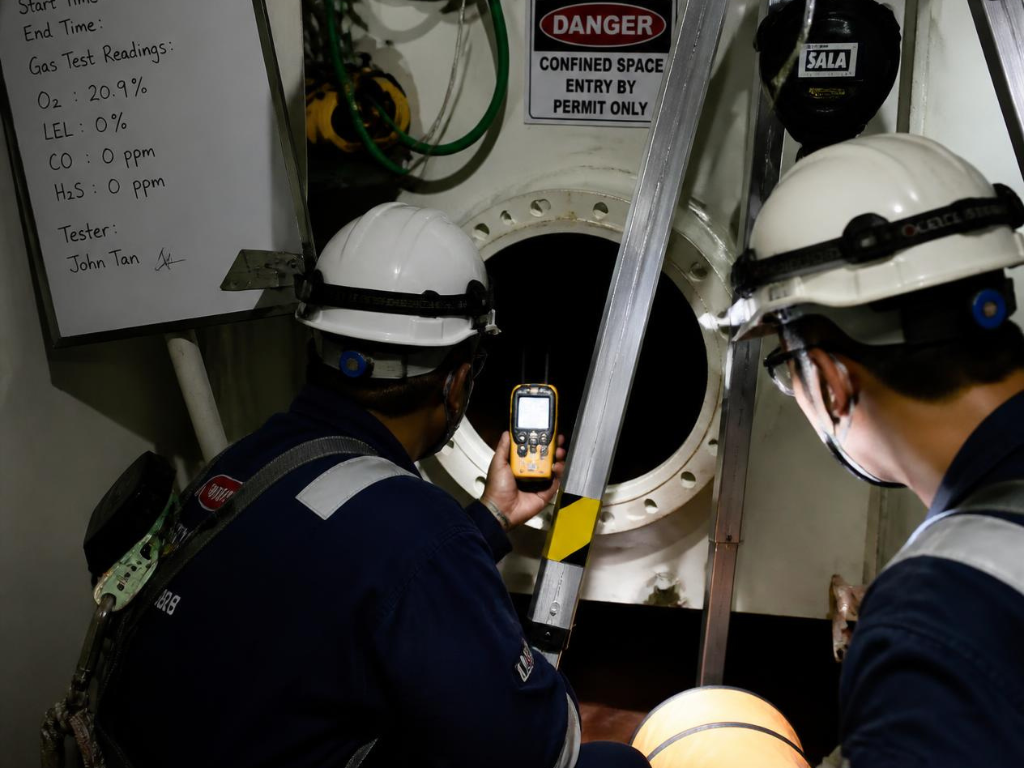
The work is technical. The assessor checks that oxygen sits within the accepted safe band of roughly 19.5% to 23%, confirms flammable gas is below 10% of the lower explosive limit, and screens for toxic gases like hydrogen sulphide and carbon monoxide using a calibrated multi-gas detector. Only then does the assessor evaluate the confined space entry permit the supervisor has submitted. A signature alone does not discharge the role. If the readings fall outside safe limits, the assessor stops the entry, and that decision is what turns a permit application into a live permit.
Who is legally required to appoint a confined space safety assessor?
The duty falls on the responsible person, usually the occupier or employer of the workplace where the confined space sits. Before anyone enters, that person must appoint a competent confined space safety assessor and ensure a valid entry permit has been issued. It cannot be delegated to the worker going in.
A risk assessment step must come first, feeding the hazards straight into the permit. Advanced Safe’s clients in marine, construction and facilities management hit this requirement constantly, because tanks, pipes, manholes and vessels all count as confined spaces once they have limited entry and a foreseeable atmospheric hazard. Where companies get caught is treating the assessor appointment as a formality to arrange after work has started. The permit and the assessor come first. Entry follows.
Confined space entrant, supervisor, assessor: which certification does each role need?
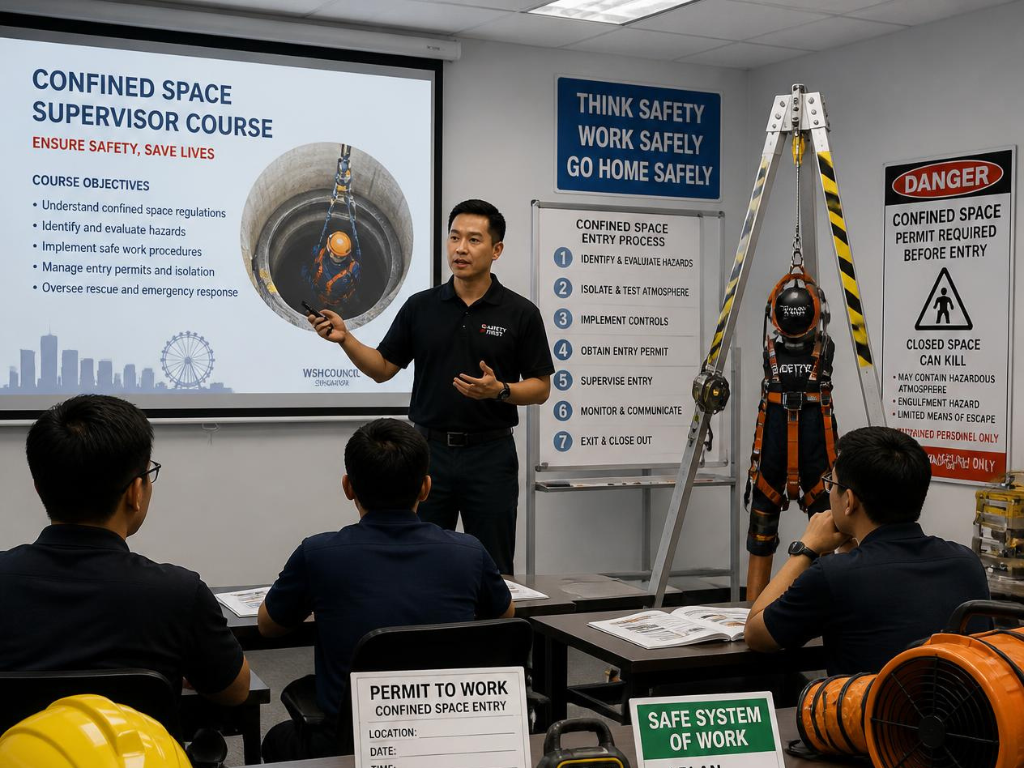
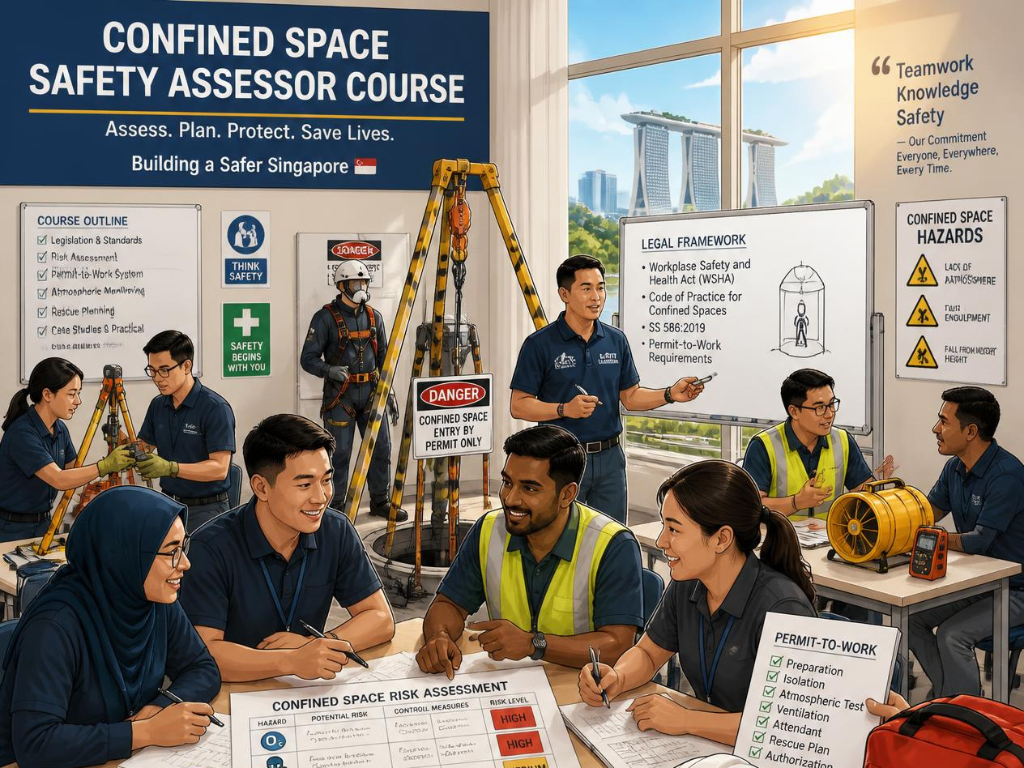
Each role maps to a specific WSQ certification, and they are not interchangeable. Sending a worker on the entrant course does not qualify them to assess, and holding the assessor certificate does not by itself make someone the site supervisor.
|
Role |
What they do |
WSQ certification |
Legal basis |
|
Entrant / worker |
Enters and works inside the space |
Perform Work in Confined Space Operation |
Reg 21 |
|
Supervisor |
Applies for the permit, supervises the work |
Supervise Work in Confined Space Operation |
Reg 11, Reg 21 |
|
Safety assessor |
Tests atmosphere, evaluates the permit |
Assess Confined Space for Safe Entry and Work (OH-CB-506E) |
Reg 9(b) |
|
Attendant |
Keeps watch outside, ready to raise the alarm |
Entrant-level training plus attendant duties |
Reg 22 |
The separation exists because each role controls a different common workplace hazard. The entrant manages their own safe work inside. The supervisor owns the permit and the crew. The assessor owns the independent atmospheric judgment. Collapse them into one certificate and you lose the checks that keep the system honest.
The role most companies forget: the confined space attendant
Regulation 22 requires a confined space attendant to keep watch outside the space for the entire duration of the entry. This is the role companies quietly drop when they are short-staffed, and it is the one that saves lives.
The attendant maintains communication with the entrant, monitors conditions from outside, and has the means to pull the worker out in an emergency without entering themselves. Confined space fatalities often involve a would-be rescuer who entered without breathing apparatus and became the second victim. The attendant exists to break that chain. In April 2026, MOM opened an investigation after a welder was found unconscious inside a pipe at a Tuas shipyard and later died, a reminder that atmospheric hazards give no warning. Regulation 22 requires an attendant trained to raise the alarm rather than enter. Treating it as optional is where sites get caught.
How the four roles work together during a single confined space entry
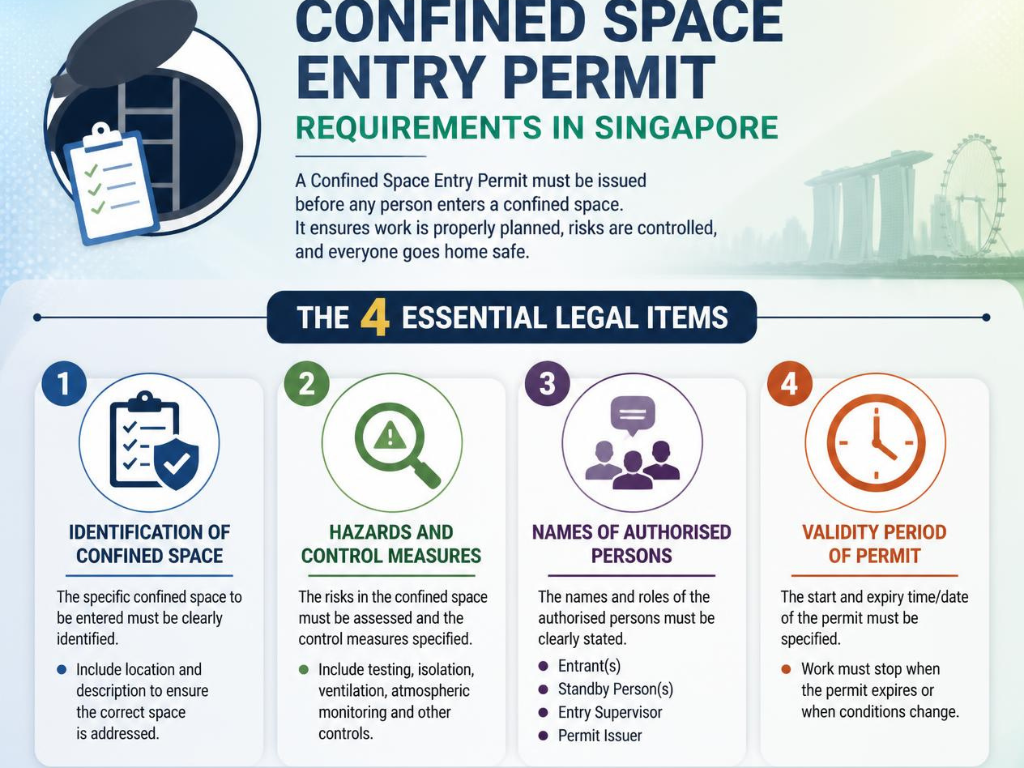
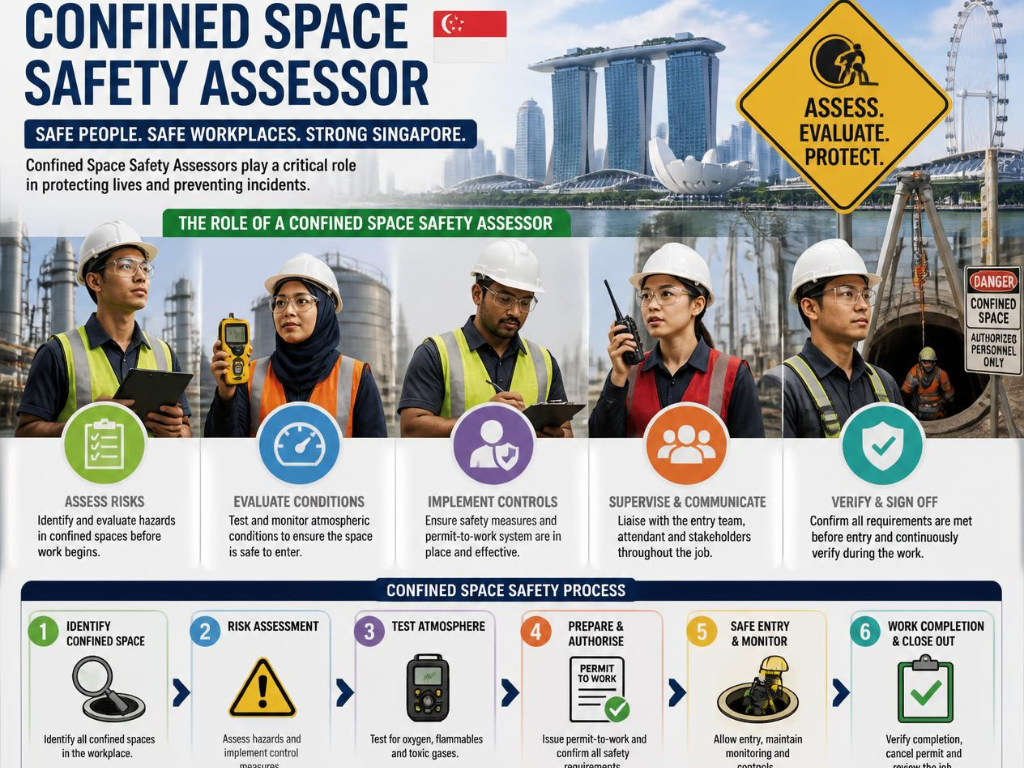
A compliant entry runs through a fixed sequence, and each role has one job in it. A risk assessment identifies the space and its hazards. The supervisor applies for the confined space entry permit and states the control measures. That application goes to the safety assessor, who tests the atmosphere and evaluates whether entry is safe.
The authorised manager issues the permit only after the assessor’s evaluation clears it. The attendant takes position outside. The entrant goes in wearing a harness and lifeline. The assessor’s readings are rechecked during the work, because conditions inside a space can shift within minutes. The permit closes when the entrant exits and the space is secured. Skip one step and the whole system fails, which is exactly why one person cannot realistically hold every role at once.
Can one person be the assessor, supervisor, and attendant at once?
No, and treating these as one job is where compliance breaks down. The roles are separated on purpose.
The supervisor is accountable for the work and has an interest in getting it done. The assessor makes an independent safety judgment on the atmosphere. Combine them and the person deciding whether entry is safe is under pressure to approve their own job. The attendant has to stay outside and focused on the entrant for the full duration, which is impossible if that same person is supervising three other tasks. Small contractors often stretch one certified worker across roles to save cost, and a solid risk management plan is what exposes that shortcut before an incident does. In practice, that stretched-thin setup is what MOM investigators find afterward. Keep the assessor independent of the supervisor, and keep the attendant free of any competing duty. Where headcount is tight, an external assessor is cleaner than collapsing the roles.
What goes wrong when the assessor is unqualified or skipped
The failure pattern is consistent. Either no assessor was appointed, or the person appointed was not competent to test the atmosphere. Singapore’s overall fatality rate improved to 0.96 per 100,000 workers in 2025 per MOM’s Workplace Safety and Health Report, yet confined space incidents keep surfacing in enforcement records because the hazard is invisible and the margin for error is small. As NTUC’s Melvin Yong said of the 2024 figures, “every number represents one life lost.”
An unqualified assessor who misreads a gas detector, or skips the check, sends a worker into an oxygen-deficient or toxic atmosphere with no warning. The fix is straightforward. Appoint a competent, MOM-recognised confined space safety assessor, keep the role independent, and make sure your entrant, supervisor and attendant each hold the right WSQ certification. Companies without a certified assessor in-house can use a confined space assessor service rather than pull an under-qualified staff member into the role. If you are unsure which of your sites need one, arrange a confined space assessment before your next permitted entry.
Conclusion
Confined space safety in Singapore comes down to matching each role to the right competency. The entrant, supervisor and attendant each need their own WSQ certification, and the safety assessor, appointed under Regulation 9(b), is the independent check that keeps the other three safe. Confusing these roles is the gap that turns a routine tank entry into a fatality investigation.
Before your next confined space job, confirm you have a competent, independent safety assessor appointed and the right certification behind every worker who goes near the space.
FAQs About Confined Space Course Singapore
Do confined space certifications expire in Singapore?
WSQ confined space Statements of Attainment do not carry a fixed statutory expiry, but competency must be kept current. Employers and MOM auditors expect refresher training when a worker has been away from confined space work, and many sites require it periodically. Confirm the current cycle with your accredited training provider before relying on an older certificate.
Who can be a confined space safety assessor?
A confined space safety assessor must be a competent person appointed by the responsible person under Regulation 9(b) and hold the WSQ Assess Confined Space for Safe Entry and Work certification (OH-CB-506E). The role suits WSH officers, coordinators and occupational hygiene technicians who can operate and calibrate gas detection equipment.
Is a confined space entry permit always required?
Yes. Under the WSH (Confined Spaces) Regulations 2009, no one may enter or work in a confined space without a valid entry permit issued after atmospheric evaluation. The supervisor applies for it, and the safety assessor’s assessment is what allows the authorised manager to issue it.
What is the difference between a confined space attendant and a supervisor?
The supervisor applies for the permit and is accountable for the work. The attendant stays outside the space for the whole entry, keeps watch, and can pull the entrant out in an emergency. Regulation 22 makes the attendant a separate, mandatory role, not a duty the supervisor can absorb.