- 28 Aug 2026
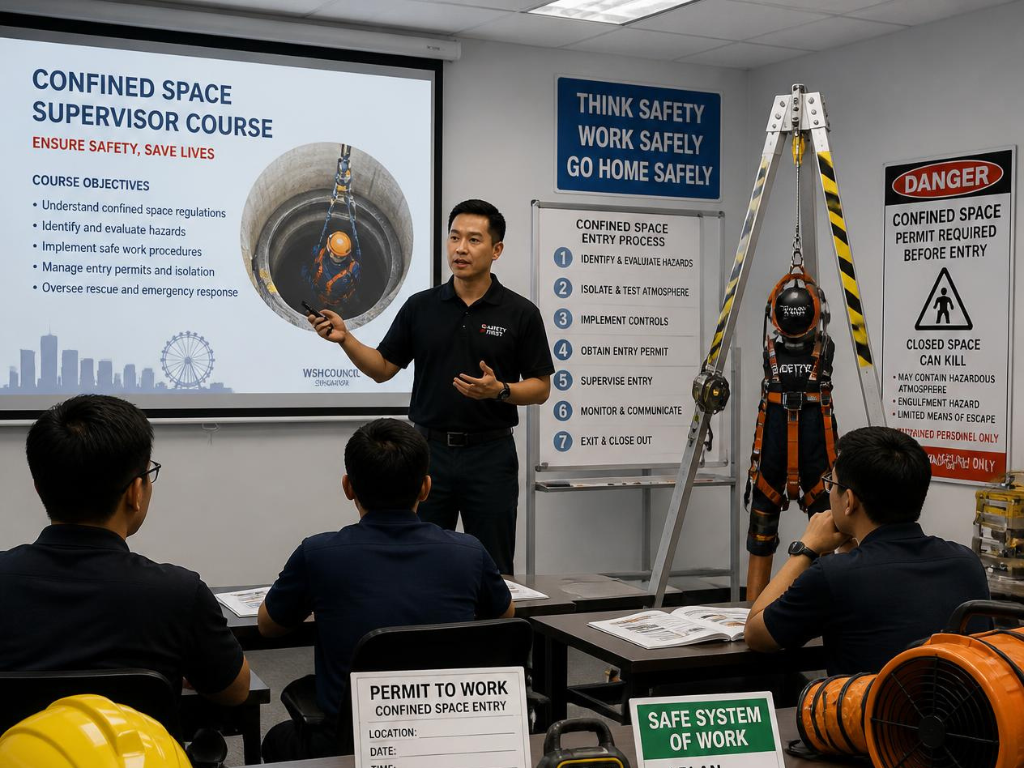
The confined space supervisor course Singapore employers book is usually treated as an attendance formality. Regulation 11 disagrees. The supervisor applies for the entry permit, and no entry is lawful without that application. MOM recorded 36 workplace fatalities in 2025, a record-low 0.96 per 100,000 workers. This blog walks you through what the supervisor controls, signs, and answers for, drawn from WSH consultancy and inspection work.
What does a confined space supervisor actually control on a Singapore site?
A confined space supervisor is the person who applies for the confined space entry permit under Regulation 11 of Singapore’s Workplace Safety and Health (Confined Spaces) Regulations 2009. The supervisor states the safety measures to be taken, prepares the space, posts the issued permit at the entrance, and can withdraw it when conditions change.
The role is upstream, not observational. Most job descriptions describe a supervisor as someone who watches workers, which gets the sequence backwards. Under the Regulations, the entry permit process cannot start until a supervisor initiates it. Regulation 11(a) states the application “shall be made by the supervisor” of the person who is to enter or work in the space.
Four control points sit with the supervisor across a single entry. The supervisor co-conducts the risk assessment, submits the permit application to the confined space safety assessor, posts the issued permit at the opening with a sketch of the work area where reasonably practicable, and withdraws the permit if a hazardous atmosphere shows up. Regulation 14 makes that posting duty explicit, along with the duty to keep the copy displayed until expiry, revocation, or the worker’s exit, whichever comes first.
Worth noting: the supervisor holds none of these powers by seniority. They attach to the function. A foreman with twenty years on site who has not been assigned as supervisor for that specific entry has no standing in the permit chain at all.
Who needs the confined space supervisor course, and who can hold the role?
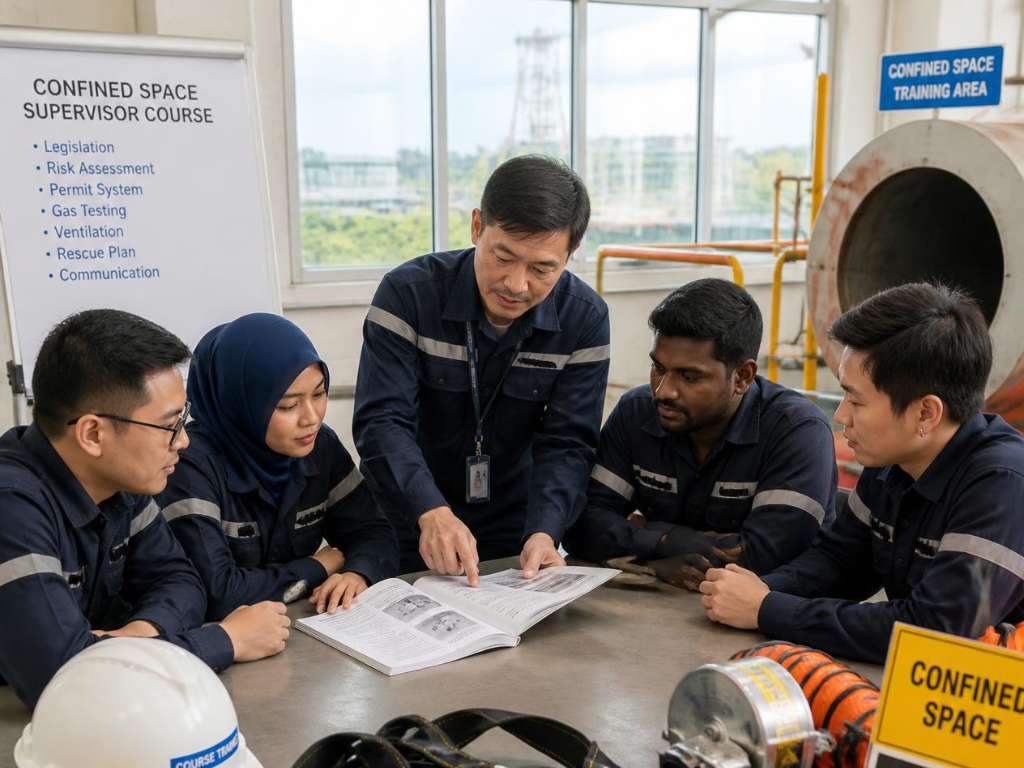
Anyone who oversees or supervises work inside a confined space. Regulation 21(2) puts a direct duty on the responsible person to ensure that a person conducting oversight or supervisory work in a confined space has first received adequate safety and health training.
The recognised qualification is the WSQ unit Supervise Work in Confined Space Operation, commonly shortened to SWCSO and previously known as the Safety Instruction Course (Manhole) for Supervisors. It sits in the WSQ Process Industry Framework at competency level 3 and functions as a core unit across all process sectors.
The realistic audience is narrower than providers advertise. Site foremen, project engineers, WSH coordinators, maintenance leads and contractor supervisors in marine, chemical, water treatment, construction and facilities management make up most of the intake. If your operation opens tanks, sewers, silos, boilers or pipeline sections, someone on that crew is legally a supervisor whether or not the job title says so.
Where this breaks down is subcontracting. A main contractor books SWCSO for its own staff and assumes the subcontractor’s crew leader is covered by the same permit. Regulation 11 attaches the application duty to the supervisor of the person entering, which on most Singapore sites is the subcontractor’s man, not yours. Six trained supervisors in the main contractor’s office do not make a single subcontractor entry lawful.
What does the supervisor sign off on, and can they issue the entry permit?
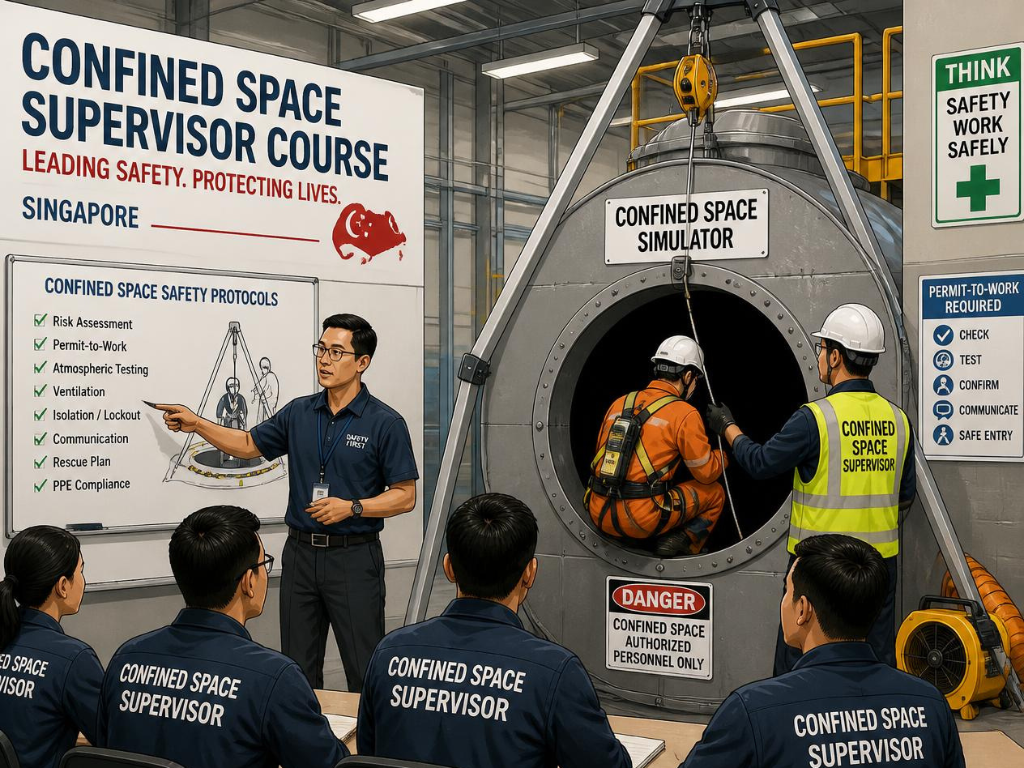
The supervisor signs the permit application and the posted permit. The supervisor cannot issue it. Regulation 13(1) reserves issuance for the authorised manager, and the supervisor’s signature sits alongside two others.
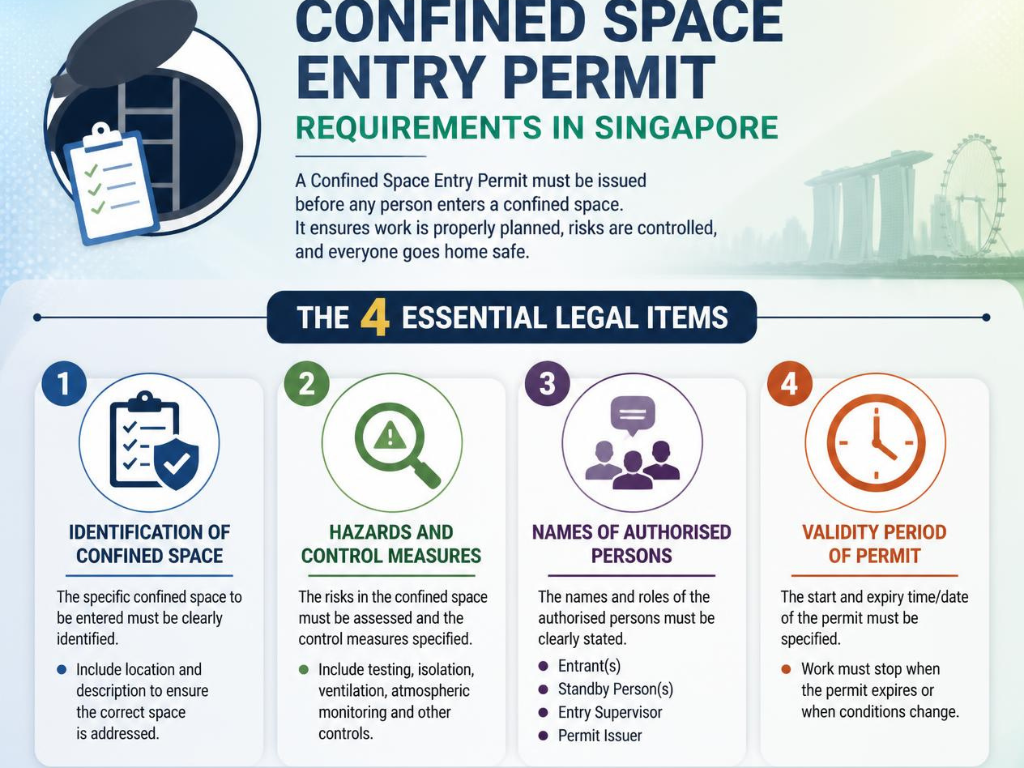
WSH Council guidance is specific about the sign-off chain: a compliant confined space entry permit carries the names and signatures of the supervisor, the confined space safety assessor, and the authorised manager. Three signatures, three functions, and the supervisor’s is the first one on the page.
What the supervisor is actually attesting to is broader than most realise. Regulation 11(c) requires the application to state the measures which will be taken to ensure the safety and health of persons entering the space. That statement has to come from somewhere, and it comes from the risk assessment. The WSH Council’s Technical Advisory requires the risk assessment to be “jointly conducted by the supervisor and the authorised manager” before the application is made. Supervisors who inherit a risk assessment they never worked on are signing for controls they cannot describe, which is the most common weakness I would flag when conducting the risk assessment is treated as a separate department’s job.
Before the application goes in, the supervisor also inspects and prepares the pre-entry requirements and briefs the intended work to everyone concerned. Barricading falls here too: the supervisor determines whether safety barriers are needed before any worker enters.
Is the confined space supervisor the same as the confined space attendant?
No, and treating them as one person breaches the Regulations. Regulation 22(2) requires the confined space attendant to remain outside the space to monitor entrants, maintain regular contact, assist evacuation, and alert rescue personnel.
The word doing the work is “remain.” An attendant who leaves the opening has stopped being an attendant. A supervisor’s job involves moving between work fronts, chasing materials, and answering to the project manager, so the two functions are operationally incompatible on any site with more than one activity running.
The penalty tier reflects how seriously the Regulations treat it. Contravention of Regulation 22(2) carries a fine not exceeding $1,000, rising to $5,000 on a second or subsequent conviction. Small numbers by WSH standards, but they are the enforcement hook, and a Stop-Work Order costs considerably more than the fine.
In practice, understaffed crews collapse the roles because the attendant looks idle. That reading is exactly wrong. The attendant is the only person whose entire assigned task is watching the people inside, and post-incident investigations across Singapore repeatedly show rescuers dying alongside entrants because nobody outside raised the alarm in time. Appoint both. If headcount forces a choice, the honest answer is that the entry should not proceed.
How does the supervisor account for everyone inside the space?
Through two separate legal mechanisms that most sites run as one informal habit. Regulation 20 requires every person entering a confined space to display their name and identification badge at the entrance, and puts a matching duty on the responsible person to ensure it happens. Regulation 15(2) then requires the responsible person to inform the authorised manager once that person has left the space after completing the work.
Badge in, notification out. That pairing is Singapore’s occupancy control, and it only works if someone physically manages the board at the opening. The supervisor is the person standing closest to it.
The failure mode is predictable. Crews swap out mid-shift, a replacement worker goes in without hanging a badge, and the tally at the entrance no longer matches the bodies inside. If the space then has to be evacuated, the count that determines whether a rescue team goes in is wrong. Rescue teams entering a space to retrieve someone who already walked out is not a hypothetical waste of time. It puts trained rescuers into an atmosphere that has already proven hazardous.
Regulation 20 breaches carry the same tier as attendant failures: up to $1,000, and up to $5,000 on repeat conviction. Treat the badge board as a live document rather than a formality, and reconcile it at every shift change.
What is the supervisor responsible for in an emergency?
Less than employers assume, and the gap is dangerous. The SWCSO learning outcome is to “assist in implementing” an Emergency Response Plan. Regulation 23(1) places the duty to establish a written rescue plan, appoint trained rescuers, and provide rescue equipment on the responsible person, meaning the employer or principal.
That split matters because rescue plans decay when nobody owns them. A supervisor who assumes the plan is their document will maintain it informally and without authority. A responsible person who assumes the supervisor owns it will never review it. The plan then sits in a folder describing equipment the site no longer has.
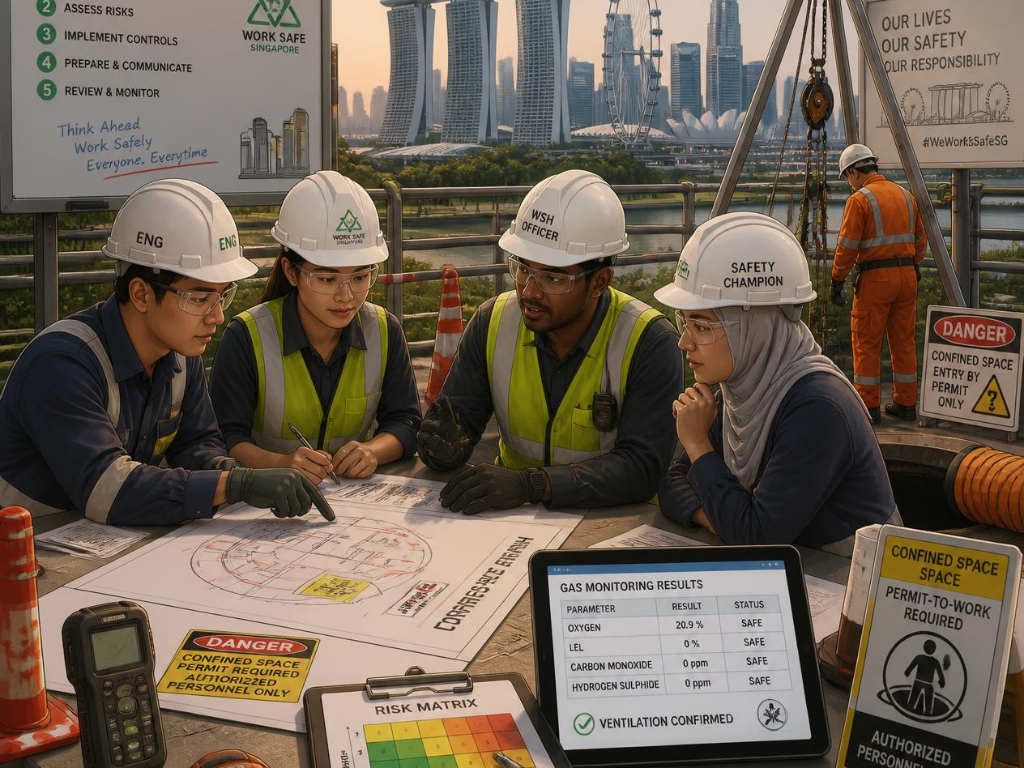
What the supervisor does own is readiness at the point of work. Rescue equipment must be kept readily available, properly maintained, and thoroughly examined by a competent person at least once every month. Rescue drills must be held at least once every 12 months, with records covering the date, personnel involved, and evaluation. Retrieval systems need to be capable of removing a worker within 2.5 minutes.
The timeline explains the urgency. WSH Council guidance notes that roughly four minutes without adequate breathing causes permanent brain damage, and that resuscitation generally needs to begin within four minutes of collapse. Waiting on external emergency services is not an acceptable rescue arrangement where the risk assessment shows a timely rescue is needed. Confined space entry stays near the top of the list of hazards that kill on Singapore sites largely because unplanned rescues turn one casualty into several.
When can the supervisor stop work and withdraw the permit?
The moment a hazardous atmosphere is detected. WSH Council guidance gives the supervisor or the confined space safety assessor authority to withdraw the entry permit when periodic testing or continuous monitoring shows the atmosphere has gone hazardous.
Withdrawal and revocation are different acts by different people, and the distinction is worth getting right. The supervisor withdraws the permit and displays “No Entry” signage at the opening. The authorised manager revokes it under Regulation 18. Regulation 16(1)(c) then requires everyone to vacate immediately, an evaluation to establish how the hazardous atmosphere developed, and a new permit before anyone goes back in.
Restarting is the supervisor’s job again. Once the atmospheric hazard has been removed, the supervisor raises a fresh entry permit and the whole application sequence under Regulation 11 runs from the beginning. There is no shortcut back to the original permit, and any site treating the first permit as still valid after an evacuation has misunderstood the mechanism entirely.
The threshold for withdrawal is not judgement. Oxygen outside 19.5% to 23.5% by volume, flammable gas at 10% or more of its lower explosive limit, or toxic substances above the permissible exposure levels in the First Schedule to the WSH (General Provisions) Regulations all meet the definition of a hazardous atmosphere under Regulation 2. When the detector alarms, the decision has already been made.
Regulation 17 gives the supervisor a second trigger. Anyone aware of incompatible work being carried out near a confined space must report it immediately to their supervisor, the WSH officer, the WSH coordinator, or the authorised manager. Hot work starting twenty metres from an open tank is the textbook case.
What are the entry requirements, duration, and cost of the SWCSO course?
Requirements vary more than the market admits, so verify against the specific training organisation before booking. Access Safety & Rescue lists total duration at 21 hours including training and assessment, delivered classroom-based with theory, practical and assessment components.
Attendance rules conflict across accredited providers. SCAL Academy states that participants achieving 75% attendance and assessed competent receive an ID card and a WSQ Statement of Attainment issued by SkillsFuture Singapore. WFA states 100% attendance for classroom facilitated training. Literacy prerequisites diverge further, ranging from Employability Skills System Level 2 at Access Safety & Rescue to Workplace Literacy and Numeracy Level 5 at SCAL Academy. Age 18 and medical fitness are common across providers.
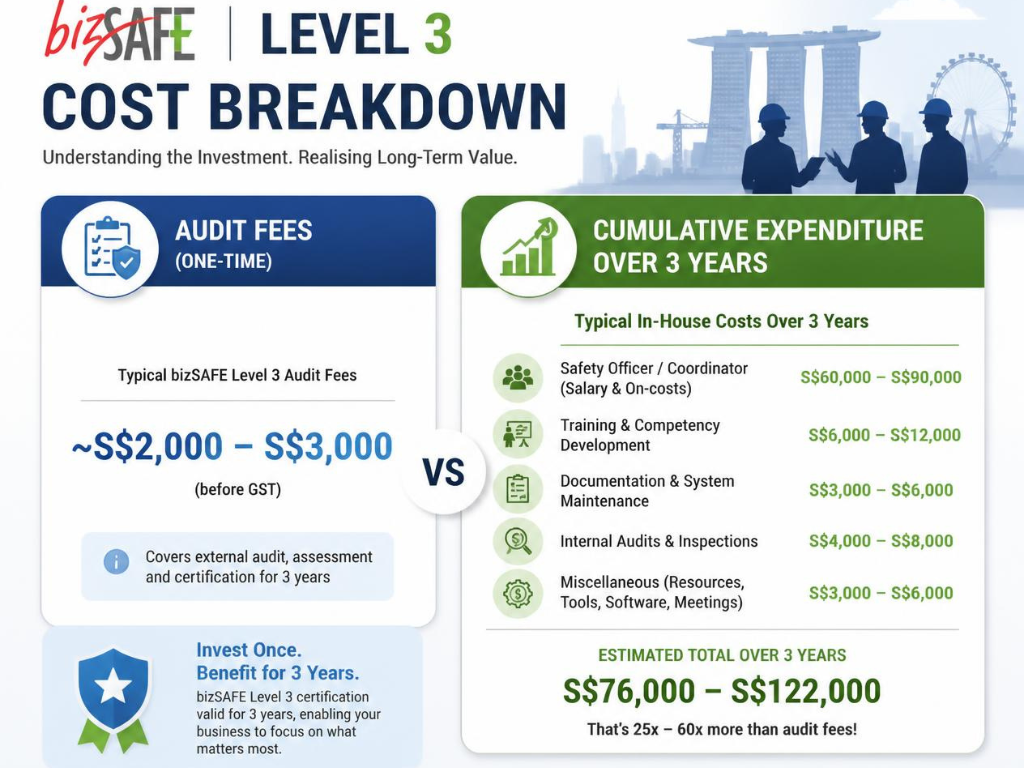
Pricing sits at the accessible end of WSH training. ASPRI-Institute of Process Industry listed the SWCSO fee at $256.15 including GST for public participants and $239.80 for ASPRI members. SSG funding of up to 70% applies for eligible Singapore Citizens and Permanent Residents, with SME and mid-career subsidies stacking above the 50% baseline.
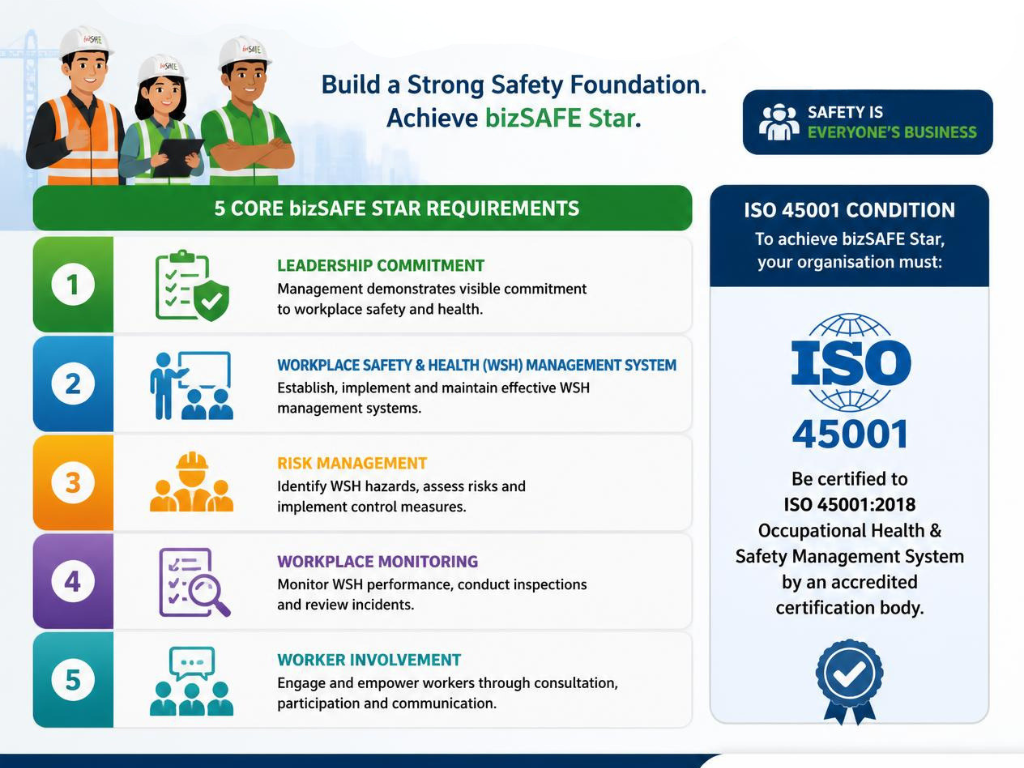
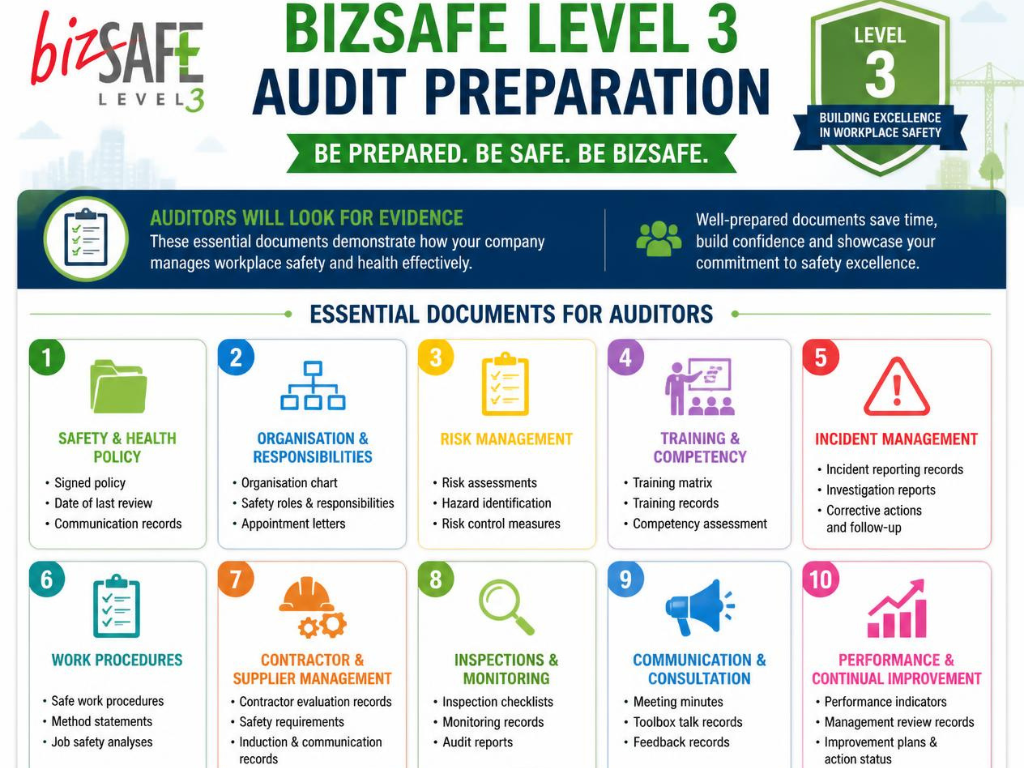
Course codes differ by provider rather than by content, which confuses procurement teams comparing quotes. WFA runs SWCSO under TGS-2022013924; AKC runs it under TGS-2013500789. Both deliver the same competency unit. Supervisors who also carry risk management duties often pair SWCSO with supervisor-level risk management training at bizSAFE Level 2, since the joint risk assessment duty under the Technical Advisory assumes the supervisor can actually build one.
What is the supervisor personally liable for if something goes wrong?
Personally, and up to two years. Regulation 24(1) exposes an individual who contravenes the Regulations to a fine not exceeding $20,000, imprisonment not exceeding two years, or both.
The tiers below that are more specific. Contravention of Regulation 9 or 10(1), covering failure to appoint required roles or permitting entry without evaluation and a permit, carries a fine not exceeding $20,000. Regulation 20 and 22(2) breaches, meaning identification badges and attendant duties, draw up to $1,000 and up to $5,000 on repeat. Regulation 23(2) failures by the competent person examining rescue equipment draw up to $2,000, and $5,000 on repeat.
Where supervisors get exposed is the application itself. Regulation 11(c) requires the application to state the measures which will be taken. A supervisor who signs an application describing ventilation, isolation and rescue arrangements that were not actually in place has made a written statement that an MOM investigation will read back to them line by line.
Documentation is the defence. Risk assessments must be reviewed at least once every 3 years and records kept for at least 3 years. Permit and gas test records must be retained for not less than two years under Regulation 16(3). Supervisors working from a system that handles turning controls into a written plan survive scrutiny. Those working from memory and a signed form do not. Companies unsure which category they fall into can get the whole chain checked through permit system audit support.
The first signature on the permit is the one that starts everything
Singapore’s confined space framework gives the supervisor the narrowest formal powers and the widest practical exposure. The supervisor cannot issue a permit, cannot own the rescue plan, and cannot serve as the attendant, yet nothing lawfully begins without their application and nothing continues once they withdraw it. Understanding that boundary is what separates a supervisor who controls an entry from one who merely attended a course.
Have your confined space permit chain audited before the next shutdown: supervisor appointments, joint risk assessments, badge board reconciliation, rescue drill records and monthly equipment examinations. Advanced Safe Consultants can review it against Regulations 11 to 23 and show you where the paperwork and the site disagree.
FAQs About Confined Space Supervisor Course Singapore
Do you need to complete PWCSO before the confined space supervisor course?
It is recommended, not mandatory. WFA advises completing WSQ Perform Work in Confined Space Operation before SWCSO, since supervisors who have never worked inside a space struggle to assess controls from outside it. Entry requirements across providers focus on literacy, numeracy, age 18 and medical fitness rather than prior confined space units.
Does confined space supervisor certification expire in Singapore?
The WSH (Confined Spaces) Regulations 2009 impose no expiry on the qualification. Regulation 21(2) sets a continuing duty on the responsible person to ensure supervisory personnel have received adequate training. Individual providers and safety card schemes apply their own renewal cycles, so confirm the validity attached to your SSG Statement of Attainment.
What is the difference between the confined space supervisor and the authorised manager?
The supervisor applies for the entry permit under Regulation 11; the authorised manager issues it under Regulation 13. The authorised manager also reviews the need for entry daily and holds sole power to revoke. Both are appointed for the specific confined space, and both sign the permit alongside the safety assessor.
What must a supervisor do if incompatible work is happening nearby?
Report it immediately. Regulation 17(1) requires anyone aware of work near a confined space that is incompatible with work inside it to report to their supervisor, the WSH officer, the WSH coordinator, or the authorised manager. Hot work near an open tank is the standard example.
Can a confined space supervisor also be the confined space safety assessor?
The Regulations structure them as separate functions. Regulation 11(d) requires the supervisor to submit the application to the safety assessor, and Regulation 12(3) requires the assessor to forward the endorsed application onward. The entry permit carries both signatures separately, which only works if two people hold the roles.