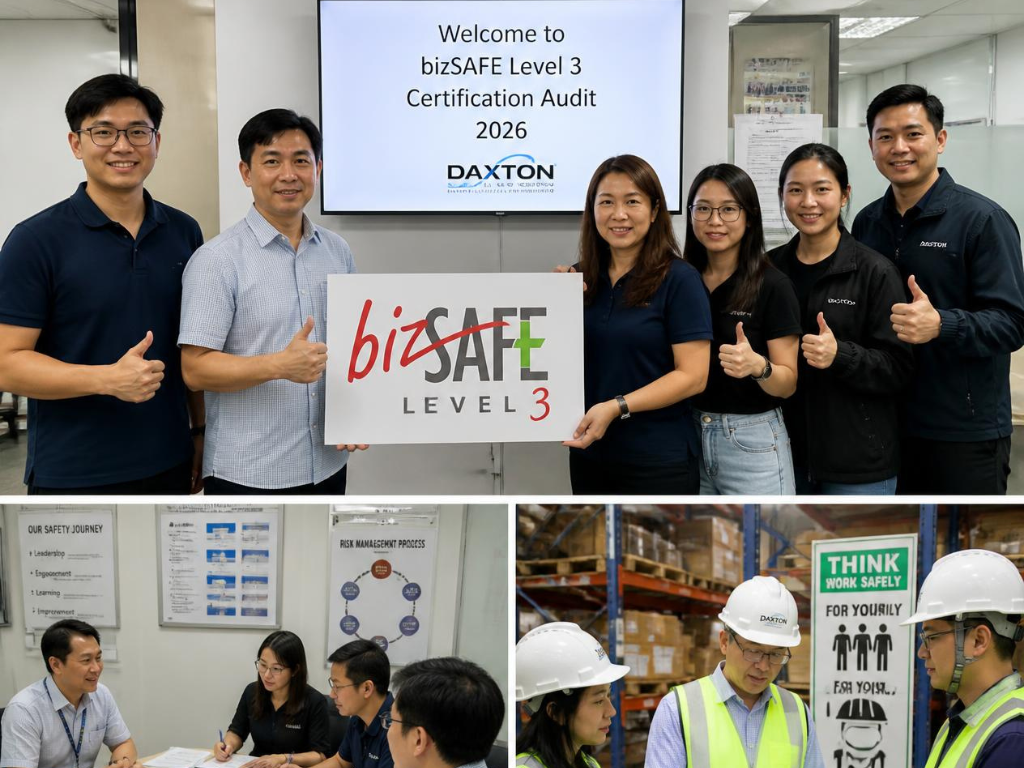
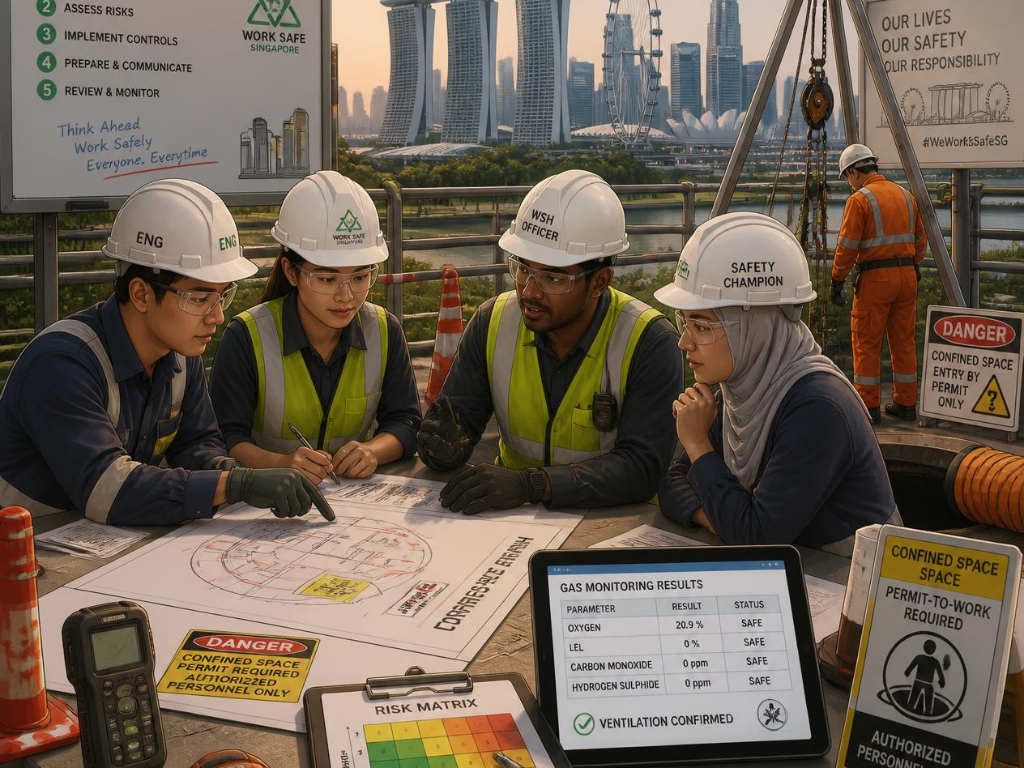
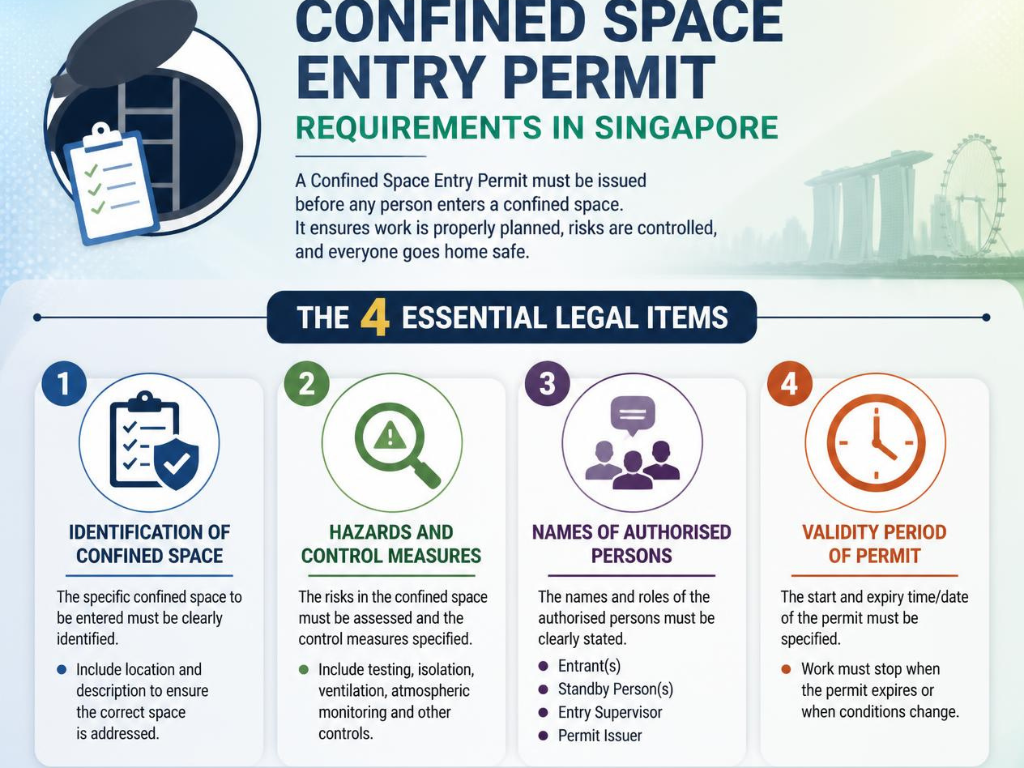
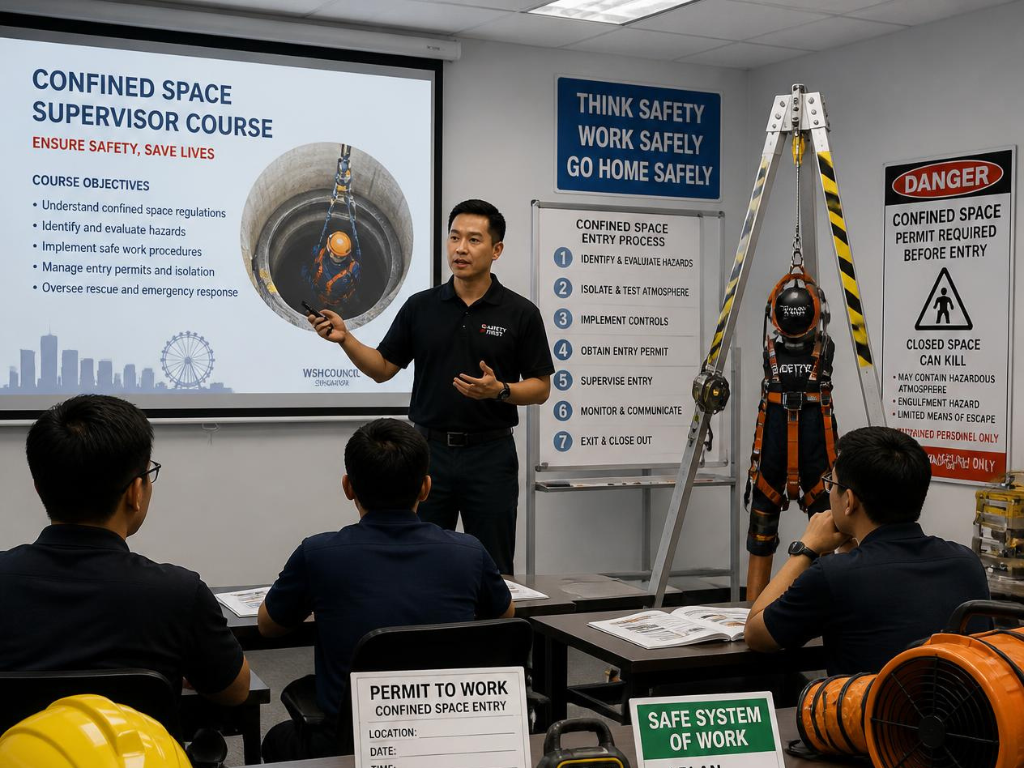
- 08 Sep 2026
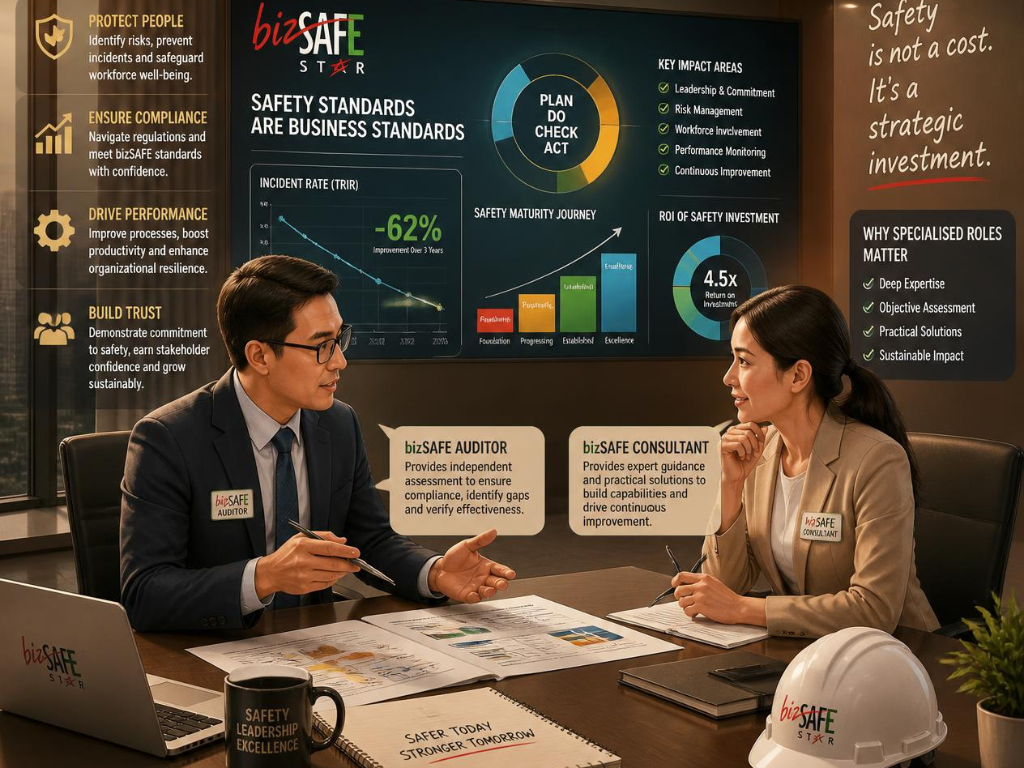
The bizSAFE auditor vs consultant question in Singapore has one answer written into accreditation rules: they are separate roles that one legal entity cannot hold for the same client. MOM’s list of accredited auditing organisations, updated 28 August 2026, names 39 firms. This blog walks you through the boundary, starting with the Level 2 risk management training that sits on the consultant side of it.
What is the difference between a bizSAFE auditor and a bizSAFE consultant?
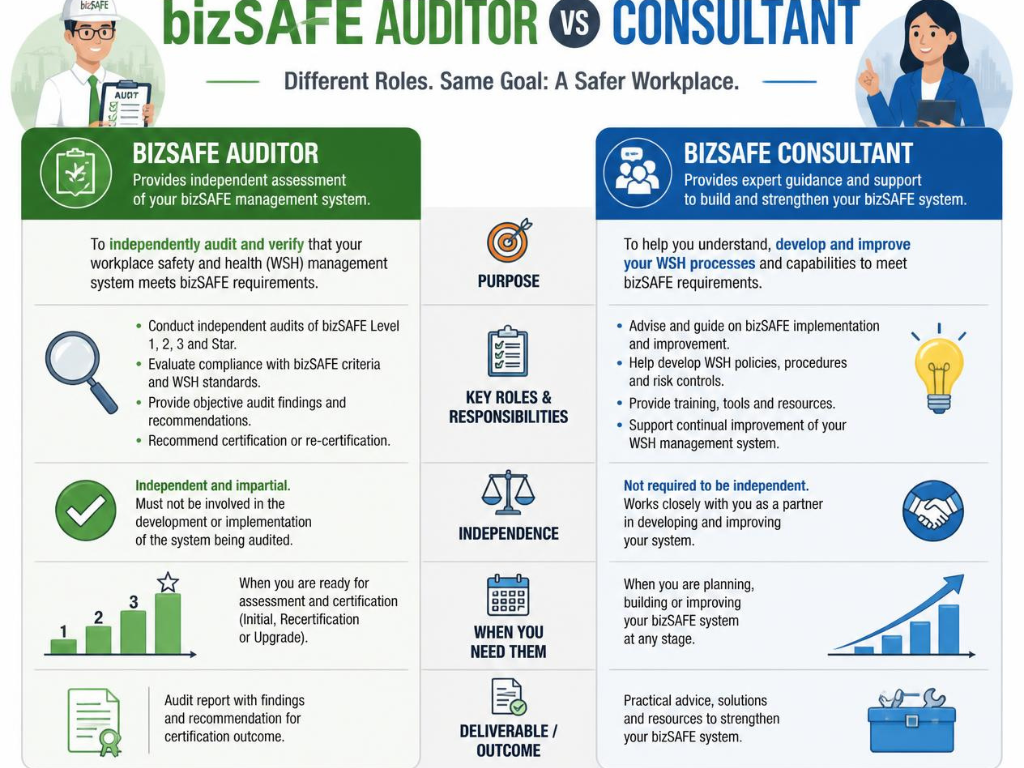
The consultant builds your Risk Management system. The auditor judges it. The consultant works for you and has an interest in your certificate arriving. The auditor works to a checklist and submits a recommendation to the WSH Council that can go either way.
A consultant runs gap analysis, writes the inventory of work activities, drafts risk assessments and safe work procedures, coaches your Risk Management Champion, and gets your evidence in order. Advanced Safe Consultants sits here, offering WSH consultancy and inspection alongside risk management services for bizSAFE 3 certification.
An Auditing Organisation does none of that. It reviews your documents against the bizSAFE Level 3 Risk Management Audit Checklist, walks your workplace, interviews your employees, writes a report, and recommends or declines. The audit report is what the WSH Council acts on.
The two roles point in opposite directions by design. One is paid to make you ready. The other is paid to test whether you are. Understanding what a WSH consultant does day to day makes the separation obvious the moment you see both scopes written down.
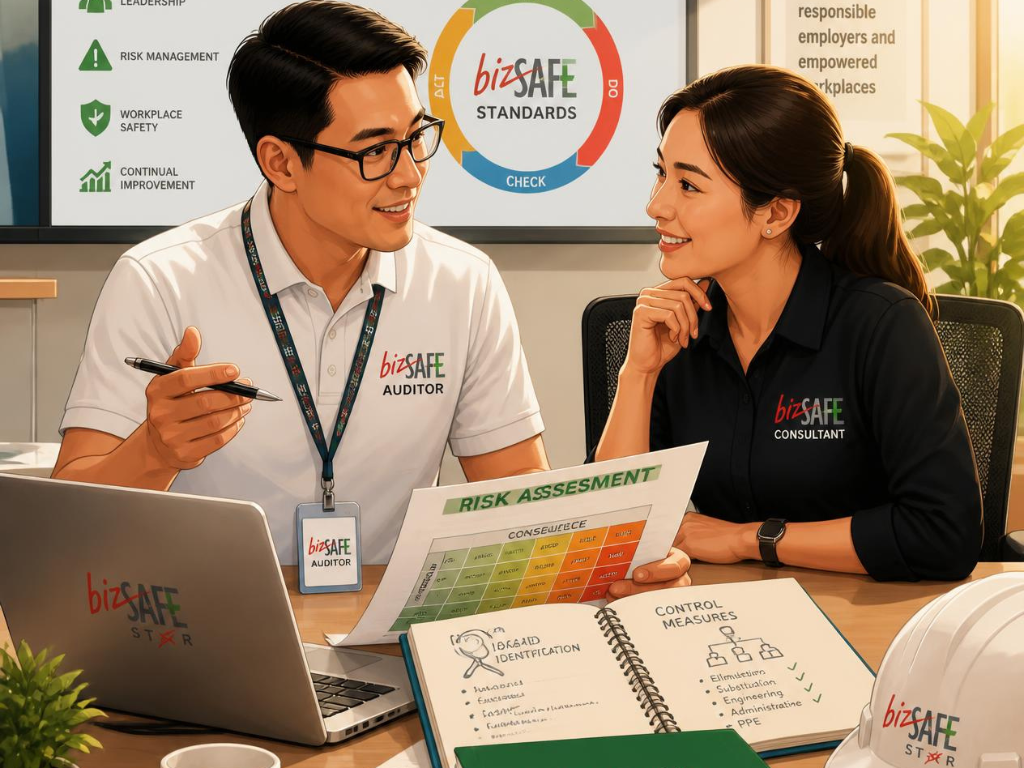
Can the same company be your bizSAFE consultant and your bizSAFE auditor?
No. Under the accreditation criteria that govern every Auditing Organisation in Singapore, the AO and any part of the same legal entity are barred from offering management system consultancy at all. Not just to you. To anyone.
This is where most published explanations go slightly wrong. The common line is that an auditor cannot audit a client it consulted for within two years, which suggests a waiting period solves the problem. Two separate rules are running here, and they bite differently.
The first is an outright ban at entity level. The second is a two-year bar at personnel level, which catches individuals who move between firms or wear two hats inside a group structure. A company that markets itself as your one-stop bizSAFE partner covering documentation and certification is either not an Auditing Organisation, or it is operating outside its accreditation criteria. Both answers should end the conversation.
What rule actually forbids one firm from doing both?
SAC CT 17, the criteria for accreditation of auditing organisations, which MOM adopted as the basis for recognising WSH auditing organisations from 1 October 2018. CT 17 is a modified version of ISO/IEC 17021-1, the international standard for bodies that audit and certify management systems.
Clause 5.2.5 of ISO/IEC 17021-1 states that the certification body, any part of the same legal entity, and any entity under its organisational control shall not offer or provide management system consultancy. Occupational safety and health management systems are named as an example of management system consultancy, which puts bizSAFE Risk Management work squarely inside the definition.
CT 17 then amends clause 5.2.10 so that personnel who have provided management system consultancy to an organisation, including those acting in a managerial capacity, cannot take part in that client’s audit if they were involved in consultancy for the client in the past 2 years. Clause 5.2.9 goes further and bars the AO from marketing its activities in a way that links them to management system consultancy, or implying that certification is simpler, faster or cheaper if a particular consultancy is used.
The Singapore Accreditation Council’s position in CT 17 is that AO personnel “shall not allow commercial, financial or other pressures to compromise impartiality.” The clause exists because the pressure is real and predictable.
Who can legally audit bizSAFE Level 3 in Singapore?
A WSH auditor approved by the Commissioner for Workplace Safety and Health, working through an auditing organisation accredited by the Singapore Accreditation Council under CT 17 and registered with MOM. No other party can produce a Risk Management audit report the WSH Council will accept.
The registration mechanics are public. An organisation must hold SAC CT 17 accreditation, list at least 2 WSH auditors on its SAC AO Schedule, maintain an established auditing methodology, and be registered with ACRA. Registration with MOM costs $110 per auditor with a minimum of 2 auditors, and takes up to 30 working days from full submission. The registration stays valid for as long as the SAC accreditation on CT 17 holds. The governing regulations are the WSH (Safety and Health Management System and Auditing) Regulations 2009.
Independence is enforced a second time inside the AO. The version log of the bizSAFE Level 3 Risk Management Audit Checklist records that from February 2022, the audit report must be approved before issuance by persons or committees different from those who carried out the audit, following ISO/IEC 17021-1. The auditor who walked your site does not sign off their own report.
How many auditing organisations can you actually choose from?
Thirty-nine. MOM’s published list of accredited SAC-AOs providing WSH auditing services, updated 28 August 2026, names 39 organisations, each carrying an SAC certificate number.
All 39 hold a bizSAFE Risk Management audit scope, so the whole list is available to you for a Level 3 audit. The picture narrows fast once sector scope matters. 38 of the 39 cover construction worksites. 14 cover the metalworking industry. 13 cover shipyards. Only 9 cover oil refinery or petrochemical work.
That last number is the one to sit with. A petrochemical operator choosing an auditor is choosing from nine firms, and if any of those nine has a group relationship with the consultancy that wrote your risk assessments, your real pool is smaller again. Check scope before you check price.
Worth noting: the list is a PDF that MOM updates periodically, and organisations move on and off it. Verify against the current version rather than a copy your consultant emailed you last year.
What does a WSH auditor have to prove before MOM approves them?
Either a relevant degree plus registration as a WSH Officer with at least 5 years of WSHO experience, or a relevant degree plus at least 7 years of WSH experience. MOM publishes both routes on its application page for adding a WSH auditor.
Those thresholds explain the shape of the market. A pool of 39 accredited organisations in a country with roughly 43,000 bizSAFE-recognised companies is not an accident of demand. It is a supply constraint created deliberately, because the audit is the only independent check in the whole bizSAFE structure.
CT 17 adds further constraints on how AOs use people. External auditors appointed by one AO cannot be external auditors of another, and the AO must analyse and document any impartiality risk when external auditors are used. Some AOs are also required to form an Impartiality Committee that is demonstrably independent of association members.
None of this applies to consultants. Anyone can call themselves a bizSAFE consultant in Singapore. There is no register, no accreditation criteria, and no minimum experience threshold. The asymmetry is the single most useful thing to understand about this market.
Does your consultant submit the audit report to the WSH Council?
The Auditing Organisation submits the audit report recommendation. You submit the bizSAFE Enterprise application. The WSH Council is direct about this, advising companies to submit the application themselves because there is a “risk of fraud or forgery” when it is delegated to a consultant.
The advice has teeth behind it. Auxiliary Enforcement Officers conduct random onsite verification inspections of Risk Management audits as part of the application process, checking whether the Auditing Organisation followed the checklist and audited stringently. An unsatisfactory verification means re-conducting the audit. The WSH Bulletin of 5 August 2025 reported a company director sentenced for issuing forged bizSAFE certificates.
Applications are tagged to your UEN, the e-certificate goes to your senior management representative, and processing takes 10 working days. Handing that step to a third party removes your only direct view of what was filed in your company’s name. Keep it.
What happens if the same firm does both anyway?
Your application carries a defect that surfaces at verification rather than at audit. The Auditing Organisation carries an accreditation problem. Neither of you finds out on a convenient timetable.
The practical failure runs like this. A group markets consultancy and auditing under related brands. Its consultant writes your risk assessments. Its auditor signs them off. The audit report goes to the WSH Council, your certificate arrives, and nothing happens for eighteen months. Then an Auxiliary Enforcement Officer verification inspection lands on your file, or a main contractor doing due diligence asks who audited you, or the AO faces an SAC assessment that examines its impartiality records.
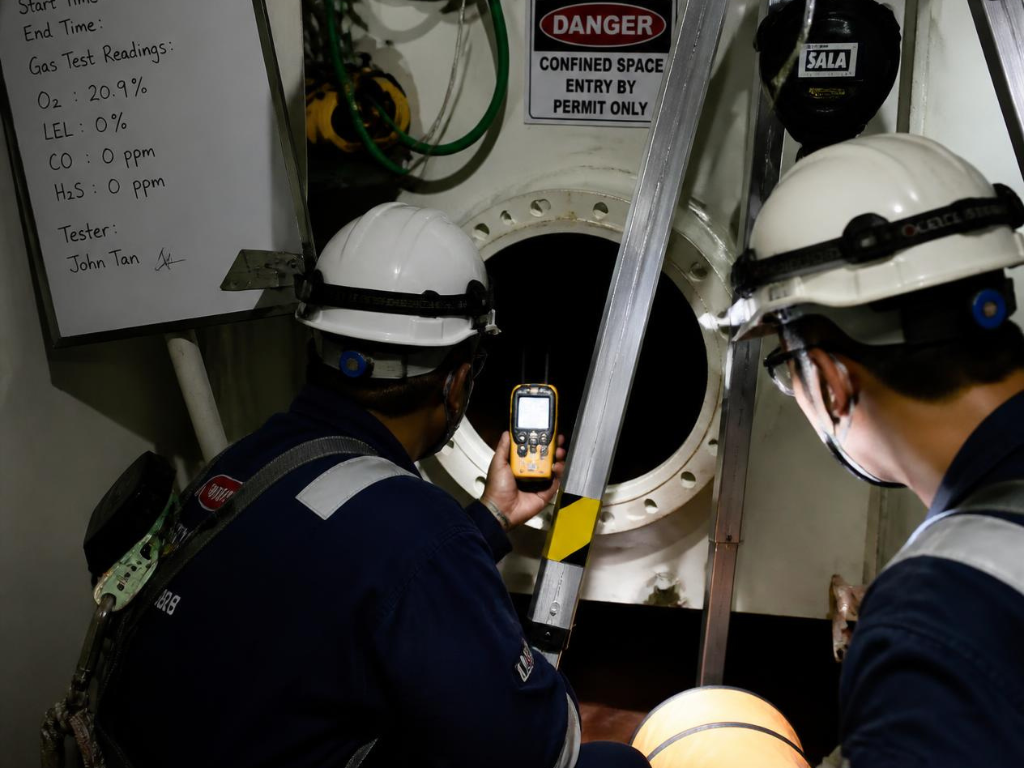
Where this breaks down for you specifically is that you paid for an audit that did not test anything. The findings your auditor did not raise are still present in your workplace. Section 4 of the Risk Management Audit Checklist carries eight implementation questions that pair document review with physical inspection, and a captive auditor walks past the same gaps a MOM inspector will later stand in front of. The safety audit expectations a MOM inspector brings do not soften because your certificate is framed.
How do you check whether a provider is an auditor or a consultant?
Look them up on MOM’s list of accredited SAC-AOs and check for an SAC certificate number. If the firm is not on that list, it is a consultancy, whatever its marketing says. The check takes under five minutes.
Then ask three direct questions before signing anything. Are you a MOM-registered Auditing Organisation, and what is your SAC certificate number. Does your organisation, or any entity in your group, provide WSH consultancy. Has anyone on the proposed audit team consulted for us in the past two years.
A legitimate AO answers all three without hesitation, because CT 17 requires it to maintain records of exactly that analysis. Hesitation is the answer. Checking provider credentials properly at this stage costs nothing and removes the most expensive category of mistake available in bizSAFE.
Advanced Safe Consultants states its position plainly: it prepares companies for the Risk Management audit and does not conduct it. Any consultancy that will not draw that line as clearly is describing a service the accreditation framework does not permit.
What should you look for when choosing each one?
Different criteria entirely, because the two suppliers are solving different problems. Judge the auditor on scope and independence. Judge the consultant on sector experience and implementation depth.
For the Auditing Organisation, the questions are narrow. Does its SAC scope cover your sector, given that only 9 of the 39 listed firms cover oil refinery or petrochemical work. How many sites will it walk. Who reviews the report before issuance. What are the group relationships. Price sits last, because a cheap audit that fails verification costs you a second audit.
For the consultant, the questions are about your operations. Has this firm written risk assessments for your kind of work activity. Will a consultant walk your floor and interview supervisors, or adapt templates remotely. Is a pre-audit mock included. Does the scope cover safe work procedures for high-risk tasks or stop at risk assessments. Comparing WSH consultancies on those terms produces a very different shortlist from comparing them on day rate.
The cleaner sequence is to appoint the consultant first, get the documentation and implementation genuinely done, then run the AO selection as a separate procurement with independence as a stated requirement. Companies that shop for both at once end up with a package that quietly breaches CT 17.
Can your consultant sit in on the audit?
Yes, as an observer supporting your team, and this is normal practice. The line is participation in the audit itself, which belongs to the auditor alone.
A consultant present on audit day helps you find documents, keeps the walkthrough moving, and hears the findings first-hand so remediation starts the same afternoon. None of that compromises anything, because the consultant is on your side of the table and everyone in the room knows it.
What the consultant cannot do is answer for your employees. The checklist directs the auditor to interview three employees on policy awareness, three implementation persons on their plans, and managers, supervisors and workers on safe work procedure adherence. A consultant answering those questions on behalf of staff produces a finding, because the question is testing whether your people know, not whether your adviser does.
Brief your team properly in the weeks before. That is the consultant’s job, and it is finished before the auditor arrives.
Separate the two purchases
The bizSAFE structure only works because one party in it has nothing to gain from your certificate. That independence is written into SAC CT 17 as an outright ban on auditing organisations offering consultancy, backed by a two-year personnel bar and a requirement that someone other than your auditor approves the report. Treating the two roles as one purchase saves a phone call and costs you the only genuine check in the system. Appoint them separately, in that order, and the audit tells you something worth knowing.
Book an independent audit-readiness review with Advanced Safe Consultants to get your Risk Management documentation and site controls tested before you approach an Auditing Organisation.
FAQs About BizSAFE Auditor vs Consultant Singapore
Can a bizSAFE consultant become my auditor after a waiting period?
Not as the same legal entity. SAC CT 17 bars an Auditing Organisation and any part of the same legal entity from offering management system consultancy at all, so no waiting period cures it. The two-year rule in clause 5.2.10 applies to individual personnel moving between roles, not to firms holding both.
Does my auditing organisation need experience in my industry?
Its SAC scope must cover your sector, and that is a hard limit rather than a preference. MOM’s list updated 28 August 2026 shows 38 of 39 organisations covering construction worksites but only 9 covering oil refinery or petrochemical work. Check the scope line on the list before requesting a quote.
Can I use my own in-house safety officer to audit for bizSAFE Level 3?
No. The bizSAFE Level 3 Risk Management audit must be conducted by a WSH auditor approved by the Commissioner for Workplace Safety and Health, working through an SAC-accredited Auditing Organisation registered with MOM. Internal audits by your WSH Officer support readiness but carry no weight in the bizSAFE application.
Who submits the bizSAFE Level 3 application, my consultant or me?
You do. The WSH Council advises companies to submit the bizSAFE Enterprise application themselves, citing fraud and forgery risk when the step is delegated. The Auditing Organisation submits its audit report recommendation separately, and processing takes 10 working days from your submission.
Can an auditing organisation recommend a consultant to me?
CT 17 bars an AO from marketing its activities in a way that links them to management system consultancy, or from implying that certification is easier or cheaper if a specified consultancy is used. An AO that steers you toward a particular consultant is operating against its own accreditation criteria.